Modern Farmhouse Style USA: The Definitive 2026 Design Guide
The architectural landscape of the United States has long been defined by its ability to synthesize historical utility with contemporary aspiration. Perhaps no movement in recent decades has captured this synthesis as viscerally as modern farmhouse style. Emerging from a need to soften the clinical edges of mid-century minimalism while avoiding the cluttered kitsch of 1980s country decor, modern farmhouse design has transitioned from a niche aesthetic to a dominant residential paradigm. Its staying power lies in its paradoxical nature: it is a forward-looking style rooted deeply in the agrarian heritage of the American heartland.
In the mid-2020s, the “Modern Farmhouse” descriptor has moved beyond a mere trend. It now represents a sophisticated architectural language used by high-end developers and intentional homeowners alike. The movement has matured, moving past the formulaic “checklist” phase—white siding, black windows, and barn doors—to embrace a more nuanced, “wise” interpretation. Today’s most successful implementations focus on honest materials, spatial flow, and a profound connection to the surrounding landscape, ensuring these homes remain relevant long after the initial social media hype has settled.
This article serves as a systemic deconstruction of modern farmhouse style in the USA. We will investigate its historical lineage, the mental models that guide its most successful iterations, and the practical dynamics of construction and maintenance in a 2026 context. By treating the style as an evolving architectural philosophy rather than a static visual set, we provide the depth required for homeowners and designers to build spaces that possess true longevity.
Understanding “modern farmhouse style usa”
To investigate modern farmhouse style usa is to investigate a shift in American domestic values. At its core, the style is a reconciliation between the “Industrial” and the “Natural.” It is frequently misunderstood as a simple aesthetic choice—a coat of white paint and a farmhouse sink. However, a professional analysis reveals it as a response to the sterility of late-modernism. It seeks to reintroduce “soul” into the home through tactile materials and traditional forms, without sacrificing the open plans and high ceilings of contemporary living.
The primary risk in understanding this style today is oversimplification. When design becomes a checklist, it loses the very authenticity that made it appealing. A “formulaic” modern farmhouse often relies on manufactured distress and synthetic shiplap, which paradoxically undermines the agrarian honesty the style is meant to evoke. Authoritative design in 2026 prioritizes the “Functional Vernacular”—the idea that the beauty of a farmhouse should be a byproduct of its utility, not a decorative layer applied after the fact.
True mastery of the modern farmhouse aesthetic involves balancing high-contrast color palettes (stark whites and deep blacks) with organic textures (reclaimed timber and hand-hewn stone). It requires an understanding of scale; a modern farmhouse should feel generous and airy, yet grounded and substantial. It is this tension between the expansive glass of modernism and the heavy timbers of tradition that defines the style’s unique contribution to the American residential canon.
Historical Context and Evolutionary Background
The farmhouse was never originally an architectural “style”; it was a functional solution to the demands of rural survival. In the 19th-century USA, farmhouses were built with whatever materials were available on the land. Form followed function with absolute strictness: large porches provided shade and mudroom transitions; gabled roofs shed snow and rain; central chimneys distributed heat through the core of the house.
The Industrial Shift
The second industrial revolution allowed for the standardization of materials, leading to the “Folk Victorian” and “Greek Revival” farmhouses. These homes began to incorporate personality, but they remained utilitarian at heart. The transition to “modern” farmhouse began in the early 21st century, popularized by designers who saw the potential for these traditional forms to house modern, open-concept lives.
The 2026 Maturity Phase
By 2026, the style has reached a point of “Earthy Maturity.” The stark, high-contrast “black and white” phase of 2018–2022 is giving way to warmer neutrals and moody, grounded palettes. We see a shift toward “Modern Cottage” elements—softer lines, arched doorways, and a more curated, collected-over-time feel. The current evolution champions sustainability and craftsmanship, favoring real aged wood over factory-distressed alternatives.
Conceptual Frameworks and Mental Models for Design
To design a modern farmhouse that transcends trends, one must employ specific mental models that prioritize architectural integrity over decorative tropes.
1. The “Honest Material” Framework
This model dictates that materials should be what they appear to be. If a beam is visible, it should be structural or made of genuine reclaimed wood, not hollow faux-wrap. This framework rejects veneers in favor of substance, ensuring the home ages gracefully. Materials like cast iron, linen, and real stone develop a patina over time, which is the ultimate marker of luxury in this style.
2. The “Light as Luxury” Model
Modern farmhouse design treats natural light as a primary building material. The mental model shifts from “choosing windows” to “designing apertures.” Large swaths of glass are used to frame the landscape, making the home feel like a part of its environment rather than an intrusion upon it. In 2026, this involves strategic placement: south-facing glass for winter warmth and north-facing light for consistent, indirect clarity.
3. The “Defined Openness” Paradox
While modern farmhouses embrace the open floor plan, the most successful ones use “spatial anchors.” A massive stone fireplace or a heavy timber ceiling treatment serves to define a room’s purpose without the need for walls. This model ensures the home feels expansive yet intimate, avoiding the “gymnasium effect” common in lower-quality open-concept builds.
Key Categories and Regional Variations
Modern farmhouse style in the USA is not monolithic; it adapts to the geography and climate of its region.
| Category | Primary Materials | Key Feature | Trade-off |
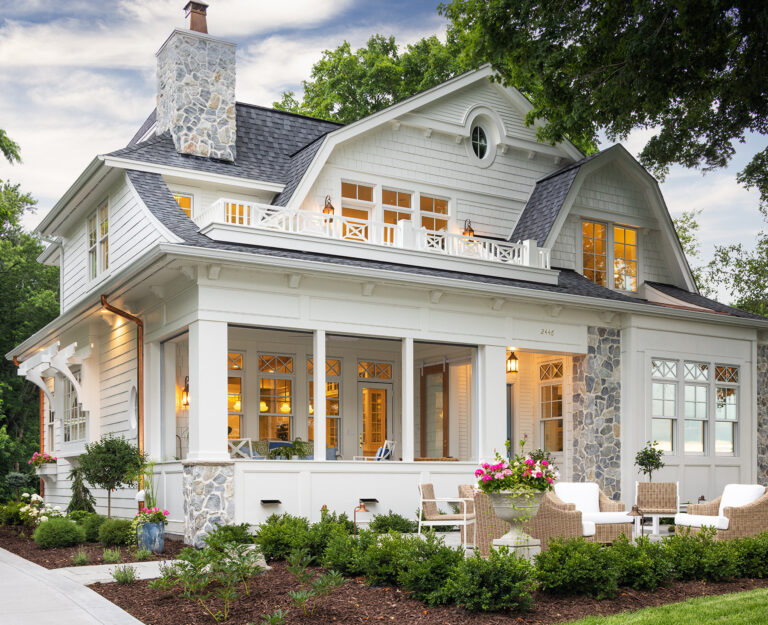
| Northeast Heritage | Cedar Shingle / Stone | Screened-in Porch | High maintenance shingles vs. iconic look |
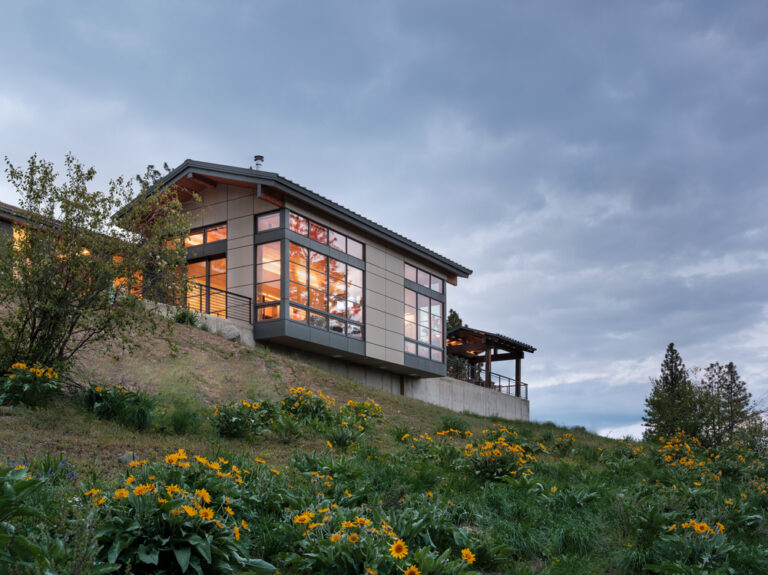
| Western Frontier | Steel / Timber / Glass | Panoramic Windows | Higher heating/cooling costs |
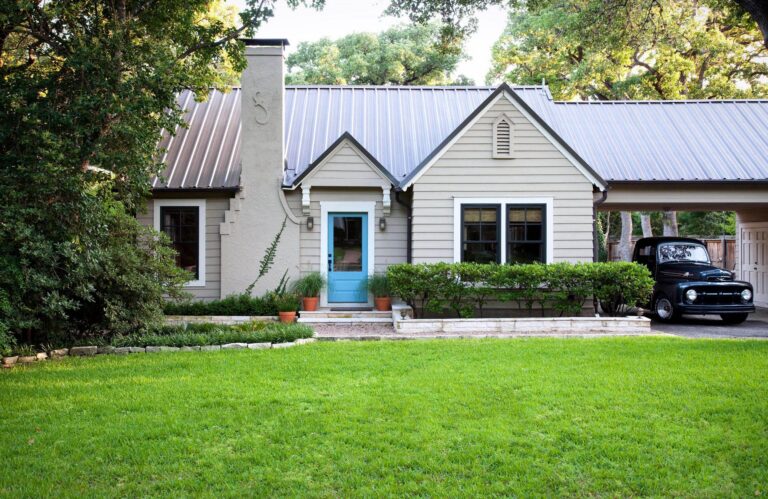
| Southern Coastal | Board & Batten / Metal Roof | Wide Wrap-around Porch | Humidity impact on wood finishes |
| Industrial Heartland | Corrugated Metal / Brick | Double-height Great Rooms | Acoustic challenges in large spaces |
| Modern Cottage (2026) | Limewash / Plaster | Arched Transitions | Higher labor cost for skilled masonry |
Regional Decision Logic
A homeowner in Wyoming will prioritize thermal performance and heavy timber framing to withstand snow loads, while a designer in Texas may focus on UV-resistant paints and deep overhangs to mitigate solar gain. Authentic modern farmhouse style respects its vernacular—the “local language” of building.
Detailed Real-World Scenarios and Decision Logic
Scenario 1: The Suburban In-fill Project
A builder is constructing a modern farmhouse on a narrow lot in a established neighborhood.
-
The Constraint: Limited privacy and proximity to neighbors.
-
The Decision: Shift from “Panoramic Glass” to “Clerestory Windows” and private courtyard-style porches.
-
The Outcome: The home retains the farmhouse “feel” through gabled rooflines but adapts its privacy model to the urban context.
Scenario 2: The High-Altitude Retreat
A client wants a modern farmhouse in a mountainous region with extreme winters.
-
The Failure Mode: Using standard white siding that stains from snow splash and massive windows without thermal breaks.
-
The Adaptation: Implementing a stone “skirt” around the foundation and high-performance metal-clad windows with a dark charcoal finish.
-
Second-Order Effect: The darker color absorbs winter heat, and the stone protects the siding, significantly reducing long-term maintenance.
Planning, Cost, and Resource Dynamics
The cost of building or renovating in the modern farmhouse style in the USA varies widely by region and material quality. In 2026, labor and material costs remain the primary drivers.
Cost Categories and Regional Variability
| Region | Cost per Sq Ft (Standard) | Cost per Sq Ft (Luxury) | Major Resource Constraint |
| Northeast | $250 – $350 | $550+ | Skilled masonry & artisan woodworkers |
| South | $180 – $280 | $400+ | Humidity-resistant timber availability |
| Midwest | $200 – $300 | $450+ | Transportation of specialized materials |
| West | $280 – $400 | $650+ | Regulatory compliance & fire-safe siding |
Indirect Costs and Opportunity Cost
One often overlooked factor is the “Complexity Premium.” A simple farmhouse box is economical, but the gables, porches, and intricate trim of the modern farmhouse can add 15-20% to framing and siding labor. However, the resale premium for a well-executed modern farmhouse remains 10-15% higher than standard contemporary homes in most US markets.
Tools, Strategies, and Support Systems
-
Fiber Cement Siding: Modern materials like James Hardie allow for the board-and-batten aesthetic with significantly less maintenance than natural wood.
-
Standing Seam Metal Roofing: Provides the iconic farmhouse look with a 50+ year lifespan and superior energy efficiency through solar reflection.
-
Advanced Glazing Telemetry: Using specialized software to calculate solar gain and light penetration, ensuring large windows don’t compromise the home’s thermal envelope.
-
Reclaimed Material Sourcing: Established networks for authentic barn wood and hand-hewn beams ensure material “honesty” in 2026 designs.
-
Smart Lighting Integration: Using tunable LEDs to mimic the warmth of natural evening light, bridging the gap between clinical modernism and cozy farmhouse vibes.
-
Low-VOC Limewash Finishes: Reintroducing traditional plaster techniques for walls that possess depth and organic texture.
Risk Landscape and Failure Modes
The “Modern Farmhouse” movement faces specific systemic risks as it enters its second decade of popularity.
1. Aesthetic Obsolescence
The “Black and White” formula is at high risk of looking dated by 2030. Homes that rely solely on high-contrast colors without architectural depth will likely see a faster depreciation in style value.
2. Maintenance Neglect
White exteriors in the USA require rigorous maintenance. Dirt, algae, and UV degradation show immediately on white siding. Failure to implement a cleaning cycle can turn a “Luxury Farmhouse” into a “Neglected Barn” within five years.
3. Material Mismatch
Using interior-grade wood for exterior accents or failing to account for wood expansion in humid climates leads to catastrophic finish failure. This is a compounding risk; a single point of rot in a board-and-batten wall can compromise the entire siding system.
Governance, Maintenance, and Long-Term Adaptation
A modern farmhouse requires a proactive maintenance regime to preserve its “crisp” aesthetic and structural integrity.
The Modern Farmhouse Maintenance Checklist
-
Annual: Inspect all siding joints and caulking, especially in board-and-batten transitions. Pressure-wash white siding to prevent staining.
-
Bi-Annual: Check roof flashing and valleys on multi-gabled roofs where debris tends to collect.
-
Five-Year Cycle: Inspect and re-seal any exposed natural wood elements (porch beams, front doors). Monitor metal roofs for any fastener loosening.
-
Adaptation Triggers: If the stark white palette feels dated, consider a “Warm Neutral” refresh with greige or olive tones, which are the dominant 2026 trends.
Measurement, Tracking, and Evaluation of Design Success
How does one quantify the success of a modern farmhouse project? It requires both qualitative and quantitative metrics.
-
Leading Indicators: Alignment with regional vernacular (Does it fit the land?); High-quality material procurement (Is the wood real?).
-
Lagging Indicators: Resale value relative to market average; Energy performance over a 12-month cycle.
-
Qualitative Signals: Tactile satisfaction (How do the materials feel?); Spatial flow (Does the open plan work for the family’s daily life?).
-
Documentation Examples: Maintenance logs, energy audits, and high-resolution “as-built” photography for future resale.
Common Misconceptions and Oversimplifications
-
Myth: Modern farmhouse is just about shiplap. Correction: Shiplap is a minor interior detail; the style is defined by gabled forms, porches, and light.
-
Myth: It has to be white. Correction: While white is iconic, some of the most sophisticated 2026 designs use charcoal, forest green, or even natural wood tones.
-
Myth: It’s an expensive style to build. Correction: The base form is often a simple rectangle, which is efficient; cost only spikes when complex gables and luxury finishes are added.
-
Myth: “Farmhouse Sink” is the most important element. Correction: The apron sink is a functional tool, but “Light” and “Scale” are the true defining features.
Ethical, Practical, and Contextual Considerations
The modern farmhouse movement has a responsibility toward sustainability. In the USA, this means using reclaimed materials when possible and prioritizing high-performance insulation. Ethically, the style should avoid “Architectural Gentrification”—building massive, stark-white structures that clash violently with more modest, historical neighbor homes. A “Wise” modern farmhouse respects its neighbors as much as its heritage.
Conclusion
The modern farmhouse style usa has successfully navigated the transition from a fleeting trend to a foundational American aesthetic. Its ability to evolve—softening its edges, warming its palette, and deepening its commitment to authentic materials—ensures its longevity in the residential market. By focusing on the bedrock truths of light, simplicity, and functional honesty, homeowners can build spaces that feel both timely and timeless. As we move through the late 2020s, the style’s success will be measured not by how many houses look alike, but by how uniquely each home responds to the landscape and the people within it.