How to Manage Gutter Overflow Issues: The Authoritative Guide
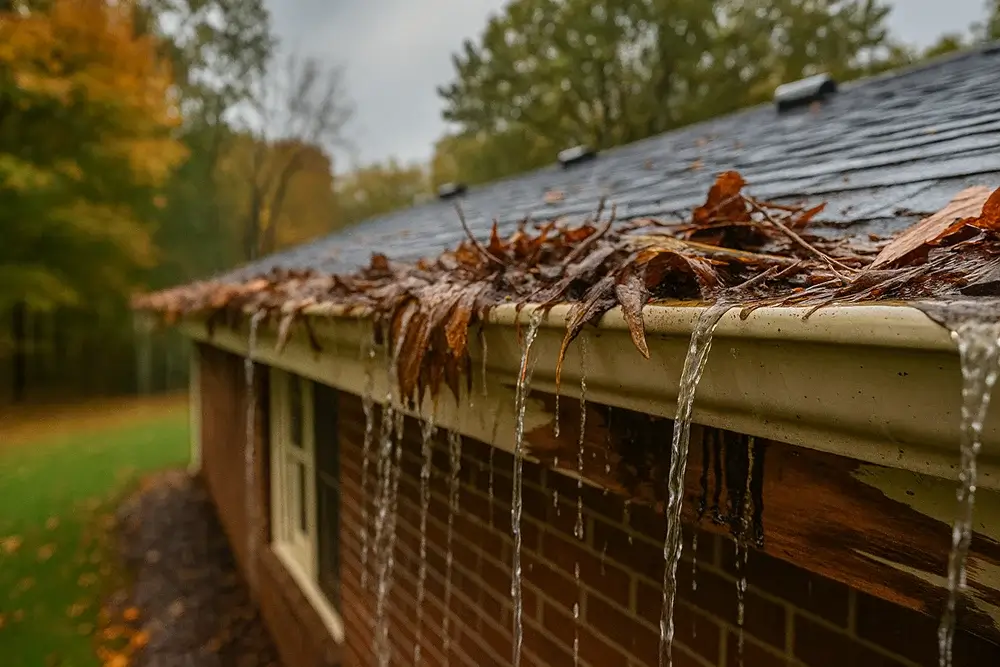
The management of storm water begins long before runoff reaches the municipal sewer or the groundwater table; it starts at the roofline. Gutter systems are the primary hydraulic infrastructure of a residential building, designed to intercept thousands of gallons of water and navigate them safely away from the foundation. When these systems fail, the resulting overflow is not merely an aesthetic nuisance—it is a localized flash flood that threatens the structural stability of the edifice. The energy of falling water can erode soil, penetrate basement walls, and rot the fascia boards that support the gutter itself.
For the property owner, understanding the mechanics of fluid dynamics as they pertain to a sloped roof is essential. A common misconception is that larger gutters are a universal cure for overflow. In reality, overflow is frequently a symptom of systemic imbalance: perhaps the downspout-to-gutter ratio is insufficient, or the pitch of the trough prevents water from reaching the exit point fast enough. As weather patterns shift toward higher-intensity “rain bombs” or concentrated microbursts, the historical standards for gutter sizing are increasingly being called into question by building scientists and civil engineers.
The complexity of these systems is compounded by the variety of debris and environmental factors unique to a property’s microclimate. A home under a canopy of coniferous trees faces a fundamentally different drainage challenge than one in an arid, windy region where silt and dust accumulate in the troughs. Consequently, a professional-grade strategy for drainage involves a forensic analysis of the roof’s “watershed” area. This article serves as an authoritative reference for those seeking to move beyond temporary fixes and establish a robust, long-term protocol for moisture management.
Understanding “how to manage gutter overflow issues”
To effectively grasp how to manage gutter overflow issues, one must view the gutter not as a static bucket, but as a dynamic conveyance system. Overflow occurs when the rate of inflow (from the roof) exceeds the rate of discharge (through the downspouts). This imbalance can be caused by simple obstructions, but it is often rooted in “undersizing.” A standard 5-inch K-style gutter may handle a typical rain, but on a roof with a steep pitch, the velocity of the water can cause it to “overshoot” the gutter entirely, particularly in the valleys where two roof planes meet.
A multi-perspective analysis of overflow reveals that the issue is often subterranean. If the downspout discharges into a buried pipe that is collapsed or clogged with roots, the water will back up the vertical column, causing the gutter to overflow at the highest point. Property owners frequently make the mistake of cleaning the troughs while ignoring the “tail-end” of the system. Thus, a definitive management plan must account for the entire journey of the water drop, from the shingle to the final discharge point away from the foundation.
Oversimplification in this domain often leads to the “guard trap.” Many believe that installing gutter guards will solve all overflow problems. However, during high-volume events, some guards act as a solid surface, allowing water to skim over the top and cascade down the siding. Identifying the best solution requires a synthesis of architectural geometry, local rainfall data, and a realistic assessment of the maintenance labor available. True mastery of the topic involves balancing these variables to ensure the building envelope remains dry regardless of the storm’s intensity.
Deep Contextual Background: The Evolution of Drainage
The history of guttering is a history of material science. Early American homes often utilized “box gutters,” which were integrated into the wooden eaves of the house and lined with lead or tin. While architecturally seamless, these systems were prone to rot and required constant tinsmithing. As the suburbs expanded in the mid-20th century, the industry shifted toward sectional galvanized steel and eventually aluminum.
The invention of the “seamless” gutter machine in the 1960s was a pivot point. By allowing contractors to roll-form aluminum troughs to the exact length of a house on-site, the industry eliminated the joints—the primary failure points where leaks and clogs originated. Today, the evolution continues with high-capacity 6-inch and 7-inch systems designed to handle the increased runoff associated with modern “McMansion” architecture, which features massive roof surface areas and complex multi-gabled designs.
Conceptual Frameworks and Mental Models
To analyze overflow, professionals use specific mental models that prioritize physics over guesswork.
1. The Watershed Calculation Model
This model treats each roof plane as a distinct catchment area. The square footage of the roof, adjusted for pitch, determines the “effective area.” A roof with a 12/12 pitch catches more wind-driven rain than a flat roof of the same footprint. This calculation dictates whether a standard downspout is hydraulically capable of draining the volume.
2. The Velocity vs. Capacity Framework
In this framework, the speed of the water is as important as the volume. Water flowing down a long valley gains kinetic energy; if the gutter does not have “splash guards” or a wide enough mouth, the water’s momentum will carry it over the outer lip. Managing overflow often involves “braking” the water or increasing the capture area at high-velocity points.
3. The “First Flush” Concept
This model focuses on the initial minutes of a storm, where the most debris (pollen, granules, dust) is washed into the system. If the system can navigate the “first flush” without clogging, it will likely handle the remainder of the storm. This leads to the strategic use of “clean-outs” at the base of downspouts.
Gutter Configurations and Strategic Trade-offs
Selecting the right system involves weighing aesthetic desires against hydraulic requirements.
| System Type | Capacity Profile | Maintenance Need | Trade-off |
| 5-inch K-Style | Standard Residential | Moderate | Can be overwhelmed by steep roofs. |
| 6-inch K-Style | High Capacity | Low/Moderate | Visually “heavy” on the fascia; more expensive. |
| Half-Round | Efficient Flow | High | Debris is more visible; requires specialty hangers. |
| Box Gutters | Architectural | Extreme | Repairs involve structural wood work. |
| Copper Systems | Permanent | Very Low | Extremely high initial capital expenditure. |
Realistic Decision Logic
A property owner should apply a “Downspout-First” logic. Doubling the number of downspouts often solves overflow more effectively than replacing 5-inch gutters with 6-inch gutters. If the distance between downspouts exceeds 40 feet, the water in the center of the run has too far to travel, increasing the likelihood of mid-run overflow during a deluge.
Detailed Real-World Scenarios
Scenario A: The Valley “Overshoot”
A house with a large dormer creates a concentrated stream of water that shoots over the gutter during heavy rain.
-
The Plan: Install a “high-flow” inside corner splash guard and widen the gutter at that specific junction.
-
Failure Mode: Cleaning the gutter will not help here; the issue is the kinetic energy of the water, not a clog.
Scenario B: The Underground Bottleneck
The gutters are clean, but water pours over the edges near every downspout.
-
The Plan: Perform a “static pressure test” by running a hose into the downspout. If the water backs up, the underground lateral line is the culprit.
-
Outcome: Root intrusion in the 4-inch PVC pipe was found 20 feet from the house, necessitating a mechanical auger service.
Planning, Cost, and Resource Dynamics
The economics of gutter management involve a delicate balance between upfront installation costs and the “catastrophic” cost of foundation repair.
Cost-Benefit Variability Table
| Component | Price Range (Professional) | Lifecycle | Impact on Overflow |
| Seamless Aluminum | $8–$15 per linear foot | 20–30 Years | Primary conveyance. |
| Gutter Guards | $5–$25 per linear foot | 10–20 Years | Prevents clogs; can cause skimming. |
| Underground Drains | $20–$50 per linear foot | 50+ Years | Critical for final discharge. |
| Fascia Repair | $15–$30 per linear foot | N/A | Corrects the “pitch” of the system. |
Opportunity Cost: Choosing to save $500 by omitting downspout extensions is an expensive mistake. Saturated soil near a foundation can lead to “hydrostatic pressure” cracks that cost $10,000+ to remediate. In the context of how to manage gutter overflow issues, the most expensive part of the system is the part that isn’t there.
Tools, Strategies, and Support Systems
Advanced gutter stewardship requires more than a ladder and a bucket.
-
Digital Inclinometers: Used to ensure a precise “slope” of 1/16th inch per foot toward the downspout.
-
Telescoping Wands: For high-pressure flushing of downspouts from ground level.
-
Heat Cables (De-Icing): Critical in northern climates to prevent “ice damming,” which causes a unique form of winter overflow.
-
Splash Blocks and Bubbler Pots: Passive systems that dissipate the energy of discharge water.
-
Drip Edges: A metal flashing that ensures water actually enters the gutter rather than wicking behind it and rotting the fascia.
-
Big-Mouth Outlets: Enlarged openings where the gutter meets the downspout, significantly reducing the “funneling” bottleneck.
Risk Landscape and Failure Modes
The primary risk of gutter overflow is the “Silent Rot.”
-
The Fascia Failure: When water overflows the back of the gutter, it saturates the wood fascia. Because this is hidden by the gutter itself, the wood can rot completely through before the owner notices the gutter is “sagging.”
-
Foundation Undermining: Concentrated water falling in one spot “scours” the soil, potentially exposing the footings to frost heave or settlement.
-
Siding Discoloration: Chronic overflow leads to “tiger stripping” on the siding and promotes the growth of algae and mold in the wall cavity.
Governance, Maintenance, and Long-Term Adaptation
A gutter system requires a structured “governance” or oversight plan to adapt to changing seasons and tree growth.
-
The Bi-Annual Audit:
-
Spring: Remove “helicopters” (maple seeds) and oak tassels which quickly clog outlets.
-
Fall: Comprehensive leaf removal and a “flow test” with a garden hose.
-
-
The “Clearance” Trigger: If tree limbs are within 6 feet of the roof, they provide a direct path for debris and squirrels. Trimming trees is a “gutter maintenance” task.
-
Adjustment Triggers: If you see “daylight” between the gutter and the fascia, the hangers have pulled loose and the system pitch must be recalibrated immediately.
Measurement, Tracking, and Evaluation
Evaluation of a drainage strategy should be both quantitative and qualitative:
-
The “Bucket Test”: Measuring the volume of water at the discharge point during a timed rain event to ensure it matches the calculated roof runoff.
-
Visual “Wet-Check”: During a heavy rain, walking the perimeter to identify “overshoot” points or leaking miters.
-
Moisture Metering: Checking the basement rim joist or crawlspace soil moisture levels after a storm to ensure the discharge is far enough away.
-
Documentation: Maintaining a “Drainage Map” that shows where all underground lines run. This prevents future “post-hole” disasters during landscaping.
Common Misconceptions and Industry Myths
-
Myth: “Gutters should be perfectly level for aesthetics.”
-
Reality: Level gutters are standing water hazards. They must have a subtle but consistent slope to be self-cleaning and effective.
-
Myth: “Screen-style gutter guards are maintenance-free.”
-
Reality: Small debris (like pine needles) can “needle” into the screens, and “shingle grit” can build up underneath them, requiring occasional removal and cleaning.
-
Myth: “Downspouts should always drain into the yard.”
-
Reality: In high-density areas or on steep lots, yard drainage can cause neighbor disputes or erosion. “Rain gardens” or municipal tie-ins are often better alternatives.
-
Myth: “Heavy-duty gutters don’t need as many hangers.”
-
Reality: A gutter full of water and wet debris is incredibly heavy. Hangers should be spaced every 24-30 inches regardless of the gutter’s gauge.
Conclusion
The pursuit of how to manage gutter overflow issues is ultimately an exercise in hydrological engineering at the domestic scale. It requires a rejection of “stop-gap” measures in favor of a systemic understanding of how water moves across a structure. By prioritizing proper sizing, ensuring clear discharge paths, and maintaining a rigorous inspection schedule, a property owner can transform a vulnerable exterior into a resilient one. The goal of a superior drainage system is to remain invisible and silent, protecting the foundation and the building envelope from the relentless pressure of the environment.