How to Avoid Foundation Water Risk: A Definitive Engineering Guide
The stability of any residential or commercial structure is fundamentally a struggle against the movement of liquid water and vapor through the soil. While we often speak of the foundation as a static object—a massive slab or wall of concrete—it is more accurately viewed as a permeable membrane submerged in a dynamic, often hostile environment. The presence of water is not merely a nuisance that leads to musty basements; it is a primary driver of hydrostatic pressure, soil expansion, and chemical degradation that can jeopardize the structural load path of the entire building.
Managing this interface between architecture and geology requires a shift from reactive waterproofing to proactive hydrological management. A basement that leaks during a hundred-year storm is a symptom of a systemic failure in site grading or drainage infrastructure that likely existed since the day the footings were poured. To address these vulnerabilities, one must look beyond the concrete itself and analyze the surrounding topography, the local water table, and the specific clay-to-sand ratio of the backfill.
In the contemporary building environment, the margin for error has narrowed. Urban densification and the prevalence of finished basements mean that any moisture ingress now results in significant financial loss and potential health hazards from mold colonization. Consequently, a professional-grade strategy for foundation preservation must be multi-layered, incorporating site-wide water diversion, subterranean drainage systems, and high-performance exterior membranes. This article serves as a definitive reference for navigating these complexities and establishing a resilient perimeter.
Understanding “how to avoid foundation water risk”
The phrase “how to avoid foundation water risk” is frequently misinterpreted as a search for the “best” sealant or a specific brand of sump pump. In reality, a strategic plan for risk avoidance is an exercise in managing the physics of water movement. Water takes the path of least resistance; if the soil surrounding a foundation is more permeable than the drainage system provided, water will collect against the concrete. This creates hydrostatic pressure—a force that can literally push basement walls inward or cause “upheaval” in floor slabs.
A common misunderstanding in this space is the belief that “waterproofing” (the application of a coating) is sufficient. True risk management prioritizes “damp-proofing” as a secondary line of defense and “drainage” as the primary. If water is allowed to sit against the foundation, even the most expensive membranes will eventually fail due to chemical degradation or structural shifting. Therefore, learning how to avoid foundation water risk starts with the realization that you cannot stop water entirely; you can only give it a more attractive place to go.
Oversimplification risks often arise when property owners focus solely on the “visible” leaks. Interstitial moisture—vapor that moves through the pores of concrete—can be just as damaging over the long term, leading to the corrosion of steel reinforcement (rebar) and the spalling of the concrete surface. A comprehensive strategy addresses liquid water, capillary rise, and water vapor simultaneously, ensuring the foundation remains a dry, stable anchor for the home.
Contextual Background: The Evolution of Subterranean Engineering
Historically, foundations were constructed using stone, brick, or rubble, which were inherently porous. These structures “breathed,” allowing moisture to enter and evaporate. While this prevented structural pressure buildup, it made for damp, unusable lower levels. The introduction of poured concrete and concrete masonry units (CMU) in the early 20th century provided greater structural strength but created a more rigid barrier that was susceptible to cracking under soil movement.
As the demand for finished basement space grew in the post-war era, the industry moved from simple tar coatings to sophisticated dimpled membranes and crystalline waterproofing. Simultaneously, the development of the “French Drain” (perforated pipe in a gravel bed) revolutionized how we managed the water table around the footings. Today, we are in the era of “Active Hydrology Management,” where smart sump pumps, exterior drainage mats, and rainwater harvesting systems work in concert to keep the soil moisture levels stabilized regardless of the weather.
Conceptual Frameworks and Hydrological Mental Models
Professional engineers utilize several mental models to diagnose and prevent moisture-related failures.
1. The Hydrostatic Pressure Model
This model treats the soil around the house like a water-filled balloon. When the soil becomes saturated, it exerts pressure in all directions. A “top” plan seeks to “pop” this balloon by providing a high-capacity drainage path (gravel and pipe) that prevents the water from ever reaching the pressure threshold required to penetrate the concrete.
2. The Soil Volatility Matrix
Different soils react to water differently. High-clay soils are “expansive,” meaning they grow in volume when wet, exerting massive lateral force. Sandy soils drain quickly but can lead to “undermining” if water flows too fast. Risk avoidance requires matching the foundation design to the specific plasticity index of the local earth.
3. The Envelope Continuity Framework
This framework views the home as a sealed box. Any break in the continuity—where the wall meets the floor, where pipes penetrate the slab, or where the window well is attached—is a failure point. Management involves “detailing” these transitions with water-stops and flexible sealants that can accommodate the house’s natural settling.
Sub-Surface Drainage Variations and Strategic Trade-offs
A comprehensive drainage plan typically involves several redundant systems.
| System Type | Primary Objective | Typical Material | Trade-off |
| Footing Drains | Manage water table level | Perforated PVC / Gravel | High install cost; difficult to repair. |
| Surface Grading | Deflect runoff away | Compacted clay / Topsoil | Requires ongoing landscape maintenance. |
| Interior Drain Tile | Manage ingress pressure | Perforated pipe / Sump | Relies on mechanical pumps and power. |
| Swales/French Drains | Redirect site water | Rock / Geotextile fabric | Can take up significant yard space. |
| Dimpled Membrane | Create an air gap | High-density Polyethylene | Susceptible to damage during backfilling. |
Realistic Decision Logic
The selection of a system should follow a “Site-First” logic:
-
High Water Table: Requires an active interior sump system and exterior dimpled membranes.
-
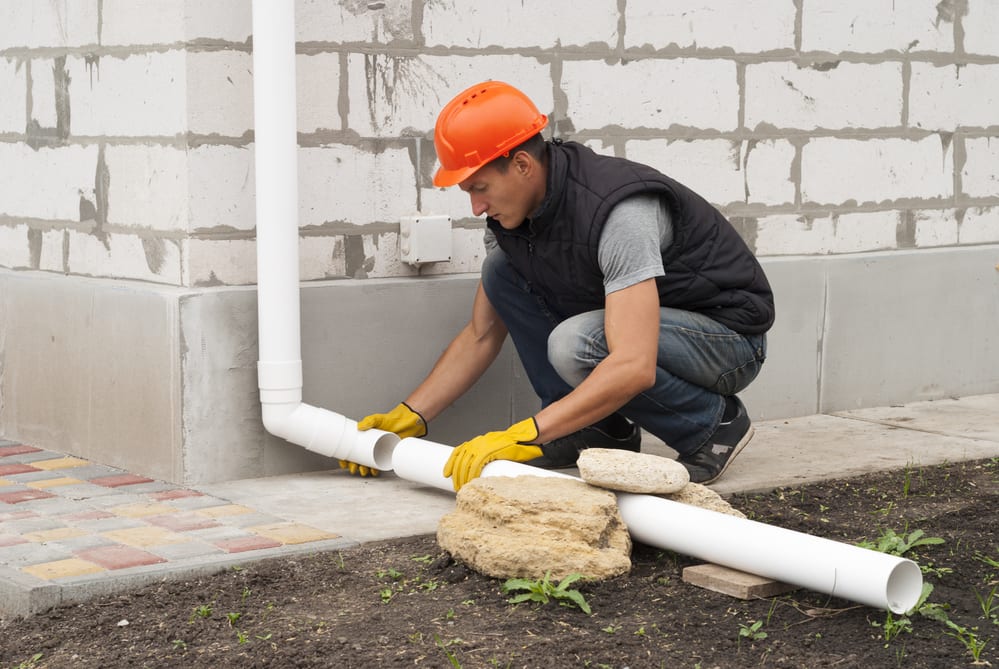
Sloping Grade toward House: Requires a swale and a heavy-duty “kick-out” drainage plan for downspouts.
-
Expansive Clay Soil: Requires “over-excavation” and backfilling with non-expansive stone to prevent lateral wall cracking.
Detailed Real-World Scenarios
Scenario A: The “Negative Grade” Correction
A 1950s home experiences seepage during every spring thaw.
-
The Plan: Re-grading the perimeter to provide a 1-inch-per-foot slope away from the house for at least 10 feet.
-
Constraint: A neighboring property or a sidewalk prevents full grading.
-
Solution: Installation of a “catch basin” and a solid-pipe extension to carry water to the street or a rain garden.
Scenario B: Hydrostatic Floor Heave
A basement slab begins to crack and “tent” in the center during heavy rain.
-
The Plan: The pressure from beneath the slab is too high. The plan requires “pressure relief” through an interior perimeter drain and a high-capacity sump pit.
-
Failure Mode: Simply patching the cracks with hydraulic cement will fail; the pressure will just find a new crack or push the slab higher.
Planning, Cost, and Resource Dynamics
The financial burden of foundation work is often heavily skewed toward labor and excavation rather than material costs.
Typical Cost Ranges (Professional Implementation)
-
Exterior Waterproofing (Excavated): $15,000 – $40,000+
-
Interior Perimeter Drain: $5,000 – $15,000
-
Sump Pump System (with Backup): $1,200 – $3,500
-
Gutter/Downspout Extensions: $500 – $2,000
Opportunity Cost: Deferring a $2,000 gutter extension project can lead to a $30,000 foundation piering job if the soil saturation causes the foundation to settle or rotate. The return on investment for “keeping water away” is among the highest in the construction industry.
Tools, Strategies, and Support Systems
Modern risk avoidance is supported by an “invisible” infrastructure:
-
Laser Levels: Used to ensure grading is actually carrying water away, as the human eye is notoriously bad at judging slight slopes.
-
Hydrostatic Relief Valves: One-way valves in the floor that allow water in only to prevent the floor from exploding upward during a flood.
-
Crystalline Waterproofing: A chemical treatment that grows crystals inside the concrete pores when it encounters moisture, effectively making the concrete “self-sealing.”
-
Battery Backup Sump Systems: Essential because heavy rain is often accompanied by power outages.
-
Moisture Sensors: Smart home integrations that alert the owner to water presence long before it is visible to the eye.
-
Geotextile Fabrics: Used to wrap drainage pipes, preventing “fines” (tiny soil particles) from clogging the gravel bed over time.
The Risk Landscape: Compounding and Hidden Failure
The primary risk in managing foundation water is the “invisible” erosion of structural integrity.
-
The Freeze-Thaw Cycle: Saturated soil against a foundation will freeze and expand. This “adfreeze” can grip the side of the wall and lift it, causing “stair-step” cracks in brickwork or CMU walls.
-
Efflorescence as a Warning: The white, powdery salt deposits seen on basement walls are a leading indicator. They show that water is moving through the concrete and evaporating on the inside, leaving minerals behind.
-
Compounding Risk: Termite infestation. Termites are drawn to moisture; a damp foundation is a beacon for wood-destroying organisms.
Governance, Maintenance, and Long-Term Adaptation
A foundation drainage system is not a “set it and forget it” asset.
-
The Semi-Annual Audit:
-
Ensure downspouts extend at least 6-10 feet away from the wall.
-
Check window wells for leaf debris that can clog the drain.
-
Test the sump pump by pouring a five-gallon bucket of water into the pit.
-
-
Adjustment Triggers: If soil has “settled” near the foundation (common in new construction), it must be filled and compacted immediately to restore the positive grade.
Measurement, Tracking, and Evaluation
How do we quantify the success of our strategy?
-
Qualitative Signal: The absence of the “basement smell.” This odor is actually the metabolic byproduct of mold and bacteria thriving in damp conditions.
-
Quantitative Signal: Using a “relative humidity” meter in the basement. A successful system keeps the RH below 50%, even during storm events.
-
Documentation: Maintaining a “site map” of where exterior drain lines are buried. This prevents future fence-post installations or landscaping from severing the critical drainage lines.
Common Misconceptions and Industry Myths
-
Myth: “Concrete is waterproof.”
-
Correction: Concrete is a hard sponge. It is full of microscopic capillaries that will pull water in through a process called “wicking.”
-
Myth: “I can fix it with ‘waterproofing’ paint.”
-
Correction: Interior paints can stop vapor, but they cannot stop hydrostatic pressure. They will eventually bubble and peel as water pushes from the outside.
-
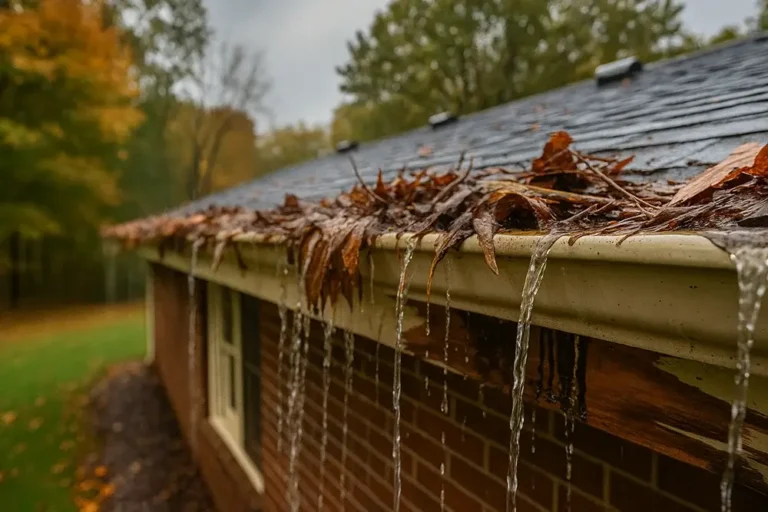
Myth: “Gutters have nothing to do with the foundation.”
-
Correction: A typical roof sheds 600 gallons of water per hour during a 1-inch rain event. If that water is dumped at the base of the wall, no drainage system can keep up.
Conclusion
Successfully navigating how to avoid foundation water risk requires a holistic view of the property as a managed hydrological system. It is a discipline that demands patience, an understanding of soil mechanics, and a rejection of “quick-fix” topical solutions. By prioritizing the “3-Ds” of water management—Diversion, Drainage, and Detailing—a property owner can ensure that their most significant asset remains structurally sound for generations. A foundation is only as strong as its ability to stay dry, and the most effective defenses are those that start 20 feet away from the house, not inside the basement.