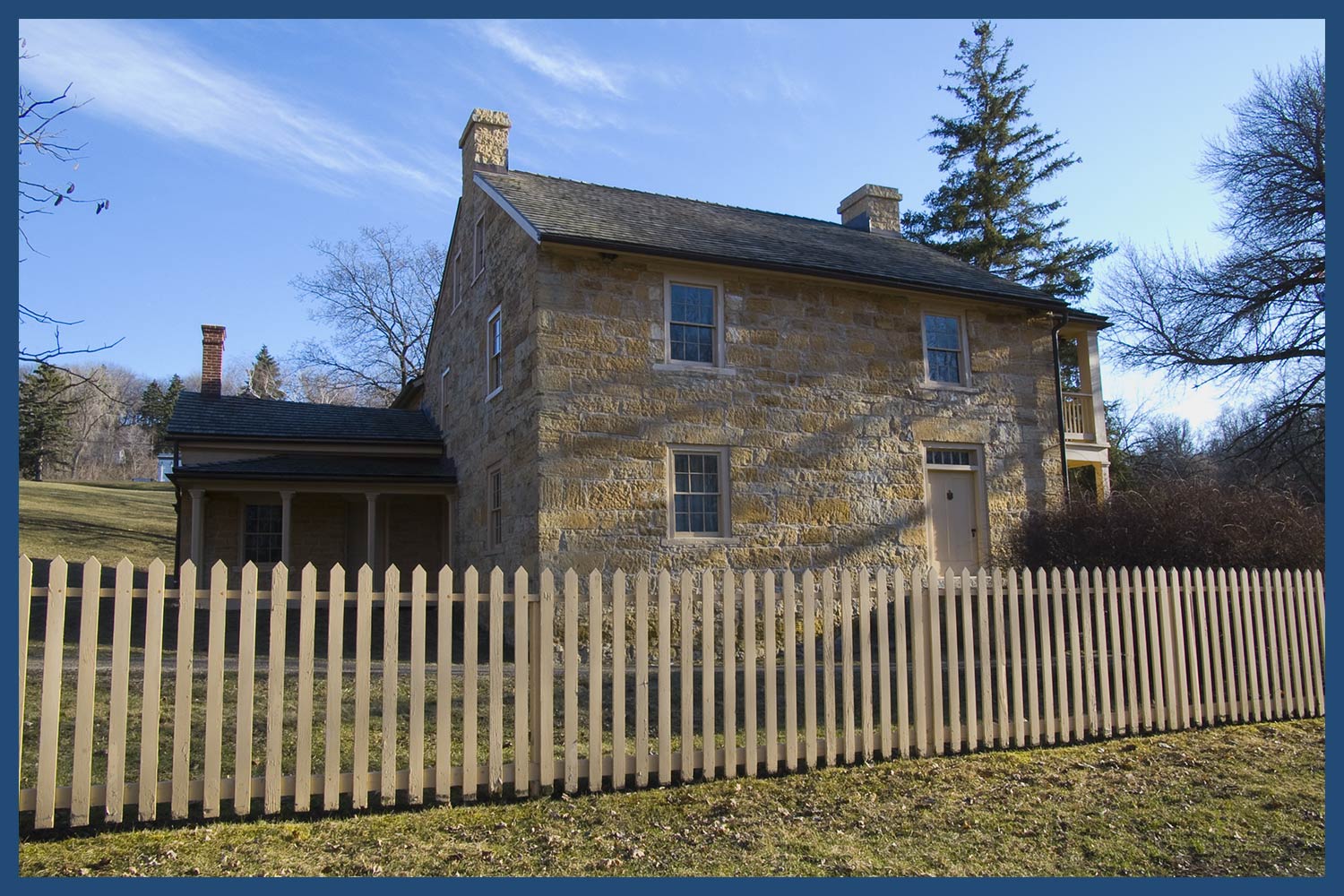
Best Historic Home Preservation United States: A Definitive Guide
The stewardship of the American built environment involves a complex intersection of architectural integrity, material science, and cultural memory. In the United States, the impulse to save a structure is rarely just about aesthetics; it is a technical and philosophical commitment to the continuity of craftsmanship. As urban density increases and the materials of the mid-20th century begin to show their expiration dates alongside colonial-era timber, the methodology of preservation has shifted from mere “fixing” to a sophisticated regime of conservation.
Managing a historic property requires a departure from modern construction logic. While contemporary building focuses on speed, synthetic uniformity, and short-term efficiency, historic preservation prioritizes breathability, material compatibility, and reversible interventions. This tension often creates significant hurdles for property owners, municipal planners, and contractors. The goal is not to create a static museum piece, but to ensure that a structure can exist within a modern context without sacrificing the very soul that justified its saving in the first place.
This article provides a systemic deconstruction of the preservation landscape. We will examine the technical standards that define high-tier restoration, the economic variables that dictate project feasibility, and the risk management strategies necessary to protect these non-renewable cultural assets. By treating the historic home as a living organism rather than a set of depreciating materials, we can better understand the rigor required to maintain the architectural fabric of the nation.
Understanding “best historic home preservation united states”
The phrase best historic home preservation united states is often used in a consumerist sense to find “top-rated” projects or contractors. However, in an editorial and technical context, it refers to the highest adherence to the Secretary of the Interior’s Standards for the Treatment of Historic Properties. This is not a subjective “best” based on beauty; it is a quantifiable “best” based on the retention of historic fabric and the appropriateness of new materials.
The Spectrum of Treatment
One must distinguish between the four primary treatments: Preservation, Rehabilitation, Restoration, and Reconstruction. “Preservation” focuses on the maintenance and repair of existing historic materials. “Rehabilitation” allows for more significant changes to make the building functional for modern use. Many of the projects cited as the best historic home preservation united states are actually successful rehabilitations. The misunderstanding often lies in the belief that preservation means “frozen in time.” In reality, the highest form of preservation allows a building to remain useful while keeping its character-defining features intact.
Material Integrity and Authenticity
A primary risk in preservation is the introduction of “incompatible materials.” For example, using modern Portland cement in a 19th-century brick wall designed for soft lime mortar. This is a technical failure that leads to the physical destruction of the historic material. Therefore, the “best” preservation involves an analytical approach to material science, ensuring that every new nail, board, or coat of paint behaves in a way that respects the original substrate.
The Role of Context and Narrative
Authentic preservation looks beyond the individual house. It considers the landscape, the streetscape, and the social history of the inhabitants. A house preserved in isolation, stripped of its original gardens or outbuildings, loses a significant portion of its historic value. The authoritative perspective views the home as a node in a larger historical network.
Deep Contextual Background: The Evolution of U.S. Preservation
The American preservation movement was born out of crisis. In the mid-19th century, the impending loss of Mount Vernon spurred the Mount Vernon Ladies’ Association into action, establishing a precedent for private, non-profit stewardship. For decades, preservation was an elitist endeavor, focused almost exclusively on the homes of “Great Men.“
The 20th century brought a systemic shift. The destruction of Penn Station in New York City served as a national catalyst, leading to the National Historic Preservation Act (NHPA) of 1966. This established the National Register of Historic Places and State Historic Preservation Offices (SHPOs). Preservation was no longer just a hobby for the wealthy; it became a matter of federal policy and municipal law.
By the 2020s, the movement expanded to include “Recent Past” architecture—Mid-Century Modern and Postmodern structures—and a deeper focus on inclusive narratives. We now recognize that the “best” preservation includes slave quarters, immigrant tenements, and the humble bungalows of the working class. The technical challenge has evolved accordingly, as we now deal with the preservation of early plastics, mass-produced steel, and complex mid-century glass.
Conceptual Frameworks and Mental Models
To manage a historic asset effectively, stewards must employ mental models that differ from standard real estate management.
1. The Breathability Model
Older homes were designed to “breathe.” They utilized air gaps, porous materials like wood and lime, and natural ventilation. Modern attempts to “seal” these homes with spray foam or vinyl often lead to trapped moisture and rot. The breathability model dictates that any intervention must allow for moisture vapor transmission. If you stop the breath, you kill the house.
2. The Reversibility Principle
Every change made to a historic structure should, in theory, be reversible. If a modern kitchen is installed, it should be done in a way that does not destroy the original wall structure. This ensures that future generations can restore the home to its original state if priorities change. This mental model prevents “permanent” damage to the historic integrity.
3. The “Repair over Replace” Hierarchy
Standard construction logic says it is cheaper to replace a window than to fix it. Preservation logic proves this false. A 100-year-old old-growth heartwood window can be repaired indefinitely. A modern vinyl window has a 15-year lifespan. The repair-over-replace model views historic materials as an investment in longevity rather than a disposable cost.
Key Categories of Historic Preservation
| Category | Primary Focus | Trade-off | Success Signal |
| Colonial/Timber Frame | Joinery & Foundation | High material cost vs. extreme longevity | Visible original beams; lime mortar. |
| Victorian/Eclectic | Ornament & Color | Maintenance intensity vs. curb appeal | Retained “gingerbread” trim; slate roof. |
| Craftsman/Bungalow | Natural Materials | Wood rot vulnerability vs. warmth | Restored built-ins; original stonework. |
| Mid-Century Modern | Glass, Steel, Openness | Energy efficiency vs. aesthetic | Original window walls; hidden HVAC. |
| Industrial Conversions | Structural Integrity | High acoustic challenges vs. volume | Exposed brick; original window rhythm. |
Realistic Decision Logic
Stewards must decide between “Period Accuracy” and “Functional Modernity.” If a 1780s home is preserved as a museum, it may lack electricity. If it is a residence, it needs a 21st-century power grid. The “best” projects find a middle path: hiding modern conduits within floor cavities and using discrete high-velocity HVAC systems to avoid drop ceilings.
Detailed Real-World Scenarios
Scenario 1: The Foundation Failure
A 1840s farmhouse in the Hudson Valley shows significant settling.
-
Modern Response: Jack up the house and pour a concrete slab.
-
Preservation Response: Excavate the stone foundation, re-point with lime mortar, and address site drainage. Concrete is too rigid and will crack the old timber frame.
-
Second-Order Effect: By using lime, the foundation can shift slightly with the seasons without failing, extending the life of the frame by 100 years.
Scenario 2: The Energy Efficiency Paradox
An owner of a 1920s Tudor wants to install vinyl replacement windows.
-
Constraint: The original windows are drafty but feature unique leaded glass.
-
Decision Point: Instead of replacement, the owner installs interior “invisible” storms.
-
Outcome: The home retains its historic profile and gains 90% of the energy efficiency of a modern window at 40% of the cost.
Planning, Cost, and Resource Dynamics
Preservation is characterized by high labor costs and lower material costs. You are paying for a craftsman’s time rather than a factory’s product.
Direct vs. Indirect Costs
Direct costs include specialized labor (masons, timber framers). Indirect costs include the “Permit Lag”—the time it takes to get approvals from local historic commissions. This time represents an opportunity cost, particularly in high-interest environments.
2026 Range-Based Table (USD)
| Item | Standard Renovation | High-Tier Preservation | Cost Driver |
| Windows (per unit) | $600 – $1,200 | $1,500 – $3,500 | Glass type; wood species. |
| Roofing (per sq) | $400 – $800 | $1,200 – $4,000 | Slate/copper vs. asphalt. |
| Masonry (sq ft) | $15 – $30 | $60 – $150 | Lime mortar; hand-carved stone. |
| Consulting | $0 | $5,000 – $25,000 | Historical research; SHPO liaison. |
Tools, Strategies, and Support Systems
-
Laser Scanning and BIM: Using 3D modeling to document “as-built” conditions before any work starts.
-
Petrographic Analysis: Testing original mortar and stone to ensure new materials are chemically compatible.
-
Historic Tax Credits: Utilizing federal and state incentives that can cover up to 20% of qualified rehabilitation expenses.
-
Specialist Insurance: Securing “guaranteed replacement cost” policies that acknowledge the cost of replicating historic details.
-
Dendrochronology: Using tree-ring dating to confirm the exact year a structure was built.
-
Low-VOC Historic Paints: Utilizing linseed oil or lime-based paints that nourish the wood rather than choking it.
Risk Landscape and Taxonomy of Failure
Preservation risks are often compounding. A single improper cleaning can lead to structural collapse years later.
1. Chemical Incompatibility
Using abrasive cleaning (sandblasting) on brick. This removes the “fired” outer shell of the brick, causing the soft interior to dissolve in the next rain. This is a common failure in “quick-flip” historic renovations.
2. Regulatory Risk
Failure to adhere to local historic district guidelines can result in “Stop Work” orders and daily fines. This often stems from a lack of “Preservation Governance”—not having a professional liaison to the local board.
3. The “Museum” Failure
Preserving a house so strictly that it becomes unlivable. If a house cannot be occupied, it cannot be maintained. Lack of use is the fastest path to decay.
Governance, Maintenance, and Long-Term Adaptation
A historic home requires a “Maintenance Lifecycle” rather than a “Repair Cycle.“
Adjustment Triggers
-
Paint failure: Not an aesthetic issue, but a sign that moisture is trapped.
-
Damp basement: Indicates site drainage has shifted or gutters are clogged.
-
Mortar dusting: Signifies that the mortar is sacrificing itself to save the brick—time to re-point.
Layered Checklist
-
Monthly: Inspect gutters; check for pest intrusion.
-
Annual: Professional masonry check; HVAC filter/drain line audit.
-
Decadal: Re-paint siding; inspect roof flashing; check for foundation settlement.
Measurement, Tracking, and Evaluation
How do you evaluate if a project is among the best historic home preservation united states? It requires looking at lagging indicators.
-
Leading Indicator: The number of original components retained versus replaced.
-
Lagging Indicator: The structural stability of the home ten years after the intervention.
-
Qualitative Signal: Recognition by local or national preservation societies (e.g., The National Trust).
-
Quantitative Signal: The premium in resale value for “documented” historic restoration compared to modern renovations.
Common Misconceptions and Oversimplifications
-
Myth: “Historic homes are more expensive to own.” Correction: Long-term maintenance of durable materials is often cheaper than the 15-year replacement cycle of modern materials.
-
Myth: “You can’t have a modern kitchen in an old house.” Correction: You can; you just shouldn’t destroy the original floor plan to get it.
-
Myth: “Preservation means you can’t change the color.” Correction: Preservation focuses on the bones; paint is a sacrificial layer and can usually be changed within reason.
-
Myth: “Older houses are always built better.” Correction: They aren’t; the bad ones just fell down. The survivors are the ones worth saving.
Conclusion
The preservation of historic homes in the United States is an act of intellectual and physical endurance. It requires a rejection of the “disposable” culture of modern construction in favor of a deep respect for material science and historical narrative. To achieve the best historic home preservation united states, one must look past the surface-level beauty of a restored façade and evaluate the integrity of the unseen systems. Ultimately, successful preservation is not about stopping time; it is about ensuring that the craft of the past remains a functional, breathing part of the future. The steward of a historic home does not own it; they simply maintain it for the next century.