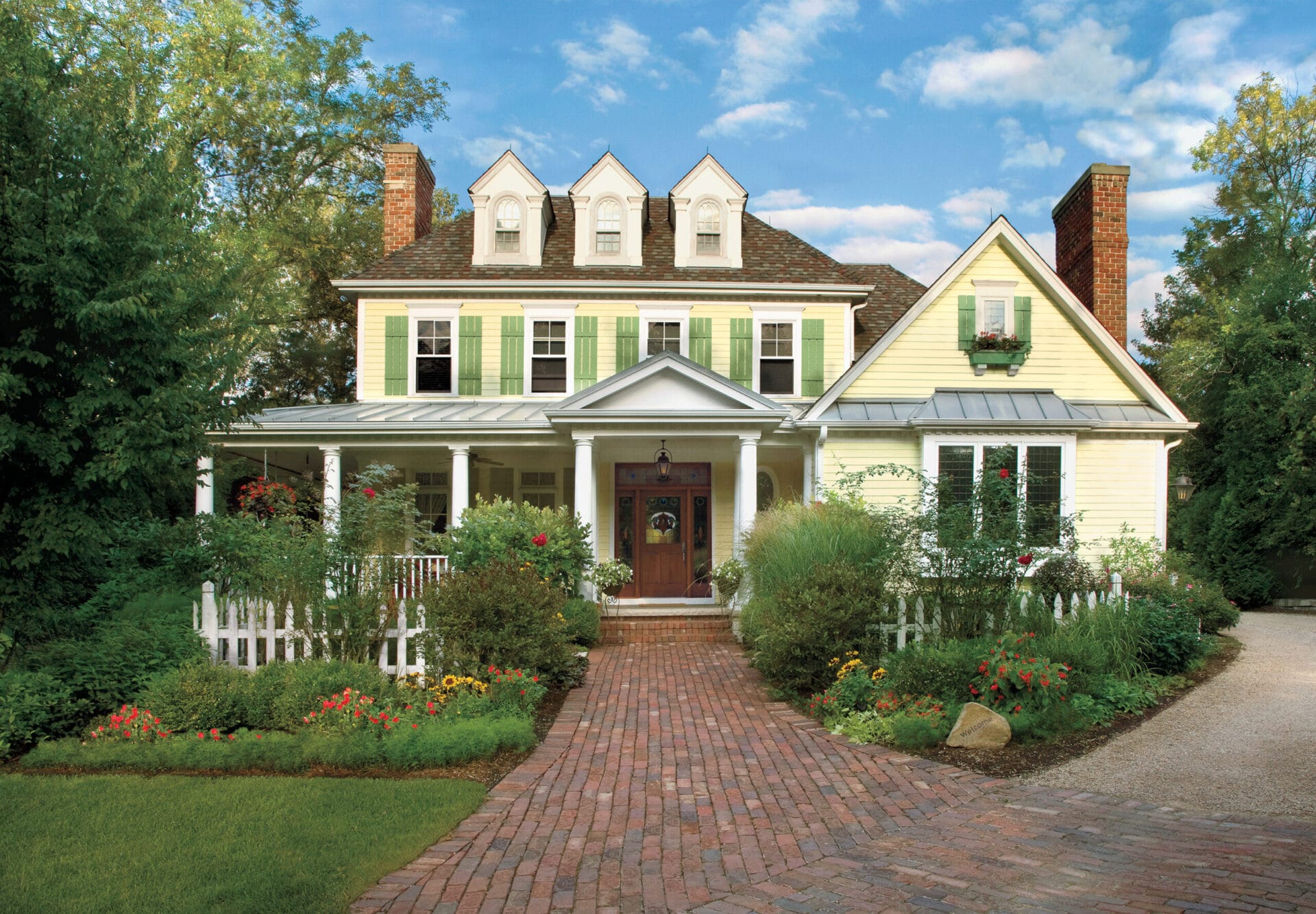
Top Suburban Curb Appeal in America: The Definitive Design Guide
The visual threshold of a residential property—commonly categorized under the umbrella of curb appeal—is a complex intersection of sociostructural signaling, architectural integrity, and ecological stewardship. In the context of the American suburb, this exterior presentation is not merely a superficial veneer; it serves as a primary indicator of property valuation and neighborhood cohesion. While often dismissed as a secondary aesthetic concern, the exterior “face” of a home is a functional interface that negotiates the private sanctuary of the domicile with the public scrutiny of the community.
Modern suburban environments have moved beyond the monolithic standards of the post-war housing boom. Today, the pursuit of a distinguished exterior requires a sophisticated understanding of regional vernaculars, sustainable horticultural practices, and the psychological impact of color theory and symmetry. A property’s visual success depends on its ability to synchronize disparate elements—cladding, lighting, softscaping, and hardscaping—into a unified narrative that respects the home’s original architectural intent while adapting to contemporary performance standards.
The challenges of achieving and maintaining high-level exterior aesthetics are compounded by fluctuating material costs and the biological realities of site-specific climates. What constitutes excellence in the arid suburbs of Scottsdale differs fundamentally from the standards in the humidity-drenched landscapes of the Virginia tidewater. Consequently, a comprehensive strategy for exterior refinement must be rooted in a forensic analysis of the building’s envelope and its surrounding microclimate. This article serves as a definitive reference for those seeking to master the nuances of residential presentation in a high-stakes real estate market.
Understanding “top suburban curb appeal in america”
To effectively analyze the standards of top suburban curb appeal in america, one must first decouple the concept from seasonal trends and “flipper” gimmicks. High-performance curb appeal is an exercise in structural and visual balance. It is a multi-dimensional discipline that encompasses the maintenance of the building’s envelope, the health of the soil, and the precision of the hardscape. A common misunderstanding is that curb appeal is achieved through a “checklist” of additions; in reality, the most impactful presentations often involve the removal of discordant elements that obscure the home’s proportions.
Oversimplification risks in this domain often manifest in a disregard for the “rule of three” or the “golden ratio.” Property owners frequently attempt to compensate for a lack of architectural character by over-planting or using overly aggressive color palettes. This “cluttering” effect actually diminishes the perceived value of the property. Professional-grade curb appeal focuses on the “primary focal point”—usually the entry—and uses secondary elements like path lighting and shrubbery to guide the eye toward that point.
Furthermore, a multi-perspective analysis reveals that curb appeal is increasingly tied to “performative ecology.” In many American suburbs, a pristine, chemically-treated monoculture lawn is no longer the undisputed gold standard. Instead, the incorporation of “soft-hardscaping,” native meadows, and bioswales reflects a more nuanced understanding of property presentation. True mastery of the topic involves balancing the rigidity of the built environment with the organic fluidity of the landscape, ensuring the property remains visually compelling throughout the four-season cycle.
Deep Contextual Background: The Evolution of the American Front Yard
The American suburban front yard is a relatively recent cultural invention, rooted in the 19th-century romantic landscapes of Andrew Jackson Downing and Frederick Law Olmsted. Before the advent of the street-car and the automobile, the space between the house and the road was often utilitarian—a place for livestock or kitchen gardens. Olmsted’s vision for suburbs like Riverside, Illinois, introduced the concept of the “contiguous park,” where private yards blended into a collective green vista, signaling democratic openness and communal health.
The mid-20th century standardized this vision through the Levittown model. The lawn became a civic duty, a patch of green that demonstrated one’s membership in the middle class. However, the energy and water crises of the late 20th century began to erode this uniformity. We are currently in a “Post-Lawn” era, where the traditional emerald carpet is competing with “Xeriscaping” in the West and “Permaculture” in the East. Today, the most prestigious suburban exteriors are those that manage to look “intentional” while reducing their carbon and water footprints.
Conceptual Frameworks and Mental Models
To evaluate and improve an exterior, professionals use specific mental models that prioritize geometry and psychology.
1. The “Sense of Arrival” Framework
This model treats the walk from the curb to the door as a transitional experience. Every element—the width of the walkway, the scent of the plantings, the brightness of the porch light—is calibrated to reduce the psychological stress of the visitor and establish the home’s “hospitality” before the door is even opened.
2. The Color-Value Hierarchy
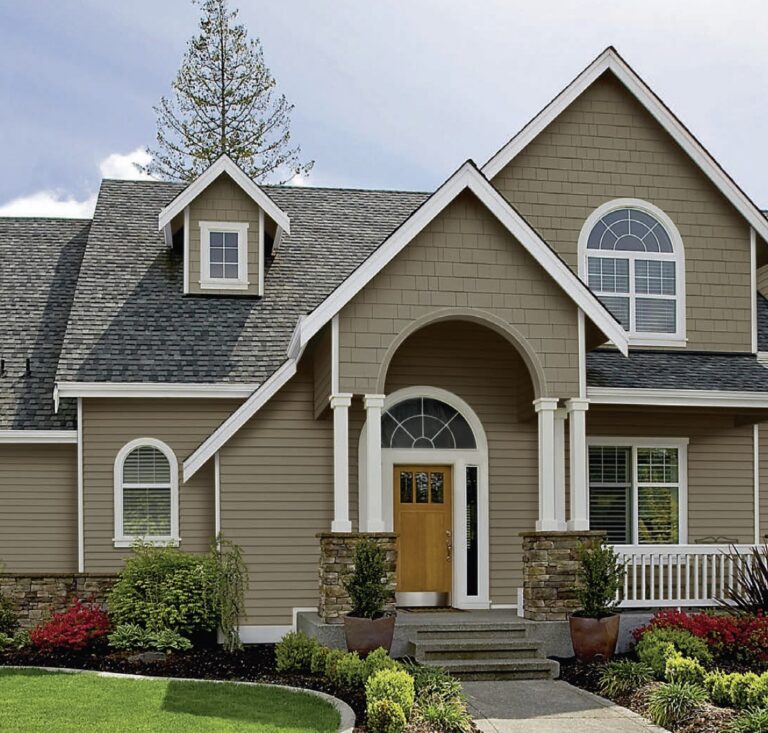
Instead of picking “favorite colors,” this model uses a three-tier system: the Base (usually the siding), the Trim (windows and rooflines), and the Accent (the front door and shutters). For maximum impact, the accent color must be the most saturated, while the base remains neutral to provide a “canvas” for the landscaping.
3. The Structural Layering Model
Landscaping should be viewed in “layers”: the Canopy (large trees), the Understory (shrubbery and small trees), and the Ground Plane (grass, mulch, or flowers). A design mistake occurs when a property skips a layer, creating a “visual gap” that makes the house look disconnected from its lot.
Key Categories of Exterior Variation and Trade-offs
Selecting the right strategy for curb appeal involves weighing aesthetic goals against the site’s maintenance requirements.
| Category | Primary Benefit | Significant Trade-off | Ideal Context |
| Traditional Formal | Timeless; High Value | Expensive maintenance | Colonial or Georgian homes |
| Native/Wild-Scaped | Eco-friendly; Low Water | Can look “unkept” to neighbors | Contemporary or Craftsman |
| Modern Minimalist | Clean lines; High impact | Shows every imperfection | Mid-century Modern homes |
| Cottage/Eclectic | Personal; Charming | Hard to scale for large lots | Victorian or Small Bungalows |
| High-Performance Hardscape | Durability; Structure | High initial capital expenditure | Properties with drainage issues |
Realistic Decision Logic
A homeowner should apply the “Proximity Rule.” Spend 70% of the budget on the area within 10 feet of the front door. This is where the human eye lingers. Spending thousands on a specimen tree at the edge of a two-acre lot provides less “visual ROI” than a high-quality solid wood front door and brass hardware.
Detailed Real-World Scenarios
Scenario A: The “Floating” House
A new-construction suburban home on a bare lot looks “plunked down” with no connection to the earth.
-
The Plan: Install “foundation plantings” of varying heights to soften the right angles where the siding meets the ground.
-
Outcome: The house appears anchored and established, immediately increasing the perceived age (and prestige) of the build.
Scenario B: The Overgrown Victorian
A property with mature, 50-year-old evergreens that have completely obscured the architectural details of the second floor.
-
The Plan: “Limbing up” the trees and removing overgrown yews to reveal the porch pillars and window casings.
-
Constraint: Over-pruning can shock the plants; the work must be done over two seasons.
Planning, Cost, and Resource Dynamics
The economics of curb appeal are volatile, but they generally follow a “rule of diminishing returns.”
Investment Tier Table
| Tier | Investment Range | Key Actions | ROI Projection |
| Low | $500–$2,000 | Paint front door, new lighting, mulch | 200–300% |
| Mid | $5,000–$15,000 | Professional landscaping, power wash | 100–150% |
| High | $25,000+ | New siding, stone walkways, mature trees | Variable (50–100%) |
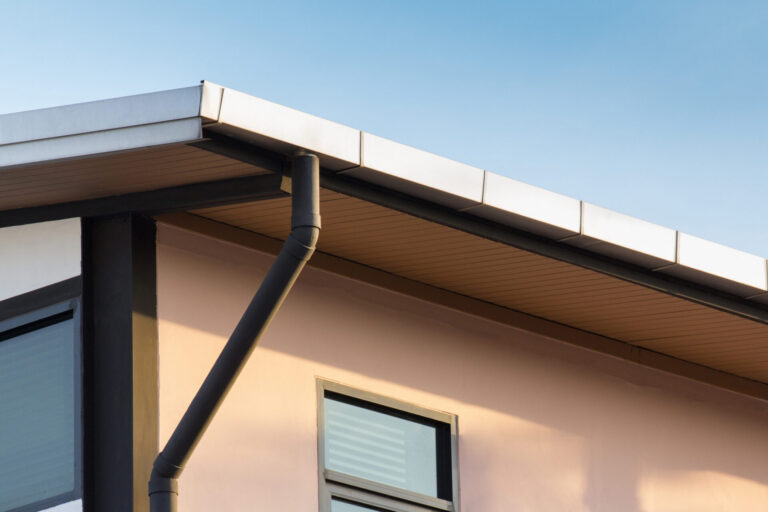
Opportunity Cost: Choosing to defer “invisible” maintenance, like gutter cleaning or chimney repointing, to fund a fancy garden is a common error. A dead tree or a sagging gutter will negate the value of $10,000 worth of flowers in the eyes of an appraiser or a savvy buyer.
Tools, Strategies, and Technical Support Systems
Mastering exterior aesthetics requires a suite of specialized tools:
-
Light Meters: To ensure path lighting is safe without being “stadium bright.”
-
Soil pH Kits: Because yellowing grass is often a chemical issue, not a watering issue.
-
Pressure Washers (Low-PSI): Essential for stone and siding, though high pressure can damage mortar and wood grain.
-
Telescoping Pruners: For maintaining the “canopy-to-house” gap that prevents mold and rodent intrusion.
-
Digital Color Visualizers: Used to simulate paint colors under different solar orientations (North-facing vs. South-facing light).
-
Permeable Paver Systems: To manage runoff while providing a high-end stone look.
Risk Landscape and Failure Modes
The “taxonomy of failure” in curb appeal is often a matter of “compounding neglect.”
-
The Drainage Trap: Installing a beautiful flower bed that directs water toward the foundation.
-
The Exotic Fail: Planting non-native species that require 10 gallons of water a day in a drought-prone region.
-
Material Mismatch: Using modern vinyl shutters on a historic brick home, which creates a “visual dissonance” that lowers perceived quality.
Governance, Maintenance, and Long-Term Adaptation
A distinguished exterior is a living asset that requires a “review cycle.”
-
The Bi-Annual Audit: Every Spring and Fall, walk the curb. Look for “peeling paint” on trim and “thatch buildup” in the lawn.
-
The “Rule of 10”: If a plant has reached 10% more than its intended size, prune it. Do not wait for it to block the window.
-
Adjustment Triggers: If the front door requires more than two attempts to latch, the house is settling or the wood is warping—this is a “curb appeal” issue because it affects the “sense of arrival.”
Measurement, Tracking, and Evaluation
How do you quantify the quality of an exterior?
-
The “Drive-By” Test: Record a video of yourself driving past your home at 25mph. What is the one thing you notice? If it’s a weed or a crooked shutter, that is your primary task.
-
Appraisal Delta: Comparing your home’s sale price per square foot against neighbors with “standard” curb appeal.
-
Qualitative Feedback: Tracking the frequency of neighbor or pedestrian compliments as a signal of community harmony.
Common Misconceptions and Industry Oversimplifications
-
Myth: “Curb appeal is just for when you are selling.”
-
Reality: A well-maintained exterior prevents structural rot and reduces pest intrusion, saving thousands in long-term repairs.
-
Myth: “More flowers mean more appeal.”
-
Reality: Flowers are seasonal. Structure (evergreens and hardscape) provides appeal 365 days a year.
-
Myth: “Black mulch is the most high-end.”
-
Reality: Black mulch is dyed and often looks “unnatural.” Natural brown or cedar mulch provides a better “biological signal.”
-
Myth: “You can’t have great curb appeal with a small yard.”
-
Reality: Small yards allow for higher “density of detail.” A tiny yard with a perfect bluestone path is often more prestigious than a vast, empty acre.
Conclusion
The pursuit of top suburban curb appeal in america is ultimately a pursuit of balance. It requires the homeowner to act as both a historian—preserving the architectural intent of the structure—and an ecologist—managing the living systems of the lot. By moving past the “fast-fashion” approach to home improvement and focusing on the fundamental principles of symmetry, layering, and material integrity, one can create an exterior that is not just a house, but a landmark. A property that masters these dynamics becomes a resilient asset, capable of retaining its value and its beauty regardless of shifting market trends.