Common House Painting Mistakes: A Strategic Editorial Guide
The application of a protective coating to a residential structure is frequently perceived as a cosmetic finality—a simple matter of color selection and steady application. This superficial view, however, ignores the complex chemical and mechanical realities of architectural coatings. In practice, a successful paint job is a sophisticated exercise in surface engineering and moisture management. When the bond between a substrate and its finish fails, the consequences extend beyond mere aesthetics, often leading to accelerated material decay and the infiltration of environmental stressors into the building envelope.
The challenges inherent in residential painting are compounded by the sheer diversity of modern substrates. A single property may feature fiber cement siding, aged cedar trim, vinyl window casings, and galvanized metal flashing, each possessing a distinct coefficient of thermal expansion and a unique porosity profile. Failure to account for these variables during the planning phase is where the most significant errors take root. Consequently, a professional-grade intervention requires a forensic level of preparation that often consumes seventy percent of the total project timeline, leaving only a fraction for the actual application of pigment.
In an era defined by rapid advancements in polymer chemistry, the margin for error has narrowed. Modern water-borne acrylics and hybrid alkyds offer superior durability and environmental compliance, but they are significantly less forgiving than the heavy-bodied lead or oil-based paints of the previous century. These contemporary coatings require precise atmospheric conditions and meticulous surface profiles to achieve their intended molecular cross-linking. This article serves as a definitive reference for identifying the systemic failures that plague residential projects, providing the technical depth necessary to move from amateur intuition to professional-grade stewardship.
Understanding “common house painting mistakes”
The phrase “common house painting mistakes” is often used to describe minor spills or visible brush marks, but in an editorial and engineering context, it refers to a breakdown in the adhesion-cohesion cycle. A mistake in this field is rarely about the “wrong color”; it is about the “wrong system.” One of the primary misunderstandings is the belief that paint is a waterproof sealer. In reality, paint is a breathable membrane. When this membrane is applied over a saturated substrate or a surface contaminated with surfactants, the resulting failure—be it peeling, alligatoring, or efflorescence—is a predictable result of basic physics.
Oversimplification in this space usually begins with the neglect of “mechanical tooth.” Many property owners assume that if a surface looks clean, it is ready for paint. However, without proper abrasion or chemical etching, the new coating sits on top of the old surface rather than integrating with it. This leads to a catastrophic loss of bond when the building experiences seasonal temperature swings. Identifying common house painting mistakes requires a multi-perspective analysis that considers the “vapor drive” of the wall, the chemical compatibility of the primer, and the atmospheric dew point at the time of application.
Furthermore, there is a systemic risk in ignoring the “alkalinity” of new masonry or the “tannin bleed” of specific wood species. A mistake made during the first hour of a project—such as failing to use a stain-blocking primer on raw redwood—can manifest as a permanent discoloration that no amount of topcoat can resolve. To master the art of architectural coating is to understand that the final appearance is merely a thin indicator of the structural and chemical work performed beneath the surface.
Deep Contextual Background: The Evolution of Coatings
Historically, house painting was a trade defined by localized chemistry. In the 19th century, painters mixed their own “lead and oil” on-site, using white lead as a durable base and linseed oil as a binder. These paints were incredibly robust but toxic, and they failed gracefully by slowly “chalking” away over decades. This chalking allowed the substrate to breathe and provided a clean surface for the next application.
The transition to latex and acrylic paints in the mid-20th century was driven by both environmental regulations and the need for faster drying times. However, these early water-borne coatings often struggled with adhesion to older, oil-rich surfaces. Today, the industry has reached a point of “high-performance hybrids.” We now utilize coatings that mimic the penetration of oil while offering the flexibility and UV-resistance of acrylics. Despite these technological leaps, the human element remains the most frequent point of failure. The irony of modern painting is that as the chemistry has become more advanced, the fundamental discipline of surface preparation has largely declined in the DIY and low-bid sectors.
Conceptual Frameworks and Mental Models
To navigate the complexities of architectural finishes, one must employ specific frameworks to categorize risk and performance.
1. The Adhesion Hierarchy Model
This model posits that there are two types of adhesion: mechanical and chemical. Mechanical adhesion involves the paint “grabbing” onto the microscopic profile of the surface (sanding). Chemical adhesion involves the molecular bonding between the primer and the substrate. A failure in either leads to a “delamination” event.
2. The Vapor Pressure Dialectic
This framework views the wall as a pressure cooker. If moisture is trapped inside a wood board by a non-breathable coating, and the sun hits that board, the water turns to vapor. This vapor exerts outward pressure, eventually “bubbling” the paint. Proper painting involves ensuring the wall can “dry out” even after it is “painted up.”
3. The Thermal Expansion Constant
Different materials move at different rates. Aluminum siding expands significantly more than a brick wall. A common error is using a high-build, brittle coating on a high-movement substrate. The coating must have sufficient “elongation” properties to move with the building’s skeleton.
Key Categories of Failure and Strategic Trade-offs
A successful project requires matching the coating system to the specific environmental stressors of the site.
| Material Class | Primary Failure Mode | Root Cause | Strategic Trade-off |
| New Wood | Tannin Bleeding | Lack of oil-based/tannin-block primer | Oil primer dries slower but seals better. |
| Masonry/Stucco | Efflorescence | Painting over high-pH or damp salt | Wait for 30-day cure or use specialty primer. |
| Glossy Trim | Peeling/Scraping | Lack of “de-glossing” or sanding | Sanding is labor-intensive but prevents failure. |
| Metal Flashing | Adhesion Failure | Residual factory oils or oxidation | Requires chemical etching (vinegar/solvent). |
| Fiber Cement | Edge De-lamination | Failure to seal cut ends | Requires “prime-all-six-sides” logic. |
Realistic Decision Logic
The choice of finish is often a trade-off between “Durability” and “Workability.” High-gloss enamels are incredibly durable and easy to clean, but they highlight every imperfection in the surface preparation. Flat finishes hide imperfections but are prone to “burnishing” and staining. A professional decision logic uses satin or eggshell for the majority of surfaces to balance these competing interests.
Detailed Real-World Scenarios
Scenario A: The “Sun-Baked” Fail
A south-facing wall is painted in the direct heat of a 90-degree July afternoon.
-
The Failure: The paint “skins over” too quickly, trapping solvent beneath a dry surface. This leads to “pinholing” or “cratering” as the gas tries to escape.
-
The Correction: Painting must follow the “shadow” around the house, ensuring the substrate temperature is within the manufacturer’s specified range (typically 50–85°F).
Scenario B: The Over-Caulking Crisis
An old wood home is meticulously caulked at every horizontal lap joint to “seal out the weather.”
-
The Failure: The house is now a plastic bag. Moisture from the interior (showering, cooking) can no longer escape through the siding laps. The siding begins to rot from the inside out, and the paint peels in large sheets.
-
The Correction: Horizontal laps should remain open to allow for “weep” and ventilation; only vertical joints and window perimeters should be sealed.
Planning, Cost, and Resource Dynamics
The financial planning for a painting project must account for the “Preparation-to-Application Ratio.”
| Expense Category | Percentage of Budget | Driver of Variability |
| Scraping & Sanding | 40–50% | Number of existing paint layers / lead content. |
| Priming/Sealing | 15–20% | Porosity of the substrate. |
| Topcoat Material | 10–15% | Pigment load and resin quality (solids by volume). |
| Labor (Application) | 20–25% | Complexity of trim and color changes. |
The Opportunity Cost of “Cheap” Paint
High-quality paints typically contain 35–45% “solids by volume” (the stuff left on the wall after it dries). Budget paints can be as low as 20%. Buying the cheaper paint often requires three coats to achieve the same coverage as one coat of a premium product, effectively tripling the labor cost to save a few dollars on material.
Tools, Strategies, and Support Systems
A professional finish is the result of the right mechanical support system:
-
High-Quality Synthetic Brushes: For water-borne paints, nylon/polyester blends maintain stiffness, whereas natural “china” bristles absorb water and become limp.
-
HEPA-Filtered Sanders: Necessary for legal and safe lead-paint disturbance in pre-1978 homes.
-
Moisture Meters: The most critical tool for avoiding failure; wood should be below 15% moisture content before any coating is applied.
-
Resin-Rich Primers: Specifically “high-build” primers that can bridge small imperfections and provide a uniform “hold-out” for the topcoat.
-
Surfactant Leaching Management: The practice of avoiding painting when heavy dew or rain is expected within 48 hours, which can pull water-soluble ingredients out of the film, leaving “snail trails.”
Risk Landscape: Compounding Degradation
The primary risk in house painting is the “hidden” failure.
-
The Moisture Trap: When paint is used to cover up damp wood, it creates a pocket of decay. Fungi thrive in the dark, moist environment beneath a fresh coat of paint.
-
Galvanic Corrosion: Painting over rusted nail heads with water-based paint without a “rust-inhibitive” primer. The water in the paint triggers an immediate oxidation reaction, causing “bleeding” rust spots through the new finish.
-
Lead Encapsulation Risks: Simply painting over lead paint without checking its adhesion. If the original layers fail, they will take the new, non-toxic layers with them, creating a hazardous dust situation.
Governance, Maintenance, and Long-Term Adaptation
A paint job is a “sacrificial” asset that requires a structured review cycle.
-
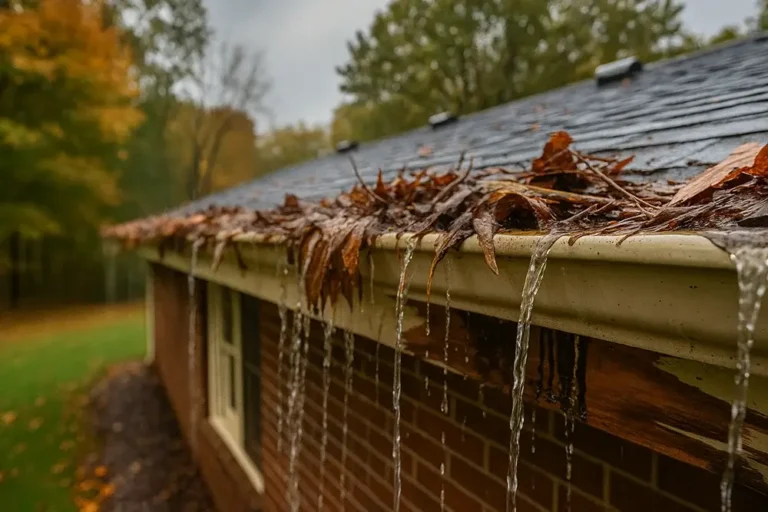
The Annual “Wet-Check”: After a heavy rain, inspect the areas where water splashes back onto the siding. These are the first areas to fail.
-
The Cleaning Protocol: Dirt and pollen are organic matter that can serve as a food source for mildew. Washing the house with a gentle detergent every two years can extend the life of a paint job by 25%.
-
Adjustment Triggers: If “chalking” is visible when you rub your hand against the siding, the binder is breaking down. This is the trigger to schedule a “wash and top-coat” before the paint begins to peel.
Measurement, Tracking, and Evaluation
How do we measure the success of an architectural coating?
-
Leading Indicators: Substrate moisture readings are below 12%; ambient humidity is below 70%; the surface has been cleaned to a “white-glove” standard.
-
Lagging Indicators: Zero “inter-coat delamination” after a full freeze-thaw cycle; color retention (measured by lack of fading) after 24 months of UV exposure.
-
Documentation: Keep a “Paint Log” that includes the brand, batch number, and specific formula of the tint. Paint changes slightly between batches; having the original formula is essential for future touch-ups.
Common Misconceptions and Oversimplifications
-
Myth: “Two coats of paint are better than a primer and a coat of paint.”
-
Reality: Paint is designed for color and UV resistance; primer is designed for adhesion and sealing. They are not interchangeable.
-
Myth: “Paint ‘seals’ a rot problem.”
-
Reality: Paint often accelerates rot by preventing the wood from drying.
-
Myth: “Power washing is enough preparation.”
-
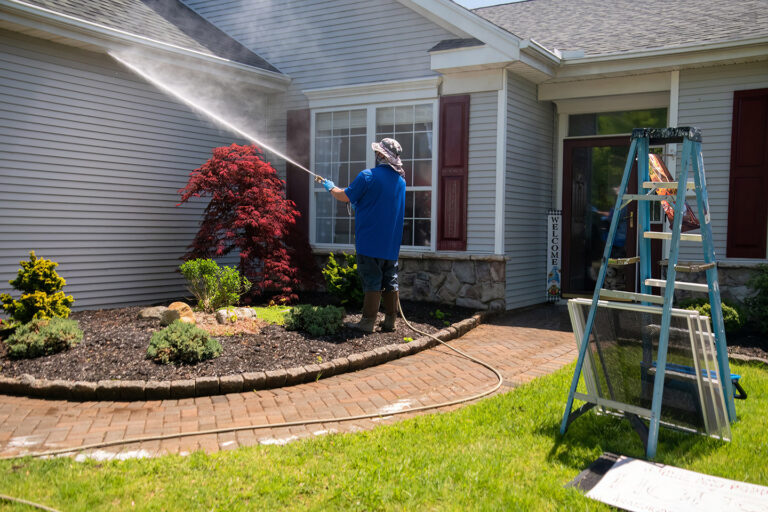
Reality: Power washing can inject water deep into wood fibers and masonry, necessitating a week of drying time before paint can be applied. It also fails to remove “gloss,” which requires manual sanding.
-
Myth: “You can paint over old oil paint with new latex easily.”
-
Reality: Latex will not bond to the high-gloss surface of old oil paint without a “transition” primer or extensive sanding.
Conclusion
The mitigation of common house painting mistakes is ultimately a matter of respecting the chemistry of the coating and the biology of the substrate. A house is a living, moving structure that is constantly exchanging moisture with its environment. To apply paint is to intervene in that exchange. By prioritizing surface preparation, substrate dryness, and chemical compatibility over speed and initial cost, a property owner can ensure that their paint job serves as a true protective shield. The hallmark of a professional finish is not how it looks on the day of completion, but how it stands against the relentless pressure of the elements a decade later.