How to Reduce Exterior Maintenance Cost: A Strategic Guide
The stewardship of a residential or commercial building’s exterior is an ongoing struggle against the fundamental laws of thermodynamics and biological decay. Sunlight, moisture, and temperature fluctuations act as relentless agents of erosion, slowly breaking down the chemical bonds of paints, the structural integrity of timber, and the sealants that preserve the building envelope. For most property owners, exterior upkeep is perceived as a reactive necessity—an expensive response to visible failure. However, a more sophisticated approach treats the building exterior as a managed asset, where strategic interventions and material selections serve to stabilize the “decay curve” of the structure.
Effective exterior management requires a departure from the “commodity” mindset of home repair. It is not merely about finding the cheapest painter or the most affordable gutter cleaner; it is about understanding the systemic interactions between a building’s orientation, local microclimate, and the lifecycle of its components. A decision made at the design or replacement phase—such as the gauge of a metal roof or the permeability of a wall coating—can dictate thousands of dollars in operational expenses over the subsequent decades.
The challenge in modern property management is the increasing complexity of materials and the narrowing margin for error in building science. As we move toward more airtight, high-efficiency structures, the traditional methods of “incidental drying” are no longer available. Moisture that enters a wall system today stays there longer, necessitating a higher standard of preventative care. This pillar article provides a forensic analysis of how to transition from reactive maintenance to a regime of strategic resilience, ultimately clarifying the pathways for long-term fiscal and structural stability.
Understanding “how to reduce exterior maintenance cost”
The pursuit of how to reduce exterior maintenance cost is frequently undermined by a focus on “first-cost” savings. Homeowners often equate cost reduction with the postponement of service or the selection of lower-tier materials. In reality, the most effective way to lower expenses is to increase the “interval of intervention.” If a standard paint job lasts seven years and a high-performance fluoropolymer coating lasts twenty-five, the latter—despite a higher initial price—represents a massive reduction in the annualized cost of the building.
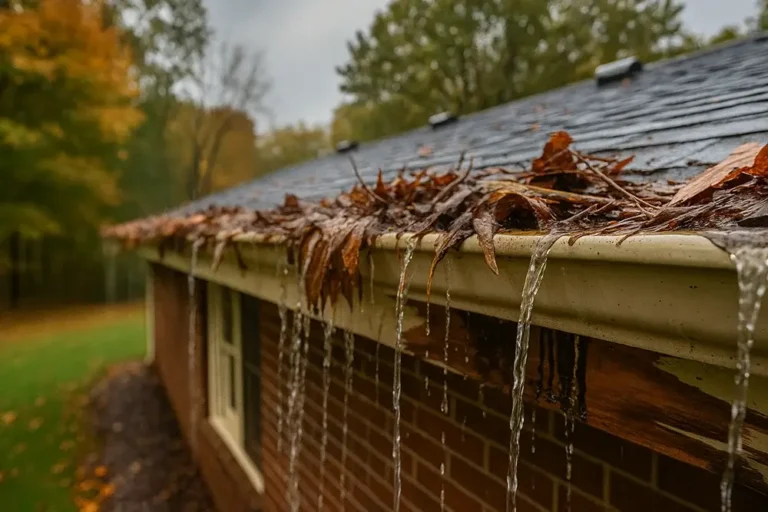
Multi-perspective analysis reveals that maintenance costs are actually composed of three distinct layers: direct labor, material replacement, and “consequential damage” (the cost of fixing things that broke because a primary system failed). For example, failing to clean gutters is a low-cost maintenance task, but the consequential damage of a flooded basement or rotted soffits is an order of magnitude higher. A professional plan prioritizes the “Critical Path” items—those that, if neglected, lead to the most expensive secondary failures.
Oversimplification risks often arise when owners treat all sides of a building as equal. A North-facing wall in a humid climate requires a fundamentally different maintenance strategy than a South-facing wall in an arid climate. Understanding these nuances—such as “UV-loading” versus “moisture-cycling”—allows for targeted spending. By focusing resources on the areas of highest stress, an owner can optimize their budget without sacrificing the integrity of the overall structure.
Deep Contextual Background: The Evolution of Upkeep
Historically, building exteriors relied on “sacrificial” layers. In the 18th and 19th centuries, lime washes and lead-based paints were expected to erode; they were cheap to apply and functioned by being the “first line of defense” that took the brunt of the weather. Because labor was relatively inexpensive and materials were localized (such as cedar or stone), the high frequency of maintenance was an accepted part of property ownership.
The mid-20th century introduced a shift toward “maintenance-free” promises with the advent of aluminum and vinyl siding. While these materials did eliminate the need for painting, they introduced new systemic risks, such as “blind rot” occurring behind panels that could not be easily inspected. The “low-cost” revolution of this era often traded long-term structural visibility for short-term aesthetic convenience.
In the current era, we are seeing a return to “performance materials” that utilize advanced chemistry to achieve longevity. We now have wood that is acetylated to prevent rot at the molecular level, and self-healing masonry coatings. The modern context for reducing costs is no longer about “doing the work yourself,” but about “selecting the work that doesn’t need to be done again.”
Conceptual Frameworks and Mental Models
To manage costs strategically, property owners should adopt several building-science mental models.
1. The Decay Curve and the “Rule of Ten”
This model suggests that every dollar spent on preventative maintenance (cleaning, sealing) saves ten dollars in corrective repairs, and a hundred dollars in total replacement. By intervening early in the decay curve, you prevent the accelerating slope of failure.
2. The Building Envelope as a Filter
Instead of seeing a wall as a solid barrier, view it as a filter that manages the flow of energy, water, and air. A “clogged” filter (e.g., a wall that cannot dry out) leads to systemic failure. Costs are reduced when the “filter” is allowed to function with minimal mechanical intervention.
3. The Lifecycle Costing (LCC) Framework
This shifts the focus from “Price” to “Cost-over-Time.”
Where $C$ is the initial cost, $M$ is the maintenance cost over the lifespan, and $R$ is the replacement cost. A high $C$ is often justified by a near-zero $M$.
Key Categories and Strategic Trade-offs
Lowering costs requires a material-by-material audit of the structure.
| Asset Category | Low-Maintenance Option | Trade-off | Long-term ROI |
| Siding | Fiber Cement / Engineered Wood | Heavy weight; requires specialized labor | High (30-50 year life) |
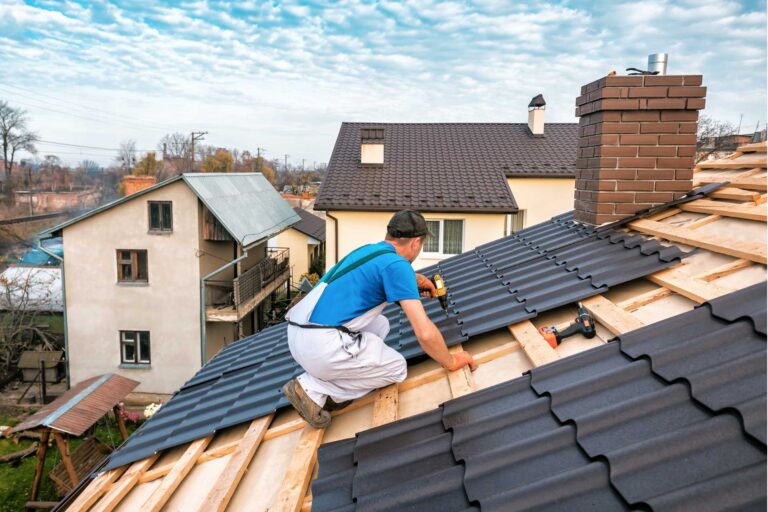
| Roofing | Standing Seam Metal | Higher initial cost; cell signal interference | Extreme (50+ year life) |
| Windows | Fiberglass Frames | Limited color options compared to wood | High (superior thermal stability) |
| Decking | Capped Polymer/PVC | High surface temperature in sun | High (eliminates staining/sanding) |
| Trim/Fascia | Cellular PVC | High thermal expansion/contraction | High (rot-proof) |
Realistic Decision Logic
The decision to invest in a low-maintenance material should be gated by the “Holding Period.” If you intend to own the property for less than five years, the premium for a metal roof may not be recovered in resale. However, if the holding period is fifteen years or longer, the “maintenance-free” options almost always represent the lower total cost.
Detailed Real-World Scenarios
Scenario A: The Coastal Exposure
A property located within 1,000 feet of salt spray faces accelerated oxidation and finish failure.
-
The Plan: Utilizing 316-grade stainless steel hardware and Kynar-coated aluminum trim.
-
Constraint: Initial hardware costs are 300% higher.
-
Outcome: Prevention of “bleeding” rust stains and finish peeling that would otherwise require biennial repainting.
Scenario B: The Mature Wooded Lot
A house shaded by large oaks with high organic debris and low sun exposure.
-
The Plan: Installing oversized 6-inch gutters with stainless steel micro-mesh guards and switching to inorganic siding (Fiber Cement).
-
Failure Mode: Standard gutters would clog monthly, leading to basement dampness and wood rot on the fascia.
-
Outcome: Reduction of “ladder-time” and the elimination of wood-destroying fungi risks.
Planning, Cost, and Resource Dynamics
Reducing costs is as much about “timing” as it is about “technology.”
Maintenance Variability Table
| Task | Frequency | Cost Range | Avoided Failure |
| Gutter Cleaning | Bi-annual | $150–$400 | Foundation erosion; Fascia rot |
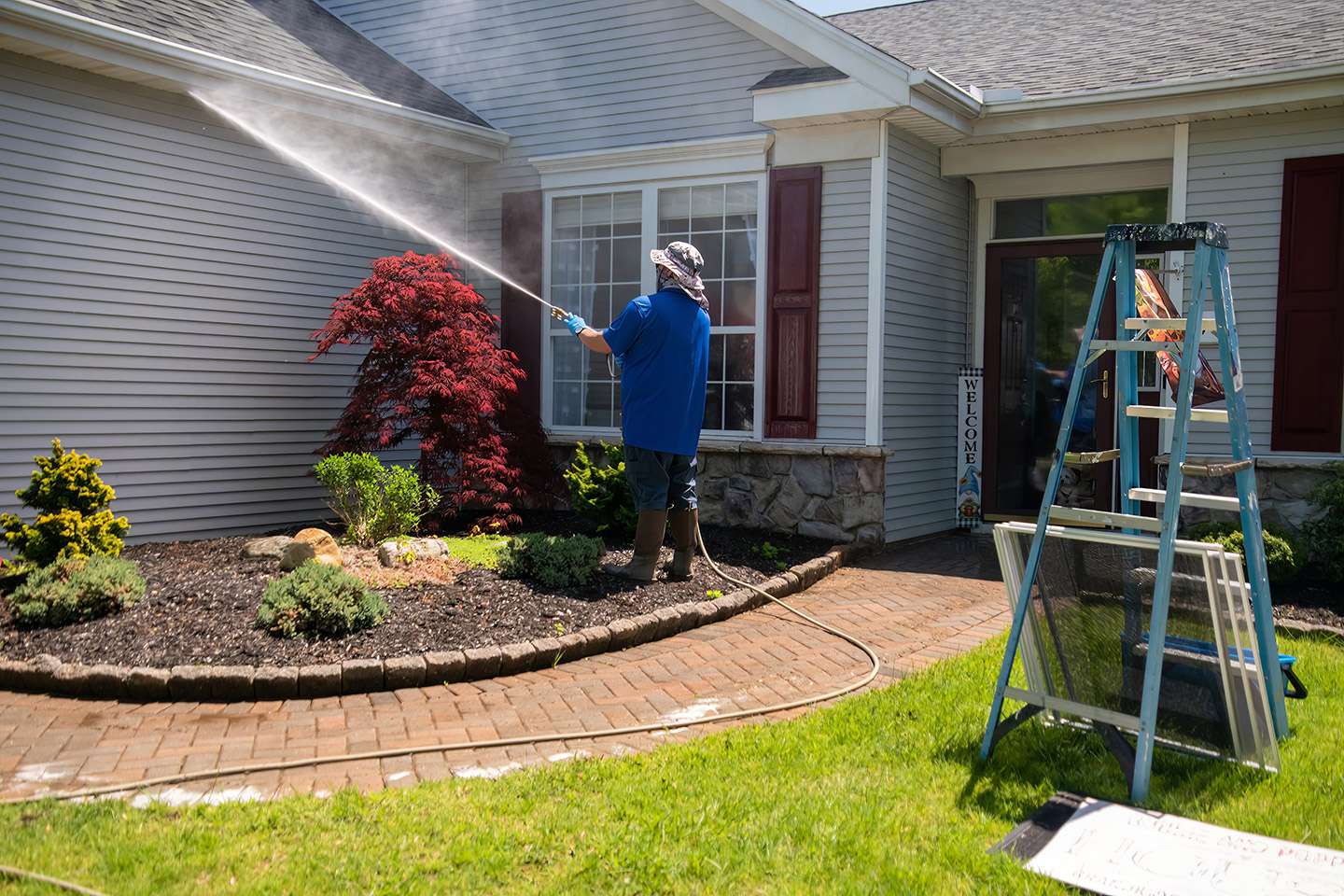
| Power Wash/Soft Wash | Every 2–3 yrs | $300–$800 | Algae/Mold colonization |
| Sealant Inspection | Annual | $0 (DIY) – $200 | Interstitial wall rot |
| Paint Touch-up | Every 2 yrs | $200–$500 | Full siding replacement |
Opportunity Cost: The resources spent on aesthetic upgrades (like a new front door) are often better “invested” in invisible upgrades (like high-quality flashing) that prevent future capital-heavy repairs.
Tools, Strategies, and Support Systems
A robust maintenance plan is supported by an “Infrastructure of Care.”
-
Drones for Inspection: High-resolution aerial photography allows for roof and chimney inspections without the cost and risk of scaffolding.
-
Moisture Meters: Pinless meters can detect “hidden” leaks behind siding before they manifest as rot.
-
Horticultural Management: Trimming trees 10 feet back from the roofline reduces “scuffing” damage and moss growth.
-
Permeable Hardscapes: Using gravel or permeable pavers reduces the hydrostatic pressure on retaining walls and foundations.
-
Astronomical Timers for Lighting: Reducing the “on-time” of exterior lights extends the life of fixtures and reduces heat-related gasket failure.
-
Siliconized Sealants: Moving away from cheap latex caulks to high-movement silicones that won’t crack during seasonal expansion.
Risk Landscape and Failure Modes
The primary risk in “low maintenance” strategies is Complacency.
-
The “Zero-Maintenance” Trap: Thinking a material needs no care. Even vinyl siding needs to be washed to prevent the “chalking” of the finish; even metal roofs need the “boots” around plumbing vents replaced every 12 years.
-
Compounding Failures: A small leak in a window seal leads to damp insulation, which leads to mold, which leads to interior air quality issues. The cost scales exponentially.
-
The “Unvented” Assembly: Installing high-performance siding but failing to provide a drainage plane. This traps water and causes the “low-maintenance” siding to fail from the inside out.
Governance, Maintenance, and Long-Term Adaptation
To truly manage costs, one must implement a Governance Protocol. This is a schedule that survives the changing of owners or property managers.
The Layered Checklist:
-
Level 1 (The Walk-Around): Every spring and fall. Look for “daylight” where it shouldn’t be, peeling paint, or signs of pest entry.
-
Level 2 (The Mechanical Audit): Every 5 years. Check the integrity of the roof-to-wall flashing and the condition of the crawlspace/basement vapor barrier.
-
Level 3 (The Decade Renewal): Every 10 years. Proactively replace high-wear items like weatherstripping and exterior door sweeps before they fail.
Measurement, Tracking, and Evaluation
How do you prove that you have successfully reduced costs?
-
Leading Indicator: The “Moisture Stability Score”—consistently dry readings in high-risk areas (like under windows).
-
Lagging Indicator: The “Maintenance-to-Value Ratio”—spending less than 1% of the property’s value on annual upkeep while maintaining or increasing the condition score.
-
Documentation: Maintaining a “Home Binder” with the specific paint codes, shingle batches, and contractor warranties. This prevents “mismatching” repairs that have to be redone for aesthetic reasons.
Common Misconceptions and Oversimplifications
-
Myth: “Brick is maintenance-free.”
-
Correction: Brick is durable, but the mortar is sacrificial. “Tuck-pointing” is a necessary and expensive 30-year maintenance task.
-
Myth: “Pressure washing is the best way to clean.”
-
Correction: High pressure can force water behind siding and into wall cavities. “Soft washing” with chemical cleaners is often safer and more effective.
-
Myth: “I should wait until the paint peels to repaint.”
-
Correction: Once paint peels, the wood is already absorbing moisture. The goal is to “top-coat” before the film breaks.
-
Myth: “All caulks are the same.”
-
Correction: Using interior caulk outside is a guaranteed failure within one season.
Ethical and Contextual Considerations
The pursuit of low maintenance often intersects with environmental stewardship. Using long-lived materials (like slate or copper) reduces the “embodied energy” of a building by preventing the need for frequent manufacturing and disposal of shorter-lived products. Furthermore, choosing materials that don’t require chemical staining or toxic biocides protects the local groundwater and ecology.
Conclusion
The secret to how to reduce exterior maintenance cost lies in the transition from a “repair” culture to a “resilience” culture. It is an admission that while we cannot stop the elements, we can out-engineer them. By prioritizing the “dryness” of the structure, selecting materials based on their 30-year performance, and maintaining a rigorous schedule of “low-intensity” inspections, the financial burden of a property can be significantly lightened. The most cost-effective exterior is not the one that was cheapest to build, but the one that was designed to be left alone.