How to Manage Siding Rot: A Definitive Guide to Building Science
The degradation of a building’s exterior cladding is rarely an isolated event. It is almost always the symptomatic expression of a systemic failure in moisture management. When organic building materials—such as wood or wood-composite sidings—are subjected to prolonged saturation without the opportunity for evaporative drying, they become a host for fungal colonization. This biological process, commonly referred to as rot, does not merely compromise the aesthetic finish of the home; it threatens the structural integrity of the underlying sheathing and framing.
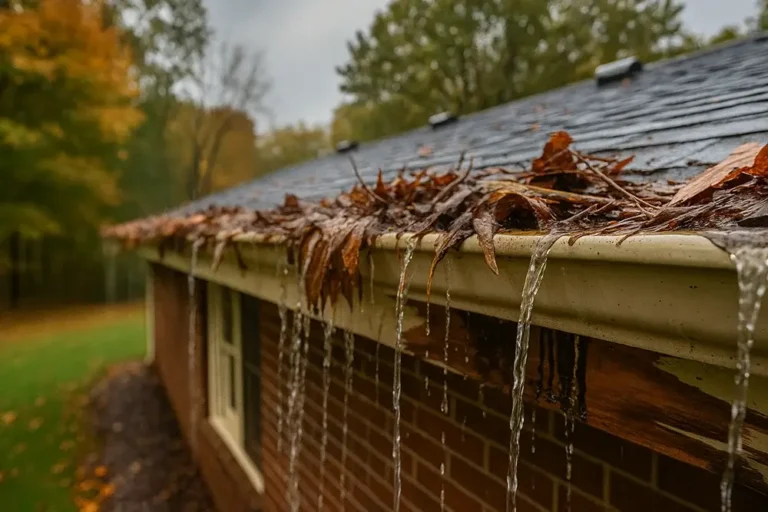
Addressing this issue requires more than a cosmetic patch or a coat of paint. It demands an understanding of building science, specifically the movement of liquid water and water vapor through the wall assembly. Effective remediation involves a forensic investigation into why the water is there in the first place. Whether the culprit is a failed flashing detail at a window head, an inadequate “kick-out” flashing at a roof-to-wall intersection, or simply the lack of a functional rainscreen gap, the solution must address the root cause to be permanent.
In the contemporary residential landscape, the complexity of these repairs has increased as homes have become more airtight. Historically, drafty houses allowed for significant “incidental drying” through the wall cavity. Modern high-efficiency homes, while excellent for energy conservation, are much less forgiving. If moisture enters the wall system today, it often remains trapped behind a vapor barrier, leading to rapid “blind” decay that can go unnoticed until the damage is extensive. Consequently, a professional approach to exterior maintenance involves a rigorous protocol for detection, diagnostic analysis, and structural correction.
Understanding “how to manage siding rot”
To effectively grasp how to manage siding rot, one must first dispel the notion that rot is a “disease” that can be cured by a topical chemical application. Rot is a biological transition. Specifically, it is the digestion of cellulose and lignin by fungi. These fungi require four specific conditions to thrive: oxygen, a favorable temperature range, a food source (the siding), and—most crucially—moisture content exceeding 20% to 28%. Since we cannot easily remove oxygen or control the outdoor temperature, and the siding itself is the food source, managing rot is exclusively a matter of moisture control.
A common misunderstanding in the management process is the reliance on wood fillers and epoxies. While these materials have a role in cosmetic restoration for historic structures, they do not address the hydraulic pressure or capillary action that introduced the moisture. If a homeowner applies epoxy to a rotted window sill without correcting the failed drip edge above it, the moisture will simply move further into the wood, causing decay to continue behind the repair. True management involves a “subtractive” phase—removing all compromised material—followed by a “corrective” phase that re-engineers the water management details.
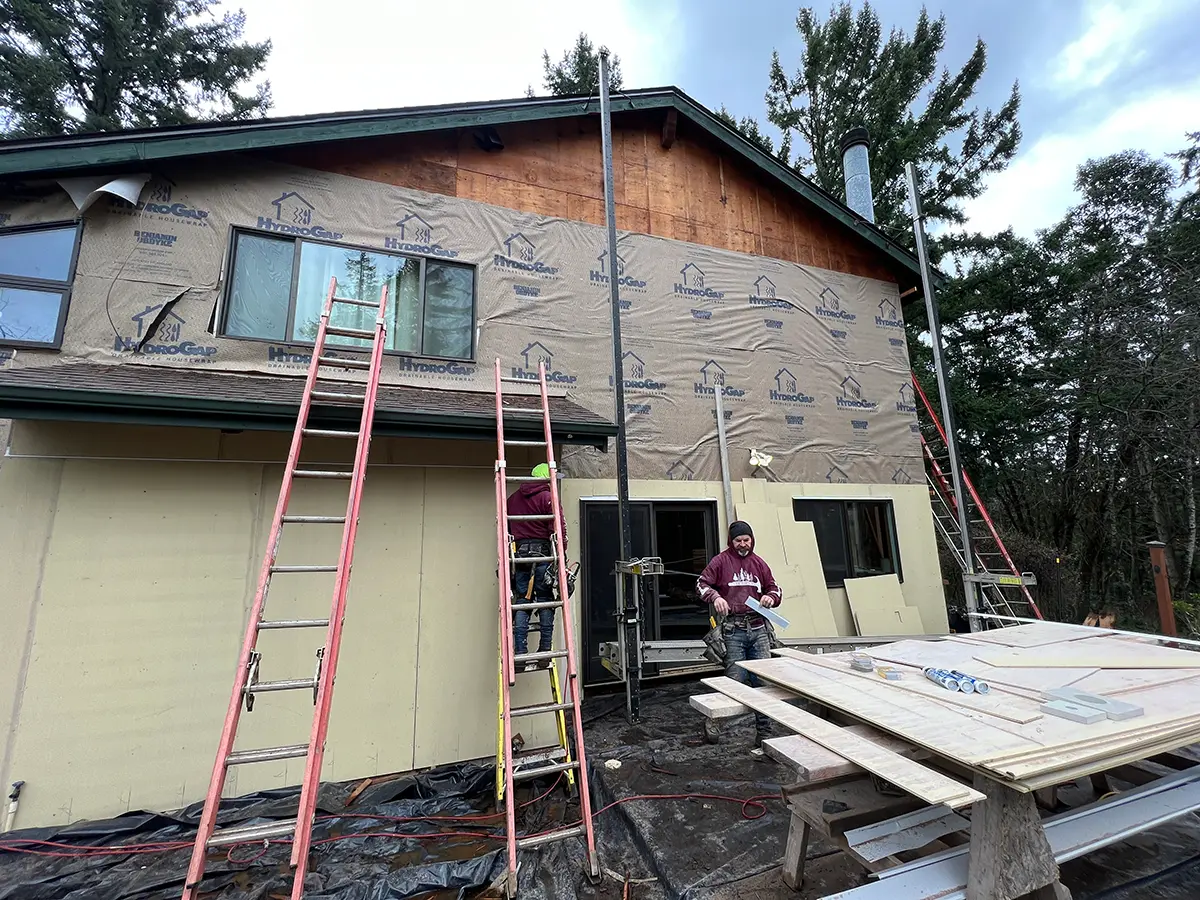
There is also a significant risk of oversimplification regarding “rot-resistant” materials. While fiber cement, vinyl, and metal are immune to fungal decay, they can still “manage” rot in a way that is detrimental to the home. If these materials are installed over wet sheathing or without a proper weather-resistive barrier (WRB), they act as a “shroud” that hides structural rot occurring in the house’s skeletal frame. Therefore, the goal of management is not just to fix the siding, but to ensure the entire wall assembly can remain dry.
Deep Contextual Background: Historical Evolution
The methodology for protecting homes has shifted from “mass wall” assemblies to “screened” assemblies. In the 18th and 19th centuries, heavy timber and thick masonry were used. Wood siding was often sacrificial; it was expected to weather and be replaced. However, because these houses were uninsulated, the heat loss from the interior kept the siding warm and dry.
The introduction of wall insulation in the 20th century fundamentally changed the physics of the wall. By keeping heat inside the home, the exterior cladding became colder. This colder temperature increased the likelihood of condensation forming on the back of the siding. In the 1980s and 90s, the emergence of “engineered” wood products—essentially wood fibers glued together—created a new crisis. These products were highly susceptible to moisture because the manufacturing process destroyed the natural cellular structure that helps solid wood resist water.
Today, we have entered the era of the “High-Performance Rainscreen.” This is a systemic approach where the siding is held away from the wall by a 1/4″ to 3/4″ gap. This gap allows for both drainage (gravity-driven removal of liquid water) and back-ventilation (air-driven removal of water vapor). Understanding this evolution is critical for anyone learning how to manage siding rot, as modern repairs often require retrofitting these drainage features into older, failing wall systems.
Conceptual Frameworks and Mental Models
To analyze a failing exterior, building scientists utilize specific frameworks that help categorize the source of the moisture.
1. The 4-Ds of Water Management
This is the foundational model for managing any exterior surface.
-
Deflection: Using wide overhangs and gutters to keep water off the siding.
-
Drainage: Providing a path (like a rainscreen) for water that gets behind the siding to escape.
-
Drying: Ensuring airflow can reach the back of the material to facilitate evaporation.
-
Durable Materials: Choosing the right substrate for the specific exposure.
2. Capillary Action and Surface Tension
This framework explains how water “defies gravity.” Water can be “sucked” upward through tight gaps between overlapping boards or around window trim. When managing rot, one must look for “capillary breaks”—intentional gaps that are too wide for water to bridge through surface tension.
3. The Vapor Drive Dialectic
In the summer, sun-baked siding can drive moisture inward through a wall (inward vapor drive). In the winter, warm interior air can drive moisture outward. Management strategies must ensure that the wall is “vapor open” in at least one direction, allowing the assembly to breathe based on the local climate.
Key Categories and Material Vulnerabilities
Different materials fail in distinct ways, necessitating specific management responses.
| Material Type | Primary Failure Mode | Root Cause | Management Strategy |
| Solid Cedar/Redwood | Surface checks and butt-joint rot | Lack of end-grain sealing | Excise rot; treat with borates; seal all edges. |
| LP/Hardboard (Engineered) | Edge swelling and “mushrooming” | Moisture absorption at factory edges | Full replacement; cannot be effectively patched. |
| T1-11 Plywood | Delamination and bottom-edge rot | Direct ground contact/splashing | Cut back 6″ from grade; add a metal Z-flashing. |
| Fiber Cement | Cracking/Spalling (not rot) | Blind-nailing or lack of gaps | Maintain 1/8″ gap at trim; use high-quality caulk. |
| Stucco/EIFS | Interstitial rot in sheathing | Lack of drainage plane | Forensic removal to inspect sheathing; add rainscreen. |
Decision Logic for Repair vs. Replacement
When determining the path forward, a “30% Rule” is often applied. If more than 30% of a wall section shows signs of fungal decay or structural swelling, localized patching is no longer cost-effective. The labor required to “surgicalize” small repairs often exceeds the cost of a full-scale replacement that includes the modernization of the underlying drainage plane.
Detailed Real-World Scenarios
Scenario A: The “Kick-Out” Omission
A common failure occurs where a sloped roof meets a vertical wall. Without a “kick-out” flashing, water follows the roof edge and pours directly behind the siding.
-
The Damage: Rotting of the corner post and internal wall studs, often hidden by the siding.
-
The Management: Removal of several siding courses, installation of a 6″ high kick-out diverter, and replacement of the water-damaged sheathing.
Scenario B: Ground-Contact Saturation
Siding installed within 2 inches of the soil or a mulch bed.
-
The Damage: Chronic “wicking” of groundwater into the bottom courses.
-
The Management: Trimming the siding back to a minimum 6-inch clearance from grade and installing a “drip cap” or a sacrificial skirt board that can be easily replaced.
Planning, Cost, and Resource Dynamics
The economics of rot management are heavily weighted toward labor and “discovery” costs. Unlike a new installation, a repair involves dismantling existing systems, which frequently reveals hidden structural issues.
| Budget Item | Percentage of Cost | Variability Factors |
| Demolition/Discovery | 20% | Difficulty of removing old layers; hazardous material testing. |
| Structural Remediation | 30–50% | Extent of rot in the studs, sill plates, and rim joist. |
| Waterproofing/WRB | 10% | Choice of high-perm wrap vs. liquid-applied membrane. |
| Siding Installation | 20% | Complexity of matching existing patterns/profiles. |
Opportunity Cost: Deferring rot management for a single season can result in the decay moving from the siding into the “sill plate”—the horizontal timber that connects the house to the foundation. Replacing a sill plate can cost five times as much as a siding repair, as it requires jacking up parts of the house structure.
Tools, Strategies, and Support Systems
A professional-grade kit for managing rot includes both diagnostic and corrective tools:
-
Moisture Meters: Specifically pin-type meters that can reach through the siding into the sheathing.
-
Oscillating Multi-tools: Essential for making “surgical” cuts in siding without damaging the underlying house wrap.
-
Borate Rods/Sprays: A mineral-based fungicide that is toxic to rot but safe for humans; it diffuses into damp wood to stop existing fungal growth.
-
Butyl Flashing Tapes: Superior to older rubberized asphalt tapes for sealing window perimeters and transitions.
-
Stainless Steel Fasteners: Standard galvanized nails can corrode when in constant contact with the moisture levels associated with rot, leading to “nail sickness.”
-
Z-Flashing: A critical metal profile used at horizontal transitions (e.g., above windows or between different siding types) to direct water outward.
Risk Landscape: Compounding and Hidden Damage
The primary risk in rot management is the “Iceberg Effect.” What appears to be a small soft spot in a piece of cedar siding is often the tip of a column of rot that has traveled down the wall cavity.
-
The Taxonomy of Compounding Risks:
-
Bio-Contamination: Rotting wood often attracts carpenter ants or termites, which use the softened wood as a nesting site.
-
Indoor Air Quality: Fungal decay in the wall cavity can release spores that migrate into the living space, potentially affecting the health of occupants.
-
Electrical Hazard: If rot occurs near an exterior outlet or a light fixture, the moisture can track along the wiring, causing shorts or fire risks.
-
Governance, Maintenance, and Long-Term Adaptation
Post-repair governance is essential to prevent a recurrence of the decay. A “Passive Monitoring” strategy is the most effective.
-
The 2-Year Review Cycle: Inspect all “penetrations” (vents, spigots, lights). Sealant joints usually fail within 3–5 years and require mechanical removal and replacement.
-
Vegetation Management: Ensure that bushes and trees are trimmed back at least 18 inches from the siding to allow for airflow.
-
Adjustment Triggers: If you see “tannin staining” (brown streaks) on wood siding or “efflorescence” (white powder) on fiber cement, it is a trigger that water is saturated behind the material and a drainage issue exists.
Measurement, Tracking, and Evaluation
How do you evaluate if you have successfully managed the rot?
-
Qualitative Signal: During a heavy rain event, observe the “drip pattern.” Water should be falling cleanly off the drip caps and away from the wall.
-
Quantitative Signal: Using a moisture meter at the same three “check-points” annually (after a rain). Readings should consistently return to below 15% within 48 hours.
-
Documentation: A photographic log of the sheathing before the new siding was installed. This is critical for future home appraisals to prove that the structural rot was fully remediated rather than just covered up.
Common Misconceptions and Oversimplifications
-
Myth: “Vinyl siding is waterproof.”
-
Correction: Vinyl is a “water-shedding” material, not a “waterproof” one. It is designed to leak at the joints; the house wrap behind it does the actual waterproofing.
-
Myth: “Caulking every gap is the best way to stop rot.”
-
Correction: Over-caulking is a major cause of rot. Gaps at the bottom of window trim and at the “laps” of siding should often be left open to allow moisture to escape.
-
Myth: “Pressure-treated wood cannot rot.”
-
Correction: Pressure-treated wood can and will rot if the “cut ends” are not treated with a field-applied preservative or if it is subjected to constant saturation.
Conclusion
Successfully navigating how to manage siding rot is an exercise in intellectual honesty regarding the limitations of materials and the power of building science. It requires a shift from viewing the home as a static object to seeing it as a dynamic system that must manage the constant flow of energy and moisture. A successful repair is not one that merely looks new, but one that incorporates the redundant drainage and drying features necessary to protect the structure for the next generation. By prioritizing the invisible details—the flashing, the rainscreen, and the vapor drive—the property owner ensures that the house remains a safe, dry, and durable sanctuary.