Top Outdoor Lighting Plans: A Strategic Guide to Landscape Illumination
The orchestration of light in an outdoor environment is a sophisticated discipline that sits at the intersection of architectural necessity, nocturnal ecology, and human psychology. While often reduced to the mere placement of fixtures along a path or the mounting of a floodlight above a garage, true exterior illumination is a layering process that requires a deep understanding of light temperature, beam spread, and the interplay between shadow and highlight. A professional-grade approach does not simply aim to “defeat the darkness” but rather to selectively reveal the landscape while respecting the inherent rhythms of the natural world.
In recent years, the transition from incandescent and halogen sources to Solid State Lighting (SSL)—specifically Light Emitting Diodes (LED)—has revolutionized the field. This shift has not only reduced energy consumption but has also allowed for a level of miniaturization and beam control previously reserved for theatrical stages. However, this technological leap has also introduced new complexities. Issues such as blue-light pollution, glare management, and the varying Color Rendering Index (CRI) of different chips mean that a modern lighting strategy requires more technical vetting than its predecessors.
Ultimately, the goal of a definitive lighting asset is to extend the utility of the home’s exterior while reinforcing its security and aesthetic character. This involves a rigorous analysis of the “visual journey” from the curb to the doorstep, as well as the “internal views” from within the house looking out. By viewing the landscape as a series of planes—vertical, horizontal, and transitional—the designer can create a cohesive experience that feels integrated rather than additive.
Understanding “top outdoor lighting plans”
The phrase “top outdoor lighting plans” is frequently misunderstood as a shopping list of expensive fixtures. In reality, a “top” plan is a strategic document that balances lumen output with visual comfort. The most common error in amateur lighting is over-illumination, which creates a “gas station” effect—bright, sterile, and devoid of depth. A sophisticated plan recognizes that the eye is drawn to the brightest point in the field of vision; therefore, light must be used with surgical precision to guide the eye toward architectural focal points or safe passage.
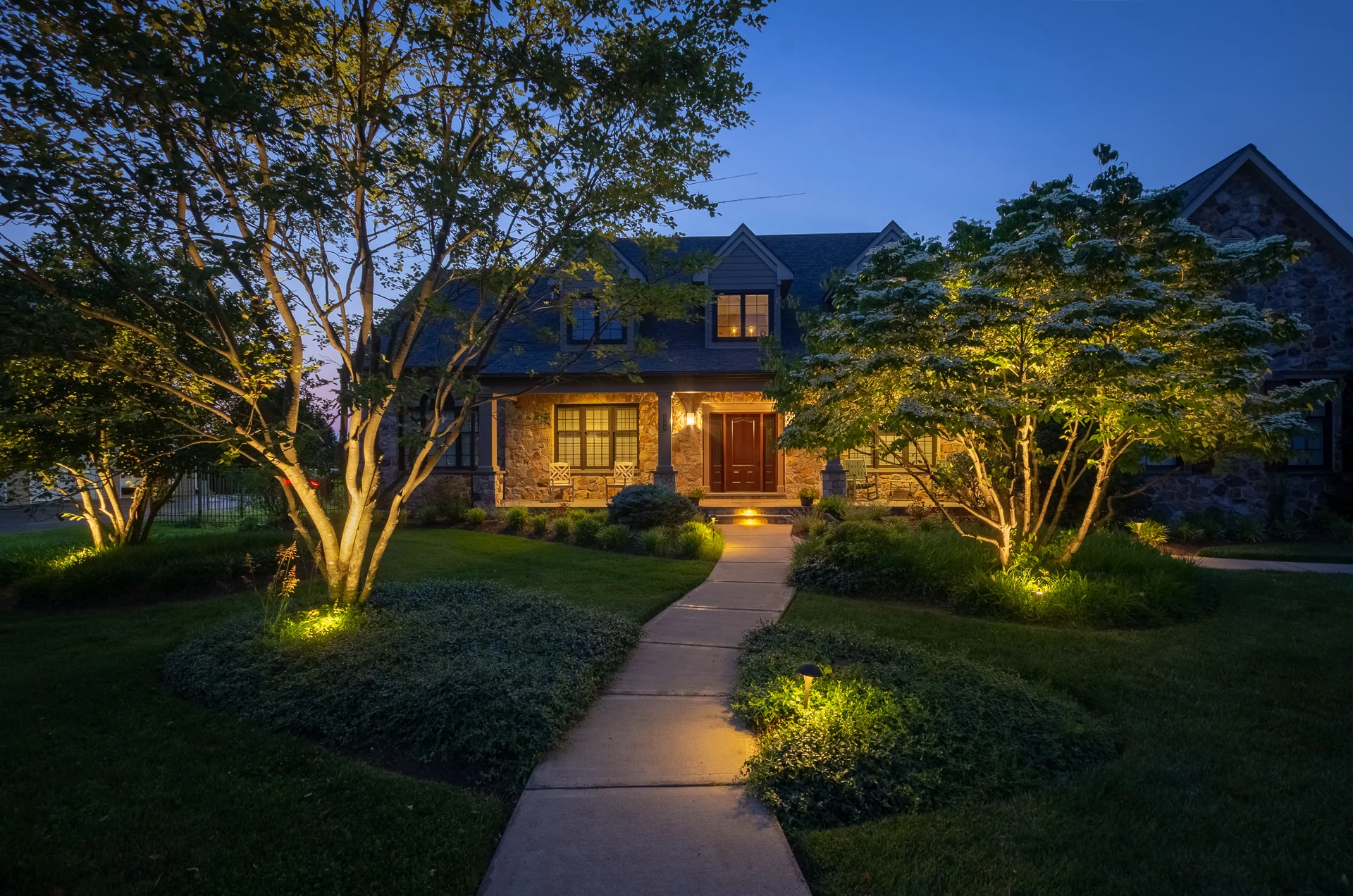
A professional plan is built upon the concept of “layered lighting.” This involves three distinct tiers: Task (for safety and function), Accent (for drama and form), and Ambient (for overall atmosphere). When people discuss top outdoor lighting plans, they are referring to the seamless integration of these layers so that no single source dominates the scene. Furthermore, a top-tier plan accounts for the “off-state” aesthetics—ensuring that the hardware itself is either discreetly hidden within the landscape or designed with such quality that it serves as an architectural asset during daylight hours.
Oversimplification in this space often leads to the neglect of “light trespass”—the spilling of light onto a neighbor’s property or into the night sky. A definitive plan prioritizes the use of shielded fixtures and specific optics to ensure that the light goes only where it is intended. This transition from “blob” lighting to “directional” lighting is what distinguishes a standard installation from a master-planned environment.
Deep Contextual Background: The Evolution of Nocturnal Space
Historically, outdoor lighting was a matter of public safety rather than private luxury. From the tallow candles of the 17th century to the gaslight eras of the 19th, light was a scarce resource. The primary evolution occurred with the widespread adoption of the AC electrical grid, which allowed for the first “landscape lighting” as we recognize it today—primarily using high-voltage incandescent lamps. These systems were dangerous, expensive to operate, and required heavy-gauge conduits buried deep in the earth.
The 1960s brought the introduction of low-voltage (12V) systems, which utilized transformers to step down current. This was a democratization of the craft, allowing homeowners to safely experiment with light. However, the true “renaissance” occurred with the maturation of LED technology in the early 21st century. We have moved from a “replace the bulb” mentality to an “integrated engine” mentality, where the thermal management of the fixture is as important as the light it produces. Modern plans now incorporate color-tuning, zoning, and astronomical timers that adjust to the shifting seasons.
Conceptual Frameworks and Mental Models
To navigate the complexity of exterior design, professionals use specific mental models to categorize light’s behavior.
1. The Theory of Visual Hierarchy
This model suggests that a landscape should be read like a story. The “hero” (a specimen tree or a stone wall) receives the most intensity, the “supporting cast” (pathways or low shrubs) receives mid-range light, and the “background” remains in deep shadow or very low-level wash. Without this hierarchy, the landscape becomes a flat, uninteresting plane.
2. The Color Temperature Spectrum (Kelvin)
The psychological impact of light is dictated by its temperature.
-
2700K (Warm White): Mimics the glow of a campfire or incandescent bulb; ideal for residential relaxation.
-
3000K (Soft White): Slightly crisper; often used to highlight the green of foliage or the gray of modern masonry.
-
4000K+ (Cool White): Typically reserved for high-security commercial applications; often feels “surgical” in a residential setting.
3. The Rainscreen and Corrosion Model
Light fixtures are the only electronic devices expected to perform while buried in wet soil or exposed to salt spray. This model evaluates fixtures based on their IP (Ingress Protection) rating and their metallurgical composition. A “top” plan rejects aluminum in favor of brass or copper for any component in contact with the earth, as these metals develop a protective patina rather than corroding.
Key Categories and Material Trade-offs
A definitive plan selects fixtures based on the physics of the desired effect.
| Technique | Primary Objective | Typical Fixture | Trade-off |
| Uplighting | Highlighting structure/trees | Well lights / Bullet lights | Can cause glare if not shielded; affects sky glow. |
| Moonlighting | Natural filtered wash | Tree-mounted downlights | Requires high-climbing labor; maintenance is difficult. |
| Path Lighting | Safe navigation | Bollards / Area lights | High risk of physical damage (mowers/pets). |
| Grazing | Highlighting texture (stone) | Linear wall washers | Requires very precise fixture setback. |
| Silhouetting | Dramatic shape definition | Floodlights behind object | Requires a solid backdrop; loses detail on the object. |
Decision Logic for Implementation
The selection process should follow a “Site-First” logic:
-
Vertical Surfaces: Light the walls and trees first to define the boundaries of the space.
-
Transition Zones: Light stairs and elevation changes for safety.
-
Interior Voids: Fill in the middle ground with low-level ambient light to prevent “dark holes” in the visual field.
Detailed Real-World Scenarios
Scenario A: The Dense Urban Courtyard
A small space with high walls and limited vegetation.
-
The Plan: Focus on “verticality.” Grazing the brick walls to emphasize texture and using mirror-well lights to bounce light off the undersides of tree canopies.
-
Constraint: Light trespass into neighboring windows is the primary failure mode.
-
Solution: Using honeycomb louvers on all fixtures to cut the side-glare.
Scenario B: The Coastal Estate
An environment defined by high salt-mist and wind.
-
The Plan: All-brass or composite fixtures with marine-grade coatings.
-
Risk: Galvanic corrosion between different metals (e.g., stainless steel screws in an aluminum body).
-
Outcome: A system that patinas beautifully into the landscape without structural failure of the housing.
Planning, Cost, and Resource Dynamics
The economics of outdoor lighting involve a high up-front capital expenditure (CapEx) balanced against low operating expenditure (OpEx).
Typical Cost Ranges (Professional Installation)
-
Standard LED Fixture (Brass): $250 – $450 (includes labor/wiring)
-
Transformer (300W-600W): $500 – $1,200
-
Smart Controller: $300 – $800
| Budget Tier | Scope | Expected Longevity |
| Standard | 10-15 fixtures; basic timer | 5–10 Years |
| Premium | 25-50 fixtures; zoning; brass | 15–25 Years |
| Legacy/Pillar | Integrated automation; custom optics | Lifetime (with maintenance) |
Opportunity Cost: Choosing “big-box” plastic solar lights may save thousands initially, but the lack of intensity and the rapid failure of the internal batteries mean the cost-per-night is actually higher than a professionally installed low-voltage system over a 5-year period.
Tools, Strategies, and Support Systems
A professional lighting environment is supported by an “invisible” infrastructure:
-
Voltage Drop Calculators: To ensure that the fixture at the end of a 200-foot wire run receives the same 12V as the first fixture.
-
Astronomical Timers: Devices that calculate sunset/sunrise based on GPS coordinates, removing the need for photocells which can be triggered by car headlights.
-
Heat Sinks: Critical for LED longevity; a chip that runs too hot will experience “lumen depreciation” (dimming) within two years.
-
Direct-Burial Wire (12/2 or 10/2): Heavy-gauge, UV-rated cabling that resists moisture and rodent damage.
-
Surge Protection: Specifically at the transformer, to protect sensitive LED drivers from lightning strikes.
Risk Landscape and Failure Modes
The “taxonomy of failure” in top outdoor lighting plans usually begins beneath the surface.
-
Compounding Risk: A nick in the wire during landscaping leads to “wicking,” where moisture travels inside the wire jacket into the fixture, causing internal corrosion.
-
Thermal Shock: Using non-tempered glass on an uplight; cold rain hitting a warm lens can cause it to shatter, exposing the electronics.
-
Biological Interference: Spiders nesting in the “shroud” of a bullet light, blocking the beam; or tree growth swallowing a fixture that was mounted too tightly to a branch.
Governance, Maintenance, and Long-Term Adaptation
A lighting system is a living entity that requires a regular review cycle.
-
The Semi-Annual Audit:
-
Clean all lenses with a mild citric acid to remove hard-water calcium deposits.
-
Re-aim fixtures that have been bumped by gardeners.
-
Prune vegetation that has overgrown the beam path.
-
-
The 5-Year Overhaul: Replacing waterproof wire connectors (which can degrade) and updating the firmware on any smart-zoning controllers.
Measurement, Tracking, and Evaluation
How is a plan’s success measured?
-
Qualitative Signal: “The Shadow Test”—stand in the middle of the yard; if you can see the source of the light (the “hot spot”), the plan has failed. You should see the effect of the light, not the light itself.
-
Quantitative Signal: Using a light meter to ensure that pathway illumination reaches a minimum of 1.0 foot-candle for safety, while accent lighting reaches a 3:1 ratio over ambient levels.
-
Documentation: A “site map” showing exactly where the wires are buried is the most valuable document for any future property improvements.
Common Misconceptions and Oversimplifications
-
Myth: “Solar lighting is a viable replacement for wired lighting.”
-
Correction: Solar is currently an auxiliary solution. It lacks the wattage for effective uplighting and the reliability for safety-critical tasks.
-
-
Myth: “More LEDs mean more light.”
-
Correction: High-quality LEDs are about efficiency and CRI. A 5W high-CRI chip will produce a more beautiful and useful light than a 20W cheap floodlight.
-
Myth: “You can just use indoor smart bulbs outside.”
-
Correction: Indoor bulbs are not rated for the humidity and thermal fluctuations of an outdoor enclosure, leading to rapid driver failure.
Ethical and Environmental Considerations
A responsible plan must address the “Dark Sky” initiative.
-
Ecological Impact: Artificial light at night (ALAN) disrupts the migratory patterns of birds and the reproductive cycles of insects.
-
The Solution: Use fixtures with a “U-Rating” of zero (meaning no light is emitted upward) and utilize motion sensors so that full intensity is only used when human presence is detected.
Conclusion
The execution of top outdoor lighting plans is an exercise in restraint and technical rigor. By prioritizing the quality of the fixture, the precision of the beam, and the long-term integrity of the wiring, a designer can transform a dark property into a sanctuary of light. A successful plan is one that feels inevitable—as if the light is an inherent property of the landscape itself rather than something forced upon it. Top outdoor lighting plans, As we move further into the era of the “smart home,” the integration of these systems will only deepen, but the fundamental principles of light, shadow, and visual comfort will remain the bedrock of the craft.