Best Roofing Materials for Insulation: A Technical Guide to Thermal Performance
The thermal performance of a building envelope is dictated largely by its upper termination. While internal wall insulation and high-efficiency windows often dominate conversations regarding energy conservation, the roof remains the primary site of heat exchange. In the summer, radiant solar energy penetrates roofing assemblies, driving up cooling loads; in the winter, convective heat loss through the attic can account for a significant percentage of a structure’s total energy waste. Achieving a high-performance home, therefore, requires looking beyond the R-value of fiberglass batts in the attic and scrutinizing the thermal properties of the cladding itself.
The selection of a roofing system is an exercise in managing three distinct modes of heat transfer: conduction, convection, and radiation. Traditional materials were often chosen for water shedding and durability alone, but modern building science demands that we view the roof as an active participant in the thermal barrier. This transition from “passive shelter” to “thermal regulator” has led to the development of sophisticated composites and reflective coatings designed to mitigate the heat island effect and lower the carbon footprint of individual residences.
Understanding the nuance of thermal resistance in roofing requires a departure from superficial product rankings. It involves an appreciation for how mass, reflectivity, and emissivity interact within a specific geographic context. A material that provides excellent cool-roof benefits in the arid Southwest might be secondary to a material that prioritizes thermal mass in the frigid Northeast. This article provides a comprehensive forensic analysis of the market to identify the most effective strategies for long-term climate control.
Understanding “best roofing materials for insulation”
A common misunderstanding in the residential sector is the belief that roofing materials themselves possess a high R-value. In reality, with very few exceptions like thick-cut thatch or specialized polyisocyanurate-integrated panels, roofing materials are relatively thin and provide minimal conductive resistance. When professionals discuss the best roofing materials for insulation, they are actually referring to a material’s ability to prevent heat acquisition through radiation or its capacity to work in tandem with a ventilation system to purge heat before it enters the living space.
The term “insulation” in a roofing context is often a misnomer for “thermal performance.” For instance, a slate roof is a poor insulator by R-value standards, yet its immense thermal mass allows it to absorb significant heat during the day and release it slowly at night, preventing rapid temperature swings inside the home. Conversely, metal roofing has almost zero thermal mass but can be engineered with high “Total Solar Reflectance” (TSR), which reflects the majority of the sun’s infrared spectrum back into the atmosphere.
Oversimplification risks leading homeowners to choose materials based on laboratory data that does not translate to their specific architectural configuration. A high-reflectivity material is wasted on a steeply pitched roof that is heavily shaded by old-growth trees, just as a high-mass material may be redundant in a climate that lacks significant diurnal temperature shifts. A truly sophisticated plan evaluates the roof not as a single layer of shingles, but as a system of layers designed to maintain a stable interior environment.
The Historical Evolution of Thermal Roofing
Historically, roofing was localized and strictly functional. In tropical regions, light-colored thatch and clay provided breathability and shade. In colder climates, heavy stone or thick timber was used to provide a barrier against the weight of snow and the biting wind. These traditional systems relied heavily on the “breathability” of the structure—uninsulated attics allowed moisture to escape, even if it meant significant heat loss.
The mid-20th century saw the rise of asphalt shingles, which offered a low-cost, fire-resistant alternative to wood. However, asphalt is essentially a thermal sponge; it absorbs heat readily and holds it, radiating it into the attic long after the sun has set. As energy costs rose in the 1970s, the industry responded not by changing the roofing material, but by stuffing more insulation into the floor of the attic.
The modern era represents a return to integrated design. We are seeing a resurgence of “cold roof” systems in snowy regions and “cool roofs” in the Sun Belt. Advanced polymer chemistry now allows us to infuse traditional-looking shingles with infrared-reflective granules. The current trajectory is moving toward “active” roofing, where the materials themselves generate energy (BIPV) or change their thermal properties based on the ambient temperature.
Conceptual Frameworks and Mental Models
To evaluate roofing efficiency, one must utilize several mental models used by building scientists.
1. The Solar Reflectance Index (SRI)
This is a composite value that accounts for both “solar reflectance” (how much light is bounced off) and “thermal emittance” (how quickly the material sheds the heat it does absorb). A high SRI is the gold standard for warm climates, as it minimizes the “oven effect” in the attic.
2. Thermal Bridging and the R-Value Gap
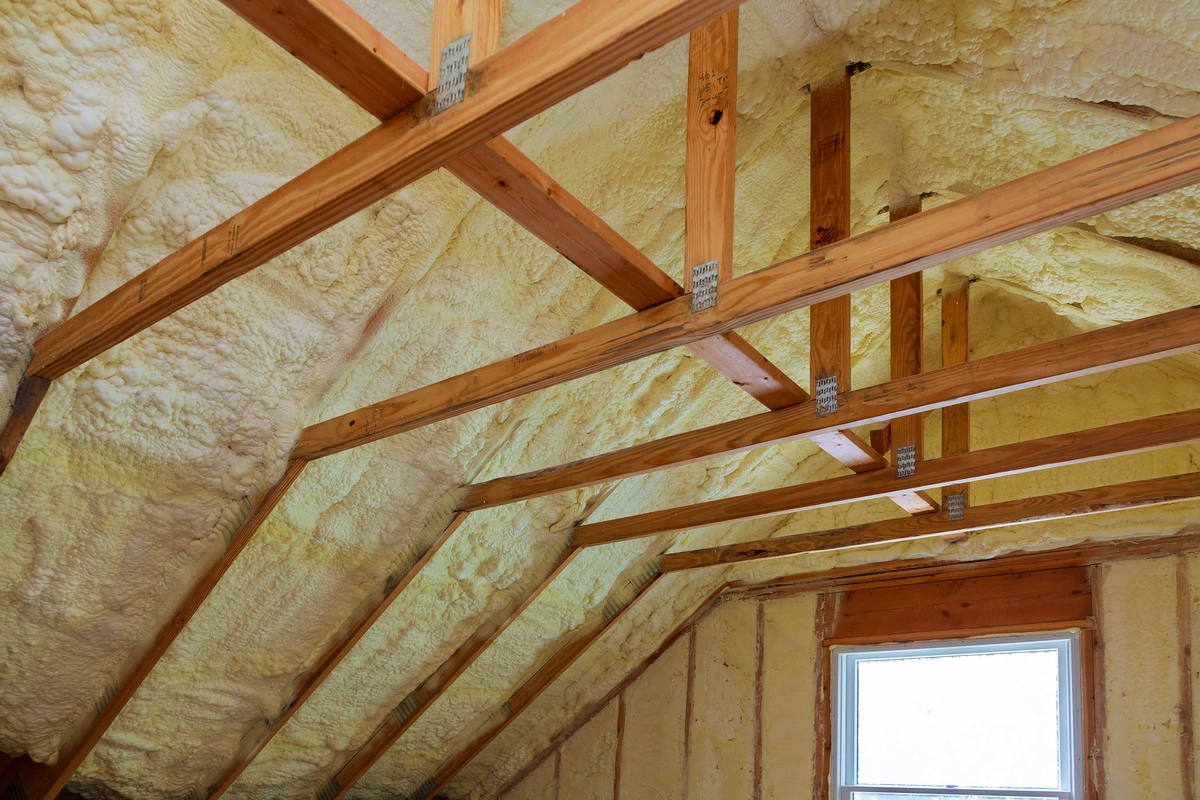
This framework identifies points where heat bypasses insulation through structural members like rafters. High-performance roofing plans often involve “rigid foam over-decking,” which provides a continuous thermal break that shingles alone cannot achieve.
3. The Stack Effect and Convective Cooling
A roof’s insulation performance is inextricably linked to its ventilation. This model views the attic as a lung. If the roofing material facilitates a “vented rainscreen” or a “counter-batten” system, it creates a layer of moving air that acts as a secondary insulation barrier, regardless of the material’s nominal R-value.
Primary Material Categories and Thermal Profiles
| Material Class | Thermal Mechanism | Reflectivity (High/Low) | Longevity |
| Metal (Standing Seam) | Reflectance/Low Mass | High (with coatings) | 50+ Years |
| Terra Cotta/Clay | Thermal Mass/Airflow | Moderate | 75+ Years |
| Concrete Tile | High Thermal Mass | Moderate | 50+ Years |
| Slate | Extreme Thermal Mass | Low | 100+ Years |
| Synthetic/Composite | Engineered Reflectance | High | 30-50 Years |
| “Cool” Asphalt | Granular Reflectance | Moderate | 20-30 Years |
Realistic Decision Logic
Selecting from the best roofing materials for insulation requires a trade-off analysis. If you are in a high-wind, hurricane-prone area, the “cool-roof” benefits of tile may be offset by its weight and potential for projectile damage. In such a case, a light-colored, heavy-gauge metal roof provides the optimal balance of reflectivity and structural resilience.
Detailed Real-World Scenarios
Scenario A: The Arid Southwest (High UV, Low Humidity)
In a desert environment, the roof is bombarded by radiant heat for 10-12 hours a day.
-
The Choice: Barrel-shaped clay tiles.
-
The Logic: The shape of the tile creates natural air channels (convection) under the material, while the high thermal mass of the clay delays heat transfer into the building until the air temperature drops at night.
-
Failure Mode: Using dark-colored asphalt shingles, which can reach surface temperatures of 160°F, essentially “cooking” the underlying plywood deck.
Scenario B: The Alpine Environment (Extreme Cold, Snow Load)
In high-altitude regions, the goal is to prevent “ice damming”—a phenomenon caused by heat escaping the roof and melting snow from underneath.
-
The Choice: A “Cold Roof” system using standing seam metal over a vented air space.
-
The Logic: The metal sheds snow quickly, and the vented space ensures the roof surface stays at the same temperature as the outside air, preventing the melt-freeze cycle.
Planning, Cost, and Resource Dynamics
The “all-in” cost of a high-performance roof is significantly higher than a standard replacement. However, the lifecycle analysis often favors the premium materials.
| Component | Entry-Level | High-Performance | Lifecycle Impact |
| Material Cost | $4 – $6 / sq. ft. | $12 – $30 / sq. ft. | Affects 30-year ROI |
| Insulation Layer | Standard Batts | Rigid Polyiso Decking | Eliminates thermal bridging |
| Ventilation | Static Vents | Ridge/Soffit/Baffles | Doubles shingle life |
| Labor | Standard Crew | Specialized Artisans | Reduces leak/failure risk |
Opportunity Cost: Choosing a cheap material today may seem prudent, but the secondary costs—higher HVAC bills, shorter replacement cycles, and potential mold remediation from poor attic venting—frequently eclipse the initial savings within 12 years.
Tools, Strategies, and Support Systems
The best roofing materials for insulation only perform as well as the support systems surrounding them.
-
Radiant Barriers: A thin layer of reflective foil installed in the attic to bounce infrared heat back toward the roof.
-
Baffle Systems: Plastic channels that ensure soffit vents aren’t blocked by floor insulation, maintaining the “stack effect.”
-
Ice and Watershield: A self-adhering membrane that provides a secondary vapor and water barrier.
-
Rigid Foam Over-decking: Specifically for “unvented” or “hot roof” designs where insulation is placed on the exterior of the house.
-
Smart Vents: Solar-powered attic fans that activate only when humidity or temperature thresholds are met.
Risk Landscape and Failure Modes
The primary risk in highly insulated roofing is Interstitial Condensation. When we make a roof “tight” and well-insulated, we reduce the amount of heat available to dry out the system if moisture enters.
-
Taxonomy of Failure:
-
Systemic: Inadequate ventilation leading to “cooked” shingles.
-
Procedural: Nailing through radiant barriers, reducing their efficacy.
-
Climatic: Using a “cool roof” in a heating-dominated climate, which can actually increase energy bills by losing “solar gain” in the winter.
-
Governance, Maintenance, and Long-Term Adaptation
A high-performance roof requires a monitoring protocol to ensure its thermal properties haven’t degraded.
-
The Layered Checklist:
-
Annual: Inspection of the “granule loss” on reflective asphalt; once the granules are gone, the reflectivity vanishes.
-
Every 5 Years: Checking for “biological growth” (algae/moss) on light-colored roofs, which significantly lowers the SRI.
-
Post-Storm: Ensuring that ridge vents haven’t been crushed or clogged by debris.
-
Measurement, Tracking, and Evaluation
How do we prove the insulation performance of a new roof?
-
Leading Indicators: Temperature differentials measured with a laser thermometer between the roof surface and the attic floor during peak sun.
-
Lagging Indicators: A reduction in “KWh” consumption on utility bills compared to previous years with similar weather patterns.
-
Documentation: Keeping the “SRI Rating Certificate” of the specific shingle or tile for future resale value.
Common Misconceptions and Oversimplifications
-
Myth: “Metal roofs make the house hotter.”
-
Reality: Quite the opposite; metal has low thermal mass and high reflectivity, making it one of the coolest options available.
-
Myth: “I don’t need ventilation if I have thick insulation.”
-
Reality: Insulation slows heat; ventilation removes it. Without ventilation, heat eventually soaks through even the thickest insulation.
-
Myth: “White roofs are always best.”
-
Reality: In northern climates, a dark roof provides “passive solar heating” in the winter, which can be more valuable than summer cooling.
Conclusion
The pursuit of the best roofing materials for insulation is ultimately a pursuit of architectural equilibrium. It requires a departure from the “commodity” mindset of the past half-century and a return to site-specific building science. By viewing the roof as a sophisticated thermal filter—one that leverages reflectivity, mass, and convection—a property owner can create a structure that is not only more comfortable but significantly more resilient to the rising costs of energy. Whether through the timeless mass of slate or the engineered precision of coated metal, the right roof is the single most effective tool in the long-term governance of a building’s internal climate.