Compare Window Installation Services: A Deep Technical Guide
The fenestration industry is often characterized by a paradox: while the windows themselves are marvels of modern material science—featuring argon-filled cavities, low-emissivity coatings, and multi-point locking systems—the actual installation remains a artisanal, site-specific endeavor. For the property owner, this creates a significant information asymmetry. One can spend weeks researching the U-factor or Solar Heat Gain Coefficient (SHGC) of a specific glass package, only to have that performance neutralized by a poor thermal break or inadequate perimeter sealing during the physical install.
The complexity of selecting a provider lies in the divergence between product manufacturing and field labor. In the United States, the market is fragmented into manufacturer-exclusive dealers, independent general contractors, and specialized window replacement franchises. Each entity operates under different overhead structures, warranty obligations, and installation philosophies. Consequently, the task to compare window installation services requires an analytical framework that looks beyond the per-unit cost and examines the structural integrity of the service delivery model itself.
Achieving long-term building envelope performance necessitates a move away from the “transactional” view of home improvement. A window is not an appliance that is simply plugged into a wall; it is a critical component of the structural, thermal, and vapor barriers of a building. When these systems are disrupted, the risk of interstitial condensation, air leakage, and rot increases exponentially. Therefore, a definitive evaluation of installation services must prioritize technical precision and organizational accountability over marketing-driven promises of “lifetime” durability.
Understanding “compare window installation services”
To effectively compare window installation services, one must first dismantle the oversimplification that “installation is installation.” In professional architectural circles, the service is viewed through three lenses: the mechanical attachment, the air/water barrier integration, and the internal finish. Most consumer-level comparisons fail because they focus exclusively on the third lens—how the window looks once the trim is applied—while ignoring the critical flashing and sealing work that occurs behind the drywall.
A common misunderstanding involves the “certified installer” designation. In many cases, this refers to a manufacturer-specific training program that may last only a few hours, rather than a comprehensive certification from a third-party body like the American Architectural Manufacturers Association (AAMA) or the Fenestration & Glazing Industry Alliance (FGIA). When you compare window installation services, you are essentially evaluating the provider’s adherence to ASTM E2112, the standard practice for installation of exterior windows, doors, and skylights.
The risk of oversimplification is particularly high in the “replacement” market. There is a fundamental difference between a “pocket” or “insert” installation—where the new window sits inside the existing frame—and a “full-frame” replacement, which involves removing the old frame down to the rough opening. A service provider that defaults to insert replacements to keep costs low may be leaving significant rot or air leakage points unaddressed. A sophisticated comparison identifies which providers have the diagnostic capability to recommend the correct method based on the condition of the existing substrate.
Deep Contextual Background: Historical Evolution
The methodology for installing windows has evolved from the “mass wall” philosophy to the “rainscreen” and “perfect wall” concepts of modern building science. Historically, windows were installed with a heavy reliance on caulking and gravity to manage moisture. As building envelopes became tighter and more insulated, the stakes for moisture management rose. If water penetrates the siding-to-window interface today, the lack of airflow within the wall means that moisture stays trapped, leading to rapid structural decay.
The 1990s and early 2000s saw a surge in “performance-based” fenestration, but installation practices lagged. This era was marked by high rates of litigation regarding synthetic stucco (EIFS) and window leaks, which forced a standardization of flashing techniques. Modern installation services are now expected to manage the “continuous air barrier,” a concept that treats the house as a single sealed vessel. This historical shift explains why modern quotes are significantly higher than those of twenty years ago; the labor required for proper liquid-applied flashing, sill pans, and tiered foam application is extensive.
Conceptual Frameworks and Mental Models
To navigate the vendor selection process, three specific mental models help filter out superficial claims.
1. The Rainscreen Principle
This model assumes that water will eventually get past the first layer of defense (the siding or window frame). A high-tier installation service operates under this assumption, installing “sill pans” with back-dams to ensure that any water that enters the rough opening is directed back out to the exterior drainage plane rather than into the wall cavity.
2. The Thermal Bridge Theory
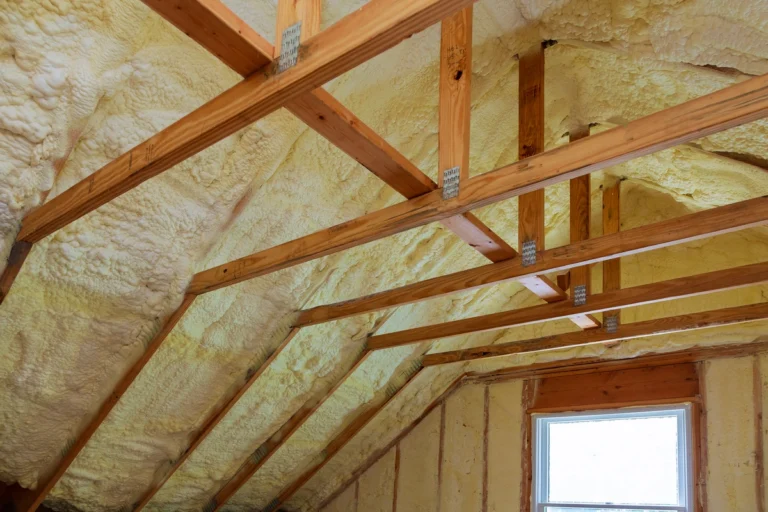
Windows are the weakest link in a home’s thermal envelope. This framework evaluates an installer based on their management of the “shim space.” If the gap between the window and the wall is filled only with loose fiberglass or improper foam, it creates a thermal bridge where heat escapes and condensation forms. Professional services use closed-cell, low-expansion foams that provide both an air seal and thermal insulation.
3. The Lifecycle Accountability Model
This model weighs the “up-front savings” of a low-cost independent contractor against the “warranty solvency” of a large company. It recognizes that the true cost of a window installation is the price divided by the number of years it remains leak-free. A $10,000 job that fails in 7 years is twice as expensive as a $15,000 job that lasts 25 years.
Key Categories and Operational Trade-offs
| Provider Type | Technical Focus | Primary Advantage | Significant Trade-off |
| Manufacturer-Direct | Specialized, repetitive precision | Unified product/labor warranty | Higher premium; limited product range |
| Independent General Contractor | Versatile, holistic integration | Better at full-frame/structural repair | Variable standards; warranty fragmentation |
| Specialized Franchises | Speed, volume, efficiency | Predictable pricing; finance options | “One-size-fits-all” installation methods |
| Boutique Window Artisans | Historic accuracy, customization | Mastery of unique substrates | Long lead times; extreme cost |
Decision Logic: Full-Frame vs. Insert
The choice between these two methods is the primary driver of cost and performance. An insert installation is appropriate when the existing frame is plumb, level, and free of rot. However, for homes older than 40 years, a full-frame replacement is usually the technically superior choice, as it allows for the installation of a modern, integrated flashing system.
Detailed Real-World Scenarios
Scenario A: The Coastal Exposure
A home within five miles of the ocean faces high-velocity wind-driven rain and salt air.
-
The Plan: An installer using stainless steel fasteners and a high-performance liquid-applied flashing system.
-
Failure Mode: Using standard galvanized fasteners and tape flashing that loses adhesion due to salt-spray infiltration.
Scenario B: The Historic Masonry Build
A 1920s brick-and-mortar structure requires new windows without disrupting the exterior aesthetic.
-
The Plan: A specialist who understands “blind stops” and the use of high-movement sealants that can bond to aged masonry.
-
Second-Order Effect: Using standard expanding foam in a weight-pocket cavity without reinforcing the frame can lead to frame bowing and operational failure.
Planning, Cost, and Resource Dynamics
The economics of window installation are notoriously opaque. A significant portion of the quote is often “risk pricing”—contractors adding a buffer for the unknown conditions behind the existing trim.
| Cost Driver | Influence on Quote | Justification |
| Rough Opening Repair | 10% – 25% | Remedying rotted sills or headers |
| Lead-Safe Practices | 5% – 15% | Mandatory for pre-1978 homes (EPA RRP) |
| Access/Height | 10% – 20% | Scaffolding or lift rentals for 2nd/3rd floors |
| Custom Interior Trim | 15% – 30% | Matching historic or high-end stained wood |
Opportunity Cost: Choosing a service that lacks proper insurance or worker’s compensation can result in the homeowner being liable for job-site injuries, a risk that far outweighs any initial savings.
Tools, Strategies, and Support Systems
A professional installation service should utilize a specific technological stack to ensure quality:
-
Laser Levels: Critical for ensuring the window is not just “square” to the opening, but perfectly level to allow for proper drainage.
-
Blower Door Testing: High-end services may offer pre- and post-installation blower door tests to quantify the reduction in air leakage.
-
End-Dam Sill Pans: Pre-fabricated pans are superior to “site-built” tape pans, as they provide a mechanical barrier against water.
-
Low-Expansion Foam Guns: Professional applicators use metal guns that allow for precise bead control, preventing the “over-foaming” that can warp window frames.
-
Liquid-Applied Flashing: Particularly in complex openings, liquid flashing provides a seamless, monolithic barrier that tapes cannot match.
Risk Landscape and Failure Modes
The primary failure in this industry is the compounding risk. This occurs when a minor installation error—such as reversed flashing (the “shingle effect” in reverse)—leads to a small, hidden leak. Because modern walls are heavily insulated, they cannot dry out. The water stays in contact with the wood framing, leading to “dry rot” (fungal decay) that is often not discovered until structural failure occurs.
Another significant risk is Seal Failure Due to Stress. If a window is installed “out of plane” (slightly twisted in the opening), it puts constant torque on the insulated glass unit (IGU). Over 18–36 months, this stress breaks the primary seal, causing the argon gas to escape and the window to “fog,” rendering its thermal properties useless.
Governance and Long-Term Adaptation
Post-installation governance involves a 12-to-24-month monitoring cycle. Buildings “settle” differently after the weight of new fenestration is added.
-
The 1-Year Audit: A professional service should return after one full cycle of seasons to check the sealant joints for “cohesive” or “adhesive” failure.
-
Drainage Maintenance: Homeowners must be taught to clear the “weep holes” in the window frames annually. If these become clogged with debris, the window’s internal drainage system will back up into the home.
Measurement, Tracking, and Evaluation
Evaluation should be both qualitative and quantitative:
-
Leading Indicator: Observation of the “flashing transition.” If the installer integrates the window flashing under the house wrap at the top and over the house wrap at the bottom, the fundamental logic is sound.
-
Lagging Indicator: Using an infrared camera during a cold winter day to check for “cold spots” around the perimeter of the new window.
-
Documentation: A “Top Tier” service provides a digital photo-log of the rough opening before the window was installed, proving that no rot was hidden behind the new unit.
Common Misconceptions and Oversimplifications
-
Myth: “New windows will pay for themselves in energy savings in 5 years.”
-
Reality: The ROI on windows is typically 15–30 years. The primary value is in comfort, acoustics, and asset preservation.
-
-
Myth: “Lifetime warranties cover everything.”
-
Reality: Most exclude “installation-related failures” after the first year, making the installer’s reputation more important than the manufacturer’s paper warranty.
-
-
Myth: “Caulk is the primary water barrier.”
-
Reality: Caulk is a cosmetic joint filler. The mechanical flashing is the only reliable water barrier.
-
Conclusion
The decision to compare window installation services is a decision to audit the technical competence of a potential partner. In an era where products are becoming increasingly commoditized, the labor of installation remains the great differentiator. A successful outcome is not merely a window that opens and closes smoothly on the day of installation; it is a window system that remains airtight and watertight through decades of thermal cycling and wind loading.