Best Mid Century Modern Homes United States: A Definitive Architectural Guide
The architectural silhouette of the American mid-century remains one of the most significant structural shifts in the history of domestic life. Emerging from the post-World War II era, Mid-Century Modernism (MCM) was not merely a stylistic preference but a radical reorganization of the relationship between the inhabitant, the structure, and the environment. This movement sought to democratize high design, utilizing industrial materials and innovative engineering to create homes that prioritized flow, transparency, and a rejection of the compartmentalized “closed-box” logic of traditional European-influenced architecture.
In 2026, the fascination with these structures has moved beyond nostalgia into a serious discipline of “sovereign preservation.” For the sophisticated collector or resident, identifying the most significant examples requires an understanding of how post-and-beam construction allowed for the erasure of weight-bearing interior walls, leading to the “open plan” that remains the gold standard of contemporary living. However, the true value of these assets lies in their “site-specificity”—the way a home in the desert of Palm Springs utilizes thermal mass and shadow differently than a glass-walled pavilion in the humidity of the Northeast.
This article provides a systemic deconstruction of the most authoritative residential examples across the country. We will investigate the architectural logic that governs these designs, the economic dynamics of contemporary MCM restoration, and the risk landscapes inherent in maintaining glass-heavy structures in a volatile climate. By treating these homes as living systems rather than static artifacts, we provide the clarity required to navigate the complexities of the nation’s most enduring architectural legacy.
Understanding “best mid century modern homes united states”
The phrase best mid century modern homes united states is frequently diluted by mainstream media to describe any house with a flat roof and a large window. In a professional editorial context, however, these homes represent a sophisticated synthesis of Bauhaus philosophy and American optimism. To evaluate these residences is to examine the “Integrity-to-Transparency” ratio—the ability of a structure to provide shelter while maintaining a nearly seamless visual connection to the horizon.
The Paradox of the Glass Skin
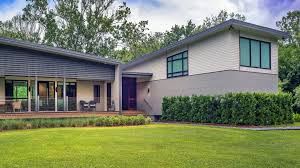
A primary misunderstanding in the current market is that MCM is a monolith. In reality, the most significant homes are those that solve the paradox of the “glass skin.” While glass walls provide the aesthetic hallmark of the movement, they also present massive thermal and privacy challenges. The authoritative persepctive prioritizes homes that utilized “deep eaves” and “clerestory windows” to manage solar gain and sightlines. This is the difference between a house that is a masterpiece of photography and a house that is a masterpiece of habitation.
Oversimplification of Materials
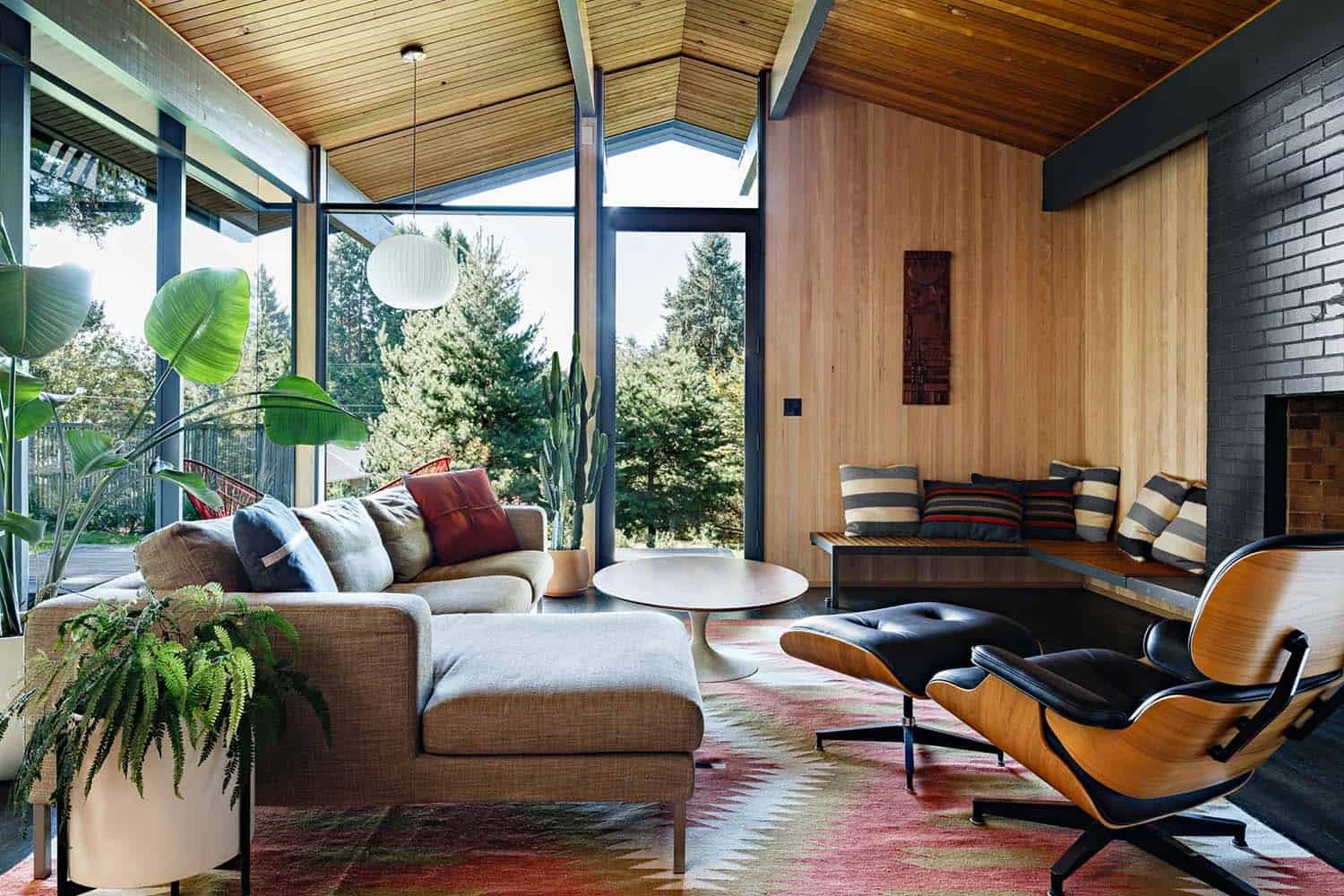
There is a common risk of oversimplifying the materials involved. High-tier MCM design is not just about wood and glass; it is about the “honest expression” of materials. This means steel that is left exposed, brick that continues from the exterior into the living room, and concrete that serves as both foundation and finished floor. When these elements are covered by modern “renovations,” the architectural authority of the home is effectively destroyed. Understanding the “best” examples requires looking for “uninterrupted material continuity.”
Deep Contextual Background: The Industrialization of the American Dream
The trajectory of Mid-Century Modernism in the U.S. was catalyzed by the arrival of European visionaries fleeing pre-war instability, most notably Walter Gropius and Ludwig Mies van der Rohe. These architects brought a “machine for living” philosophy that dovetailed perfectly with American industrial expansion. Between 1945 and 1969, the residential landscape was transformed from a collection of vertical, partitioned spaces into a series of horizontal, interconnected planes.
The Case Study Program
Perhaps the most influential driver was the Case Study House Program, initiated by Arts & Architecture magazine. This project commissioned leading architects to design and build inexpensive, efficient model homes for the housing boom. It moved MCM from the realm of the elite into the public consciousness, proving that steel-frame construction could be warm, inviting, and inherently “Californian.” This period established the iconic vocabulary: post-and-beam frames, flat or shed roofs, and the integration of indoor and outdoor square footage as a single living unit.
The Suburban Expansion
As the movement spread East, it adapted to different climates and topographies. In the suburbs of New York and Connecticut, the “Harvard Five” created a more intellectual, often wooded version of modernism. In the South, architects like Paul Rudolph developed the Sarasota Modern style, which focused on passive cooling and ventilation. By the late 1960s, MCM had become the definitive aesthetic of the “Space Age,” reflecting a cultural belief that technology and design could create a frictionless future.
Conceptual Frameworks and Mental Models
To construct or evaluate a high-order MCM asset, one must employ mental models that differ from traditional architectural logic.
1. The “Inside-Out” Living Framework
This model treats the landscape not as an external view but as an additional “room.” An authoritative MCM plan starts with the outdoor space and builds the interior to frame it. The framework dictates that the floor material should, where possible, continue past the glass threshold to the patio, psychologically extending the boundaries of the home.
2. The “Post-and-Beam” Structural Honesty
In traditional homes, walls hold up the roof. In MCM, the “post-and-beam” model carries the load, allowing the walls to become “curtains” of glass or wood. This mental model prioritizes “visual lightness.” If a renovation adds heavy, load-bearing walls where they weren’t intended, it violates the structural honesty of the original design.
3. The “Zonal Modularity” Model
MCM homes often utilize “zones” rather than rooms. The public zone (living, dining, kitchen) is typically one continuous space, while the private zone (bedrooms) is tucked away. This model ensures that the social energy of the home is never obstructed by hallways or doors, fostering a specific type of communal interaction.
Key Categories and Regional Typologies
MCM is not a single style but a collection of regional adaptations.
| Category | Primary Focus | Key Materials | Regional Trade-off |
| Palm Springs Desert | Thermal Mass/Shade | Concrete, Breeze Blocks | High heat vs. Indoor/Outdoor flow |
| Case Study (Cali) | Steel Efficiency | Steel, Plywood, Glass | Visual purity vs. Coastal salt air |
| Sarasota Modern | Passive Cooling | Wood slats, Jalousie windows | Humidity vs. Airflow |
| New England Modern | Wooded Integration | Natural Stone, Dark Wood | Cold winters vs. Glass walls |
| Midwest Usonian | Geometric Organicism | Brick, Horizontal planes | Deep foundations vs. Snow load |
Realistic Decision Logic: Preservation vs. Performance
When acquiring an MCM home, the resident must choose between “Museum Accuracy” and “2026 Performance.” A purely accurate home often suffers from poor insulation and single-pane glass. The most successful adaptations use “Invisible Upgrades”—such as secondary “internal” glazing or vacuum-insulated panels—that preserve the thin-profile aesthetic while meeting modern energy codes.
Detailed Real-World Scenarios
Scenario 1: The Glass Pavilion in a Cold Climate
A homeowner in New Canaan, Connecticut, owns a 1952 glass-walled residence.
-
The Conflict: The heating bill is astronomical, and condensation is damaging the original steel frames.
-
The Decision: Instead of replacing the frames with bulky modern windows, the owner installs a low-profile radiant heating system along the perimeter glass.
-
Second-Order Effect: The heat curtain prevents condensation and protects the structural steel, demonstrating that “mechanical” solutions are often superior to “structural” changes in MCM preservation.
Scenario 2: The Desert Sun Exposure
A property in the Coachella Valley faces intense UV degradation on its floor-to-ceiling windows.
-
The Constraint: Traditional tints ruin the “color neutrality” of the desert view.
-
The Solution: Implementation of automated exterior “slat” shades that track the sun’s angle.
-
Outcome: The home maintains its transparency during optimal hours but becomes a shaded “bunker” during the high-heat apex, preserving the interior furniture and lowering cooling costs by 40%.
Planning, Cost, and Resource Dynamics
The economic profile of Mid-Century Modern homes is characterized by high “Specialist Costs” and significant “Material Rarity.”
Direct and Indirect Costs
Direct costs are visible: the custom millwork and the large-format glass. Indirect costs are the “hidden” drivers, such as the need for specialized structural engineers who understand the “tension-based” limits of 1950s steel. In 2026, the cost of restoring a genuine MCM home can be 1.5x to 2x higher than a new build of similar square footage due to the precision required.
2026 Range-Based Planning Table (USD)
| Component | Standard Mid-Range | Luxury/Architectural | Cost Driver |
| Custom Glazing | $80 – $150 /sq ft | $350 – $600+ /sq ft | Frame profile thickness & UV specs |
| Terrazzo Floors | $15 – $25 /sq ft | $50 – $100 /sq ft | In-situ pouring vs. tiles |
| Millwork (Teak/Walnut) | $10k – $30k per room | $80k – $200k+ per room | Grain matching & “floating” joinery |
| Steel Restoration | $5k – $15k /linear ft | $40k – $100k+ /linear ft | Rust removal & weld integrity |
Tools, Strategies, and Support Systems
-
3D Laser Scanning: Used to document the exact “settle” of a post-and-beam structure before making any structural adjustments.
-
Vacuum Insulated Glass (VIG): A critical 2026 technology that allows for R-12 insulation levels in a pane of glass only 1/4″ thick, fitting original MCM frames.
-
Hydrophobic Steel Coatings: Nanotechnology-based clear coats that prevent oxidation on exposed steel frames without changing the matte/industrial finish.
-
BIM (Building Information Modeling): Used to simulate sun-paths throughout the year, identifying where to place “sacrificial” outdoor plantings to shade glass.
-
Smart Lighting Curation: Utilizing tunable white LEDs to mimic the specific “incandescent warmth” of the 1950s while reducing energy consumption.
-
Petrographic Mortar Analysis: Identifying the specific sand and lime mix used in mid-century brickwork to ensure new mortar doesn’t cause “spalling” or cracking.
Risk Landscape and Taxonomy of Failure
MCM homes are “high-strung” structures. Because they pushed the limits of engineering at the time, they are susceptible to specific, compounding risks.
1. The “Galvanic Corrosion” Failure
Many MCM homes used a mix of aluminum and steel. Over 70 years, the contact between these dissimilar metals in the presence of moisture leads to galvanic corrosion. If a restorer doesn’t understand this, they may fix the surface but leave the “structural cancer” inside the joint.
2. Thermal Bridging Decay
The very thing that makes MCM beautiful—exposed steel and concrete—is a “thermal bridge.” In cold climates, this bridge pulls heat out of the house, but more dangerously, it causes internal wood rot at the junction points where warm interior air hits the cold structural member.
3. Footprint Obsolescence
Original MCM kitchens were often tiny, designed for a different era of social dynamics. The risk of failure occurs when a “renovator” knocks down walls to create a modern kitchen, inadvertently removing the “torsion strength” of the house’s skeletal system.
Governance, Maintenance, and Long-Term Adaptation
A prestigious MCM home requires a “Stewardship Model” rather than a “Maintenance Model.”
Layered Maintenance Checklist
-
Monthly: Inspect the roof drains (scuppers). Flat roofs are notorious for “ponding,” and a single clogged drain can cause a roof collapse in an MCM home due to the thin structural members.
-
Annual: Check the “sealant integrity” of every glass-to-steel junction. These homes move and flex; the seals must be elastic enough to move with them.
-
Decadal: Re-evaluation of the “Foundation Hydration.” In many Southwest MCM homes, the concrete slab is the finish floor. If the soil underneath dries out too much, the slab will crack, destroying the interior aesthetic.
Adjustment Triggers
If the home experiences more than 5% “sag” in a roofline or if “clouding” appears in the perimeter glass, these are triggers for immediate structural intervention.
Measurement, Tracking, and Evaluation
How do you evaluate the success of an MCM residence?
-
Leading Indicators: The “Profile Consistency”—the thickness of the roofline and window frames compared to original blueprints.
-
Lagging Indicators: Energy usage per square foot (normalized for glass percentage).
-
Qualitative Signals: The “Blur Ratio”—how much the resident feels “inside” while looking at the garden.
-
Documentation Examples: Maintenance logs of scupper cleaning, UV-protection treatments for wood siding, and structural “datum” measurements taken every five years.
Common Misconceptions and Oversimplifications
-
Myth: “Mid-century homes are easy to maintain.” Correction: Because of their thin profiles and experimental materials, they require more frequent and specialized care than a traditional brick home.
-
Myth: “You can’t have a big TV in an MCM home.” Correction: The “top” designs use hidden lifts or art-integration so the technology doesn’t compete with the view.
-
Myth: “Flat roofs always leak.” Correction: A flat roof with modern “single-ply” membranes and proper slope-to-drain engineering is often more reliable than a shingled roof.
-
Myth: “All MCM furniture is uncomfortable.” Correction: The movement prioritized ergonomics; original designs by Eames or Saarinen are engineered for the human body, but modern “replicas” often fail these standards.
Ethical and Contextual Considerations
The preservation of the best mid century modern homes united states carries an ethical weight. As these homes reach their 70th and 80th birthdays, they face the threat of “mansionization”—the trend of tearing down smaller, historically significant homes to build oversized contemporary residences.
True authority in this space involves “Contextual Stewardship.” This means respecting the original footprint and the “negative space” of the lot. An MCM home that is surrounded by a massive fence or crowded by additions loses its relationship with the land. The ethical move is to preserve the “transparency” of the site, acknowledging that the architecture was a gift to the streetscape as much as to the inhabitant.
Conclusion
The pursuit of the best mid century modern homes united states is a commitment to a specific type of clarity. These homes demand that we look at the world through glass, steel, and stone, without the filters of tradition or the clutter of the unnecessary. In 2026, they stand as more than just historical markers; they are blueprints for a future that values light, air, and the erasure of boundaries.
Ultimately, the success of an MCM residence is measured by its ability to disappear. When the architecture recedes and the inhabitant feels an unmediated connection to the sunrise or the surrounding trees, the mid-century dream is realized. These homes are not just shelters; they are frames for the human experience, and their preservation is essential to our understanding of the American landscape.