Luxury Desert Landscaping America: The Definitive Architectural & Botanical Guide
The high-deserts and arid basins of the American Southwest—spanning the Sonoran, Mojave, and Chihuahuan landscapes—have undergone a profound architectural shift over the last decade. Historically, the imposition of non-native, water-intensive flora was the primary signifier of wealth in these regions; a lush, green lawn in the middle of Scottsdale or Las Vegas served as a defiant, if ecologically precarious, display of resource dominance. Today, the paradigm has inverted. Sophisticated land stewardship and the elevation of xeric principles have redefined the aesthetic of the elite. In 2026, luxury is no longer found in the defiance of the desert, but in its masterful articulation.
This evolution is driven by more than mere aesthetic preference. A tightening regulatory environment regarding water rights and a maturing appreciation for the subtle textures of the arid biome have coalesced. Modern high-end landscaping in these environments requires a multidisciplinary approach, merging the precision of civil engineering with the nuance of botanical conservation. To design for the desert is to work with the most unforgiving of canvases, where the interplay of extreme solar radiation, minimal precipitation, and alkaline soil chemistry dictates the limits of possibility.
The scope of this investigation covers the systemic complexities of transforming raw, arid terrain into an intentional, luxury environment. We will deconstruct the mental models used by top-tier landscape architects, the economic realities of large-scale desert installations, and the long-term governance required to maintain biological and structural integrity. For the property owner or developer, understanding the “invisible” layers—drainage, thermal mass, and micro-ecosystems—is the prerequisite for achieving an outdoor space that persists as a permanent asset.
Understanding “luxury desert landscaping america”
The phrase luxury desert landscaping america is frequently misinterpreted as a simple collection of expensive cacti and gravel. In reality, it represents a sophisticated branch of landscape architecture that prioritizes “place-making” through regional authenticity and structural permanence. At this tier, the landscape is not a secondary addition to the home; it is an integrated extension of the building’s footprint, often involving more engineering than a traditional garden.
One of the primary risks in these projects is oversimplification. Many perceive xeroscaping—the practice of landscaping with slow-growing, drought-tolerant plants—as a “low-cost” or “low-maintenance” option. In the luxury sector, the opposite is often true. The cost of sourcing mature, specimen-grade flora, such as a multi-trunk Saguaro or an ancient Boojum tree, can exceed the price of luxury interior finishes. Furthermore, the precision required in hardscaping—the use of imported volcanic stone, custom-poured concrete, and integrated lighting—demands a level of craftsmanship that exceeds standard residential work.
True luxury in the American desert context also involves the manipulation of the microclimate. A successful project does not just look beautiful; it functions as a thermal buffer. Through the strategic use of shade structures, thermal mass, and “cool” paving materials, an expertly designed landscape can lower the perceived temperature of an outdoor living space by 15 to 20 degrees. This functional utility is the hallmark of the American Southwest’s current “Desert Modernist” movement.
Deep Contextual Background: The Evolution of Arid Aesthetics
The historical trajectory of landscaping in the American West began with the “Oasis Myth.” Early settlers and 20th-century developers sought to recreate the temperate environments of the East Coast and Europe. This led to the proliferation of Kentucky Bluegrass and Mediterranean palms in regions where they could only survive through massive subterranean irrigation. This period was characterized by high “maintenance friction”—a constant battle against the environment that required immense chemical and water inputs.
By the 1970s and 80s, the introduction of the “Xeriscape” movement began to change public perception, but it was initially viewed as a compromise—a sacrifice of beauty for utility. It wasn’t until the early 2000s that architects began to realize the sculptural potential of native desert plants. The shift was accelerated by the work of pioneers who treated Agaves and Barrel Cacti as living sculptures rather than mere “bushes.”
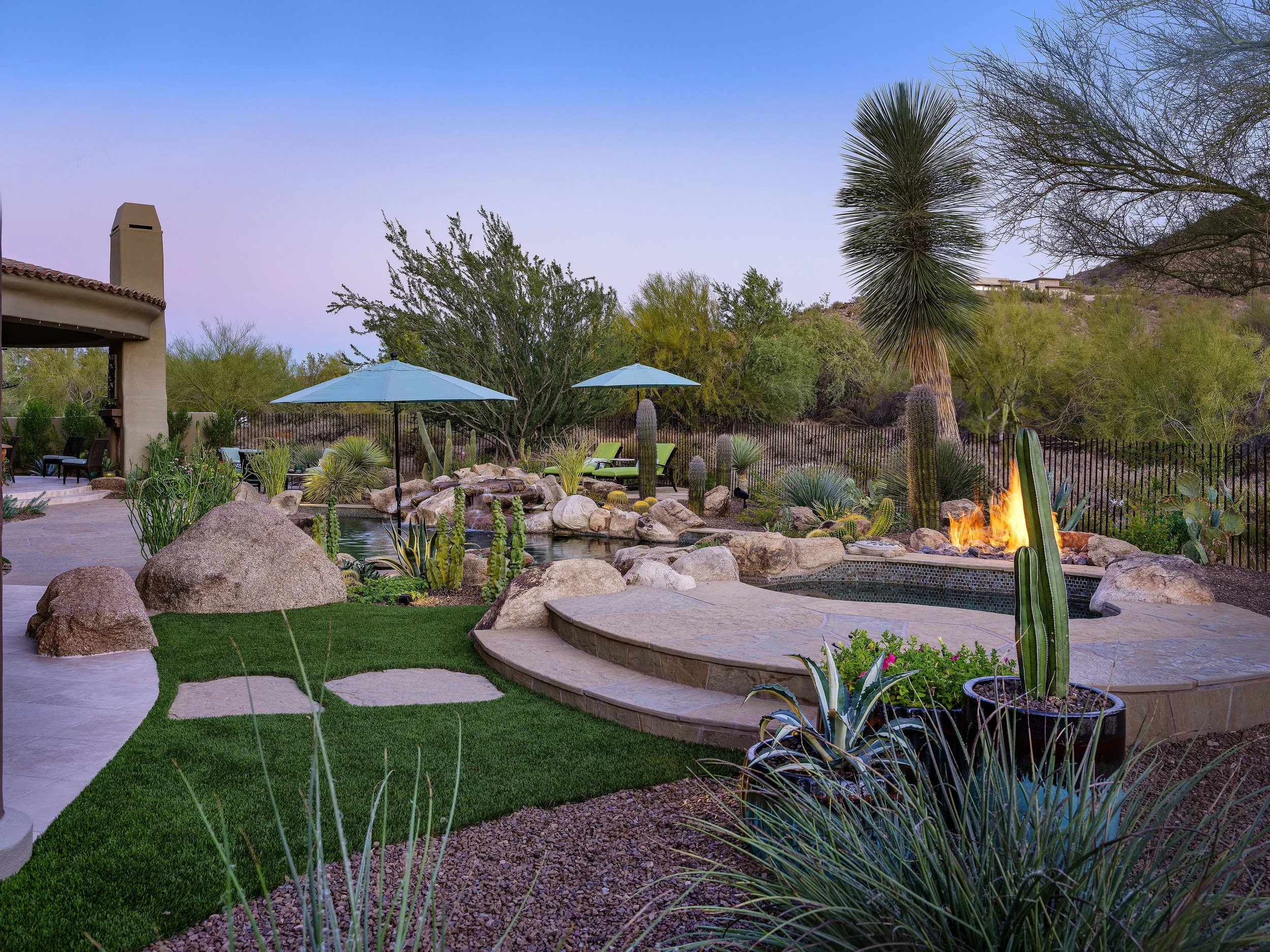
In the current era, the aesthetic has matured into “High-Definition Naturalism.” This approach uses the desert’s natural palette—ochre, slate, sage, and copper—but intensifies it through repetition, scale, and contrasting textures. The modern luxury landscape in America now celebrates the “geometry of survival”—the unique shapes plants adopt to conserve water—elevating the desert from a wasteland to a curated gallery.
Conceptual Frameworks and Mental Models
To achieve a resilient, high-end landscape, designers rely on several core mental models that prioritize longevity over immediate visual impact.
1. The “Water Sovereignty” Framework
This model treats every drop of water as a capital asset. Instead of relying solely on municipal supply, luxury landscapes are engineered as “collection vessels.” This involves grading the property so that monsoonal rains are directed toward “passive basins” or subterranean cisterns. The goal is to create a self-sustaining hydration loop where the landscape’s reliance on the grid is minimized.
2. The “Thermal Mass” Mental Model
In the desert, hardscape materials (stone, metal, concrete) act as batteries. They absorb heat during the day and radiate it at night. A sophisticated plan analyzes the “thermal shadow” of the property. Using high-albedo (reflective) materials near the home prevents heat gain, while darker stones are used further away to define boundaries without overheating the living zones.
3. The “Biological Succession” Model
Desert plants grow slowly. A luxury project must account for how a landscape will look in 10, 20, and 50 years. This model rejects the “instant garden” approach in favor of a layered installation: placing fast-growing “nurse plants” to protect slower-growing specimen trees until they reach maturity.
Key Categories of Desert Landscapes and Strategic Trade-offs
Luxury landscaping in the Southwest can be divided into several distinct typologies, each with its own set of operational demands.
| Category | Primary Focus | Key Feature | Strategic Trade-off |
| Desert Modernist | Clean lines, geometry | Poured concrete, steel | High installation cost vs. low maintenance |
| High-Sonoran Naturalist | Specimen Saguaros | Natural boulder outcroppings | High ecological value vs. slower maturity |
| The Arid Oasis | Hidden water features | Intimate courtyards | High sensory appeal vs. higher humidity/maintenance |
| Xeric Minimalist | Negative space, texture | Crushed aggregates, monochromatic flora | Iconic aesthetic vs. “harshness” in extreme sun |
| Arid-Mediterranean Hybrid | Olives, Lavender | Softened desert edge | Higher water demand vs. classical elegance |
Decision Logic: Specimen vs. Mass Planting
A critical decision for the owner is the “specimen-to-mass” ratio. A landscape dominated by mass-planted succulents is easier to install but lacks the “gravitas” of a specimen-driven design. Conversely, a specimen-heavy landscape requires immense upfront capital and specialized “boxed tree” transport, often requiring cranes for installation.
Detailed Real-World Scenarios
Scenario 1: The Mojave Ridge Estate
A property sits on an exposed ridge in Palm Springs, facing high winds and intense afternoon sun.
-
The Constraint: Wind shear can dessicate plants and move lightweight gravel.
-
The Solution: Use of heavy, fractured rock mulch (3″ minus) and a “wind-break” of Palo Verde trees.
-
Failure Mode: Installing fine DG (Decomposed Granite) which would erode or create dust storms during Santa Ana wind events.
Scenario 2: The Sonoran Urban In-fill
A modern home in Paradise Valley requires a private, walled garden.
-
The Opportunity: A courtyards create a “cool cell” microclimate.
-
The Strategic Move: Integrating a “weeping wall”—a stone feature that uses minimal water to cool the air via evaporation.
-
Second-Order Effect: The water feature must be shielded from the sun to prevent rapid evaporation and calcium buildup on the stone.
Planning, Cost, and Resource Dynamics
The economic landscape of luxury desert landscaping in America is characterized by high labor intensity and high material shipping costs. Unlike temperate regions where plants are relatively inexpensive, desert specimens are “time-grown” assets.
Cost Categories and Regional Variability
| Item | Low-End Professional | High-End Luxury | Primary Driver |
| Specimen Saguaros (per ft) | $100 | $500+ | Height, arm count, permit status |
| Hardscaping (sq ft) | $25 | $120+ | Material origin, finish (e.g., honed stone) |
| Irrigation (per zone) | $1,500 | $5,000+ | Telemetry sensors, redundancy |
| Lighting (per fixture) | $200 | $1,200+ | Finish, integrated automation |
Indirect Costs: The “Permit and Salvage” Tax
In many parts of the Southwest, such as Arizona, native plants like Saguaros are protected by state law. Moving them requires a permit and a specialized “salvage” team. These indirect costs can add 15% to the botanical budget before a single hole is dug.
Tools, Strategies, and Support Systems
-
Smart Irrigation Telemetry: Luxury systems no longer use simple timers. They use “evapotranspiration” sensors that adjust water output based on real-time satellite weather data.
-
Subterranean Root Watering: For specimen trees, water is delivered 24″ below the surface to prevent evaporation and encourage deep, wind-stable root growth.
-
Low-Voltage LED Curation: Strategic uplighting uses warm-spectrum LEDs to highlight the skeletal structure of desert flora without creating “light pollution” in dark-sky communities.
-
BIM (Building Information Modeling): Landscape architects now use 3D modeling to simulate shadow paths across the year, ensuring seating areas aren’t in direct sun during 4 PM in July.
-
Steel Edge Definitions: Using Corten steel to create crisp transitions between stone types prevents “migration” of aggregates and adds a patina-based color contrast.
-
Soil Amelioration Loops: Desert soils are often devoid of organic matter. High-end installs use a “biological inoculation” to introduce beneficial mycorrhizae to the roots.
Risk Landscape and Taxonomy of Failure
Landscaping in the desert is a high-risk endeavor. Failure is rarely linear; it usually results from a compounding of environmental stressors.
1. The “Salt Accumulation” Failure
Constant drip irrigation in alkaline soil leads to a buildup of mineral salts. If not “flushed” periodically, the soil becomes toxic to the very plants it is meant to support. Luxury systems must include a “leaching” protocol.
2. The “Thermal Shock” Risk
Hardy desert plants can still suffer if moved from a nursery to a high-heat site in the middle of summer. “Transplant shock” in mature Saguaros can result in a collapse that is unrecoverable, representing a total loss of the capital asset.
3. Drainage “Pooling”
Arid soils (caliche) are often as hard as concrete. If drainage is not engineered correctly, a rare desert rain will create “pooling” at the foundation of the home, as the water has nowhere to penetrate the ground.
Governance, Maintenance, and Long-Term Adaptation
A luxury landscape is not a “finished product”; it is a managed biological system. Proper governance requires a move away from the “mow and blow” crews of the suburbs toward “Arid Technicians.”
The Maintenance Lifecycle
-
Quarterly: Sensor calibration and emitter checks. A single clogged emitter can kill a $10,000 tree in a week.
-
Annual: Pre-emergent weed control and structural pruning. Desert trees should never be “topped”; they require thinning to allow wind to pass through the canopy.
-
Adjustment Triggers: If a plant shows “yellowing” (chlorosis), it is usually a sign of PH imbalance rather than lack of water—a mistake that often leads to overwatering and root rot.
Adaptation Checklist
-
Check for “hidden” leaks via water meter telemetry.
-
Audit the lighting system for UV degradation of conduits.
-
Assess aggregate levels; wind and rain naturally thin out stone coverings every 3–5 years.
Measurement, Tracking, and Evaluation
How do you evaluate the ROI of a luxury desert landscape? It is measured in “Resource Efficiency” and “Property Valuation Delta.”
-
Leading Indicators: Plant “turgor” (firmness), successful new growth on specimens, and minimal run-off during storms.
-
Lagging Indicators: Increase in property appraisal value and year-over-year reduction in per-acre water usage.
-
Qualitative Signals: Utilization of outdoor spaces. If the outdoor lounge is too hot to use at 5 PM, the landscape architecture has failed its primary functional goal.
Common Misconceptions and Oversimplifications
-
Myth: “Cacti don’t need water.” Correction: During the first two years of establishment, even the hardiest desert plants require a regular, deep watering schedule to build a root system.
-
Myth: “Gravel is maintenance-free.” Correction: Weeds in desert rock beds are opportunistic. Without pre-emergent treatments, a xeric yard will quickly become a weed field.
-
Myth: “The desert has no color.” Correction: Through the use of Hesperaloe, Lantana, and various Penstemons, a desert landscape can be as vibrant as a tropical one, but with a more sophisticated, seasonal rhythm.
-
Myth: “You can’t have a lawn.” Correction: You can, through the use of synthetic “luxury turf” or hybridized Kurapia, but it should be used sparingly as an “area rug” rather than a default flooring.
Ethical, Practical, or Contextual Considerations
The ethics of desert landscaping in 2026 center on “Biophilia and Responsibility.” As the Southwest faces permanent aridification, the luxury sector has a responsibility to lead by example. This means rejecting water-extravagance in favor of “Eco-Prestige”—showing that a landscape can be incredibly high-end while using 90% less water than a traditional estate.
Sourcing also carries ethical weight. The “poaching” of native plants from public lands is a significant issue. A luxury project must ensure that all specimen Saguaros and Ocotillos have “Tags and Permits” that prove they were legally salvaged from development sites or grown in licensed nurseries.
Conclusion
The pursuit of luxury desert landscaping america is an exercise in restraint and articulation. It is a refusal to accept the “barren” label of the desert, choosing instead to reveal its hidden textures, shadows, and resilience. A successful installation is a symphony of engineering and botany, where stone and plant work together to create a habitable enclave in an otherwise hostile environment.
Ultimately, the desert rewards those who understand its rhythm. A landscape that respects the sun, captures the rain, and celebrates the native form will not only increase in value but will provide a sense of permanence and peace that no imported “oasis” can ever match. In the arid West, true luxury is the mastery of the void.