Luxury Mountain Architecture USA: The Definitive Engineering
The architectural response to high-altitude environments in the United States has undergone a radical transformation over the last half-century. Once defined by the rugged, vernacular “log cabin” aesthetic—a pragmatic answer to the abundance of timber and the necessity of thermal mass—modern mountain builds now occupy a space of high-technology and sophisticated transparency. Designing in these regions requires a profound reconciliation between the desire for expansive vistas and the brutal realities of snow loads, seismic activity, and wildfire risks.
In the current landscape of luxury development, the mountains are no longer just a backdrop; they are a primary driver of structural form. The topography of places like Aspen, Big Sky, and the Blue Ridge Mountains demands an engineering precision that rivals urban skyscrapers, yet must be executed with a delicacy that respects the fragile alpine ecosystem. The successful mountain home must function as a closed-loop system, capable of withstanding thirty-foot snowdrifts and sub-zero temperatures while providing an interior experience of effortless connection to the wild.
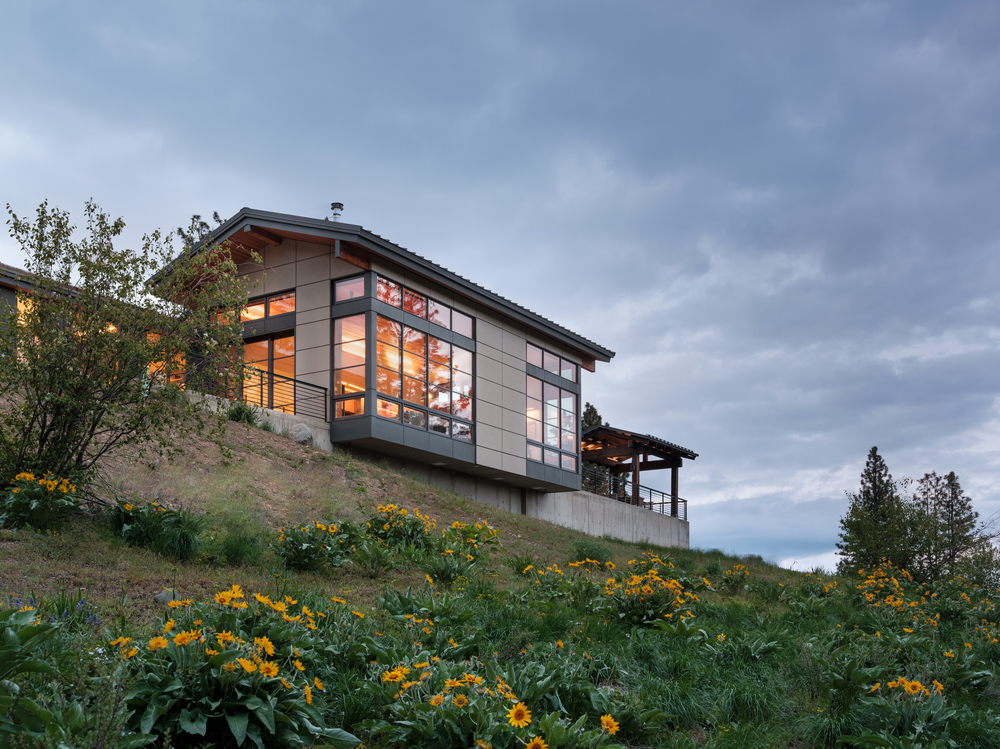
This evolution is not merely stylistic but systemic. The integration of glulam beams, steel tension rods, and high-performance glazing systems has allowed architects to move away from the “bunker” mentality of early ski lodges. Today, the dialogue between the built environment and the mountain peaks is one of “Modern Alpine” or “Mountain Minimalist” sensibilities, where the materiality—zinc, stone, and reclaimed wood—is chosen for its ability to weather gracefully into the landscape rather than stand in opposition to it.
This article serves as a definitive exploration of the engineering, aesthetic, and logistical complexities that define high-end residential builds in the American highlands. High-performance machine designed to survive the most beautiful and hostile environments on the continent.
Understanding “luxury mountain architecture usa”
The term luxury mountain architecture usa is often misunderstood as a simple aesthetic choice—the “mountain look” characterized by heavy timbers and river-rock fireplaces. In a professional editorial context, however, this phrase refers to a specific engineering discipline that addresses the extreme variables of high-altitude construction. A luxury build in this category is defined by its ability to resolve the conflict between “view-maximization” and “thermal-retention.” This often involves the use of massive, custom-engineered curtain wall systems that must remain operable even as the building settles under the weight of several tons of snow.
Oversimplification in this space frequently ignores the “site-specific” nature of mountain physics. A design that works in the humid, older peaks of the Appalachians would fail catastrophically in the Tetons or the High Sierras. Understanding the domain requires a multi-perspective analysis of the “snow-water equivalent” of local precipitation, the diurnal temperature swings (which can exceed 40 degrees in a single day), and the UV intensity at 9,000 feet, which can degrade standard finishes and sealants in a fraction of their usual lifespan.
There is also a significant misunderstanding regarding “sustainability” in mountain builds. While many luxury projects emphasize solar arrays, the primary sustainability metric in the mountains is actually “durability.” A house that requires major structural repair every fifteen years due to ice damming or moisture infiltration is not sustainable, regardless of its energy source. Therefore, luxury in this context is inextricably linked to the longevity and resilience of the building envelope—a “hardened” structure that requires minimal intervention to maintain its integrity against the elements.
Deep Contextual Background: The Evolution of the Alpine Home
The lineage of mountain architecture in the United States begins with the utilitarian structures of the 19th-century mining and trapping eras. These were “low-performance” builds that relied on the sheer volume of logs to provide thermal inertia. By the early 20th century, the “National Park Service Rustic” style—often called “Parkitecture”—emerged, using oversized stonework and dark-stained timber to harmonize with the surroundings, as seen in grand lodges like Old Faithful Inn.
The post-WWII era brought the influence of European chalets, particularly from the Swiss and Austrian Alps, as ski culture exploded in North America. However, it wasn’t until the 1990s that “Mountain Modernism” began to take shape. This movement was driven by advancements in structural steel and triple-pane glazing, allowing for the “dissolving” of walls. This historical trajectory represents a move from protection (the cabin) to integration (the glass pavilion). We have moved from a time when the mountains were seen as an adversary to be kept out, to a time when the building is designed as a sophisticated lens through which to view the landscape.
Conceptual Frameworks and Mental Models
To navigate the complexities of high-altitude residential engineering, architects and engineers employ several core mental models.
1. The “Dead Load vs. Live Load” Snow Balance
In most residential builds, the roof is designed for a live load of 20–30 pounds per square foot. In mountain architecture, the “ground snow load” can exceed 250 pounds per square foot. Designers must use a “Dynamic Shedding” model, where roof pitches are calculated to either hold snow for insulation (cold-roof design) or shed it immediately to prevent structural fatigue.
2. The Solar Radiation/Thermal Bridge Framework
At high elevations, the atmosphere is thinner, leading to intense solar gain during the day followed by rapid heat loss at night. The “Thermal Bridge” framework assumes that any metal element connecting the exterior to the interior will act as a highway for heat loss. Luxury builds utilize “thermal breaks”—non-conductive barriers—within steel beams and window frames to prevent interior condensation and heat leakage.
3. The Wildland-Urban Interface (WUI) Matrix
This framework treats the landscape and the house as a singular fuel system. A luxury mountain build must satisfy the “Defensible Space” model, which categorizes zones of vegetation and material flammability. The goal is to create a structure that can survive a wildfire even without active fire-fighter intervention, utilizing non-combustible siding and ember-resistant venting.
Structural Typologies and Material Variations
The selection of a structural system is a trade-off between speed of construction, aesthetic warmth, and seismic resilience.
| Typology | Primary Material | Strength | Strategic Trade-off |
| Heavy Timber Frame | Douglas Fir / Cedar | Aesthetic warmth; high thermal mass. | High labor cost; prone to wood “checking” (cracking). |
| Steel & Glass Modern | I-Beams / Curtain Walls | Expansive views; seismic strength. | High thermal conductivity; requires precision insulation. |
| Concrete Form (ICF) | Poured Concrete / EPS | Extreme fire resistance; sound dampening. | Difficult to modify; “cold” aesthetic without cladding. |
| CLT (Cross-Laminated) | Engineered Pine Layers | Carbon sequestering; fast assembly. | High shipping costs to remote mountain sites. |
| Stone Masonry | Granite / Fieldstone | Permanent durability; historical tie. | Requires massive footings; slow construction. |
Realistic Decision Logic
The “Luxury Choice” in the current market often involves a Hybrid Steel-Timber system. Steel provides the “skeleton” that allows for 30-foot spans of glass, while timber provides the “skin” and interior warmth that prevents the home from feeling like a commercial office building. This hybrid approach allows for the maximization of mountain views without the structural bulk of traditional log-post construction.
Detailed Real-World Scenarios
Scenario A: The “Avalanche-Chute” Build
A site is located on a steep grade with a historical record of snow slides.
-
The Plan: The house is designed with a “plow” geometry. The uphill side of the structure is a reinforced concrete wedge, partially subterranean, designed to allow snow to flow over the roof.
-
Failure Mode: If the roof is not designed with a “snow-retention” system, the sudden shed of ten tons of snow could destroy the lower-level deck or entry point.
-
Decision: Utilize a “warm-roof” system with electric heating cables to prevent ice dams at the wedge’s edge.
Scenario B: The “High-Desert” Mountain Build
A home in the high-altitude desert of Utah or New Mexico.
-
The Plan: Focus on “diurnal cooling.” Utilizing rammed earth or thick masonry to absorb solar heat during the day and release it into the home during the cold nights.
-
Constraint: These materials are heavy and require extensive soil-stabilization work on mountain slopes.
-
Outcome: A structure that maintains a 68-degree interior temperature with minimal mechanical HVAC intervention.
Planning, Cost, and Resource Dynamics
Constructing in remote highlands introduces “site-accessibility” costs that often exceed the material costs themselves.
Highland Resource Distribution Table
| Expense Category | Percentage of Budget | Primary Driver |
| Site Preparation | 15–20% | Blasting (rock removal) and slope stabilization. |
| Building Envelope | 35–40% | Triple-pane glazing and high-R value insulation. |
| Structural Frame | 20% | Steel prices and specialized crane rentals. |
| HVAC & Systems | 10–15% | Snow-melt systems and backup power (off-grid). |
| Finishes | 10% | Custom millwork and stonework. |
The Opportunity Cost of “Off-Grid” Resilience: Many luxury mountain builds opt for independent power and water systems. The “opportunity cost” of a power outage during a three-day blizzard—which could result in frozen pipes and millions in water damage—makes the investment a logical insurance policy.
Tools, Strategies, and Support Systems
The successful execution of luxury mountain architecture usa depends on a suite of specialized technologies:
-
Snow-Melt Systems: Hydronic tubing embedded in driveways and entry walks to prevent ice accumulation.
-
Triple-Glazed IGU (Insulated Glass Units): Essential for preventing the “cold-wall” effect where occupants feel a chill despite the furnace running.
-
Advanced Weather-Resistive Barriers (WRB): Liquid-applied membranes that provide a seamless “monolithic” seal against wind-driven snow.
-
Seismic Dampers: Necessary in the Rockies and Sierras to protect large glass panels from breaking during tectonic shifts.
-
Fire-Suppression Mists: High-pressure interior mists that use significantly less water than standard sprinklers, critical for homes on well-water.
-
BIM (Building Information Modeling): Used to simulate snow-drifting patterns around the structure before a single shovel hits the dirt.
Risk Landscape and Failure Modes
The “Mountain Paradox” is that the features that make a site desirable (elevation, views, trees) are the same features that create risk.
-
Ice Damming: When heat leaks through the roof, it melts the bottom layer of snow. This water runs down to the cold eaves, freezes, and creates a “dam,” forcing water back up under the shingles and into the walls.
-
Sub-Grade Moisture: Hydrostatic pressure from melting snow can turn a basement into a swimming pool if the waterproofing and French drains are not designed for peak runoff volumes.
-
UV Degradation: In the thin air of the mountains, the UV index is significantly higher. Standard paints will peel in 2–3 years; high-performance Kynar finishes or natural “sacrificial” materials are required.
Governance, Maintenance, and Long-Term Adaptation
A luxury mountain home is not a “set-and-forget” asset. It requires a rigorous governance protocol.
-
The “Fall Shutdown”: Annual inspection of the snow-melt system, cleaning of gutters to prevent ice-dam triggers, and testing of the backup generator.
-
The “Spring Flush”: Inspecting the foundation for cracks caused by frost-heave and checking the “defensible space” vegetation for wildfire safety.
-
Adaptive Triggers: If a window seal fails (indicated by “fogging”), it must be replaced immediately. In the mountains, a failed seal can lead to several gallons of condensation per day, triggering mold growth in the wall cavity.
Measurement, Tracking, and Evaluation
Evaluation of mountain architecture is done through “performance-monitoring”:
-
Blower Door Testing: Measuring the “Air Changes per Hour” (ACH). A luxury build should aim for 0.6 ACH or lower (Passivhaus standards) to ensure thermal efficiency.
-
Thermal Imaging: Using infrared cameras during the first winter to identify “heat leaks” in the envelope.
-
Snow-Load Monitoring: For massive flat-roof modern builds, sensors can track the weight of the snowpack, triggering mechanical shedding or heating if limits are reached.
-
Documentation: Maintaining a “Digital Twin” of the house—a 3D model that tracks the location of every hidden hydronic line and structural bolt.
Common Misconceptions and Industry Myths
-
Myth: “Large windows mean the house will be cold.“
-
Reality: With modern Low-E coatings and argon-gas fills, a glass wall can be nearly as efficient as a standard 2×4 wall.
-
Myth: “Log homes are the most ‘mountain’ choice.“
-
Reality: Log homes suffer from “settling” for years and have poor R-values compared to modern “sip-panel” or “ICF” builds.
-
Myth: “Flat roofs are bad for snow.“
-
Reality: Flat roofs, when engineered correctly, are excellent because they hold the snow as a natural “insulation blanket” and prevent dangerous “roof-avalanches” over entryways.
-
Myth: “Solar doesn’t work in the mountains because of the cold.“
-
Reality: Solar panels are actually more efficient in cold temperatures; the challenge is keeping them clear of snow.
Conclusion
The discipline of luxury mountain architecture usa has arrived at a point of high-performance elegance. We have moved past the era of the dark, drafty cabin into an era where a home can be a sanctuary of glass and light in the middle of a blizzard. Success in this field is not found in a specific “style,” but in the invisible details: the thermal breaks, the structural redundancies, and the hydrological management of the site. A great mountain home does not fight its environment; it anticipates it.